Rent, buy, panic? Auckland’s House Prices now Higher than Melbourne

We have got so used to leading New Zealand in all matters (possibly excluding rugby) that the facts of New Zealand’s economy break into our consciousness only slowly. 

Image

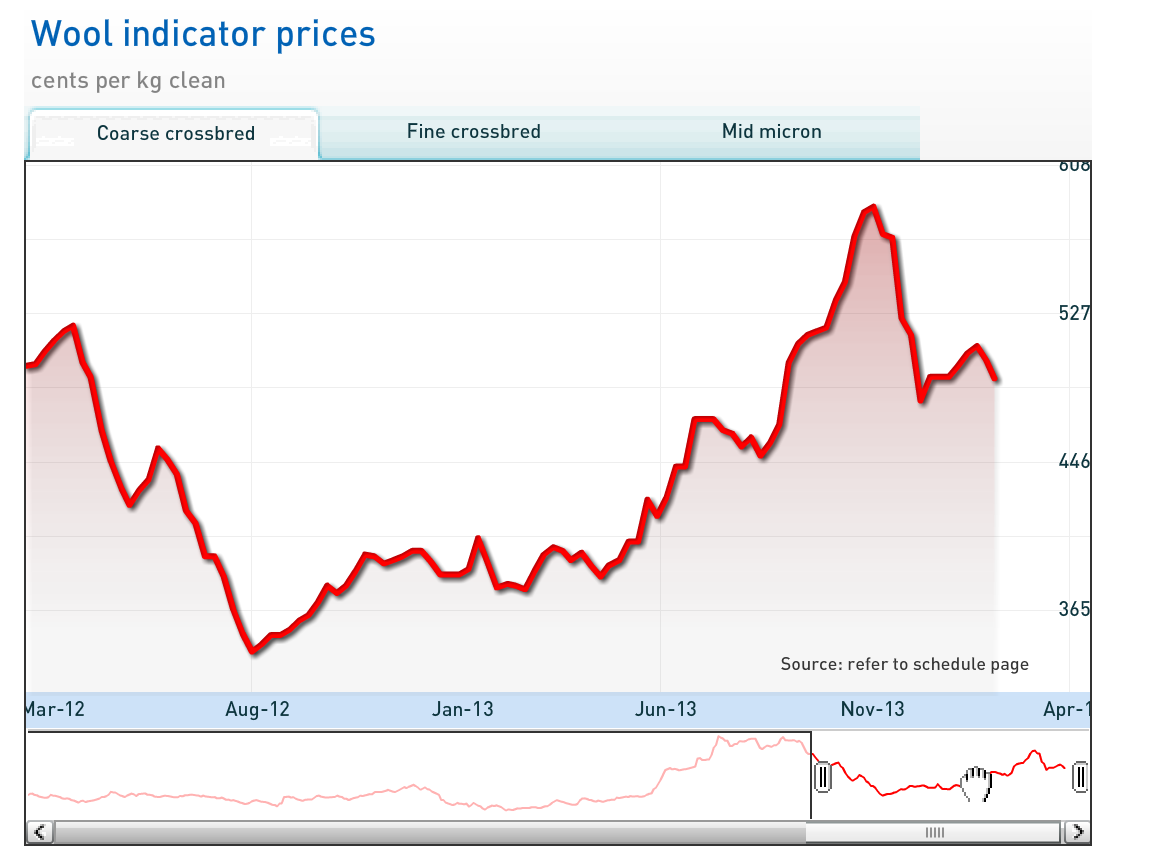
But here is the truth: New Zealand’s wool industry is a golden fleece and its dairy industry is a cash cow. The Chinese consumer’s taste for consumption is fuelling demand for soft commodities that is making Aotearoa like Perth. They are enjoying a “dining boom” just like our mining boom.

That’s happening at the same time as free-market policies pushed by right-wing Prime Minister John Key, so that New Zealand is coming out of the GFC far richer than it went in.

The rum in the punch at this prosperity party is Auckland property prices, which have risen wildly in the last two years.

Image


If you’re a beneficiary of the great kiwi boom, you might like this “choice as” property offering:

Image

The property price boom is spreading even to the unfavoured areas of Auckland.

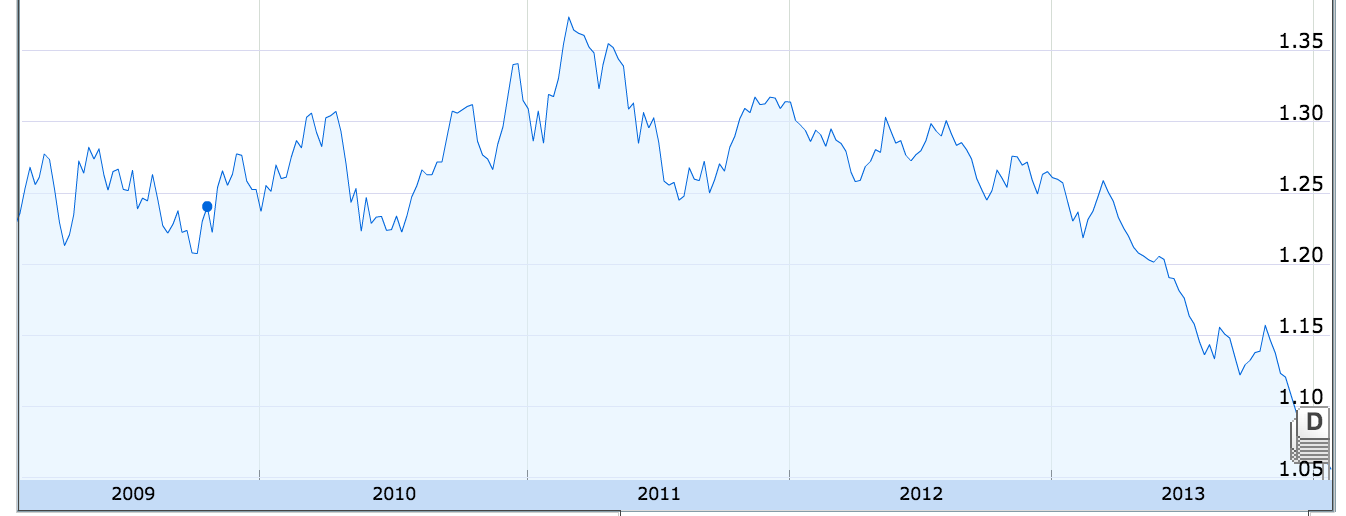
Another sign of the booming Kiwi economy is their dollar. We may soon be on the wrong side of parity.

Image

And it’s not just Auckland where house prices are booming. Ordinary homes in out-of-the-way parts of the South Island are also priced oddly high.

Image


The other great explanation for this is low low interest rates. Australia got its official cash rate down to 2.5 per cent just last year. New Zealand has had rates at that level since March 2011.

The rise in house prices has been so marked that the government introduced special laws to try to cap price rises. They have tried to limit the value of loans going to borrowers with low deposits.

So can these high house prices be justified?

New Zealand is still not as rich as Australia, minimum wage there is $13.75, compared to $16.37 in Australia. Average and median earnings are lower too – Kiwis earn 26 per cent less.

It is concerning.

When I think about New Zealand’s housing market, I get the feeling it it is self-evidently frothy. That the bubble will pop. That the end of all this Will. Be. No. Good. 

That is almost exactly the same patronising attitude all these flown-in experts have when they talk about the Australian market. Here’s the latest one, printed just hours ago.

So what can we learn here? That an outside perspective on house prices can feel very different from an inside perspective? That rapid growth should ring alarm bells? That the Chinese demand may not be as guaranteed as the Kiwi market seems to believe? Or just that we should have bought in Auckland two years ago?

Fire in the hole! Fire in the coal!

Fires are racing across the state of Victoria, burning the fringe of Melbourne, and immolating the state’s east.

I drove down the Hume Highway yesterday and the thick billowing black and grey smoke was bigger and more threatening than any fire I’d ever seen. The radio told us the Hume was closed –  it wasn’t when I drove through – but the fire was uncomfortably close to the road, perhaps 3km, and the wind was very strong. It was stressful. That fire is still burning today.

There is also a fire in the open-cut coal mines in Gippsland. Tonnes of brown coal are burning up that might otherwise be used to power the whole state.

Because of fires, the Hazelwood power station, which provides a huge proportion of Victoria’s power, is at risk of stopping this afternoon.

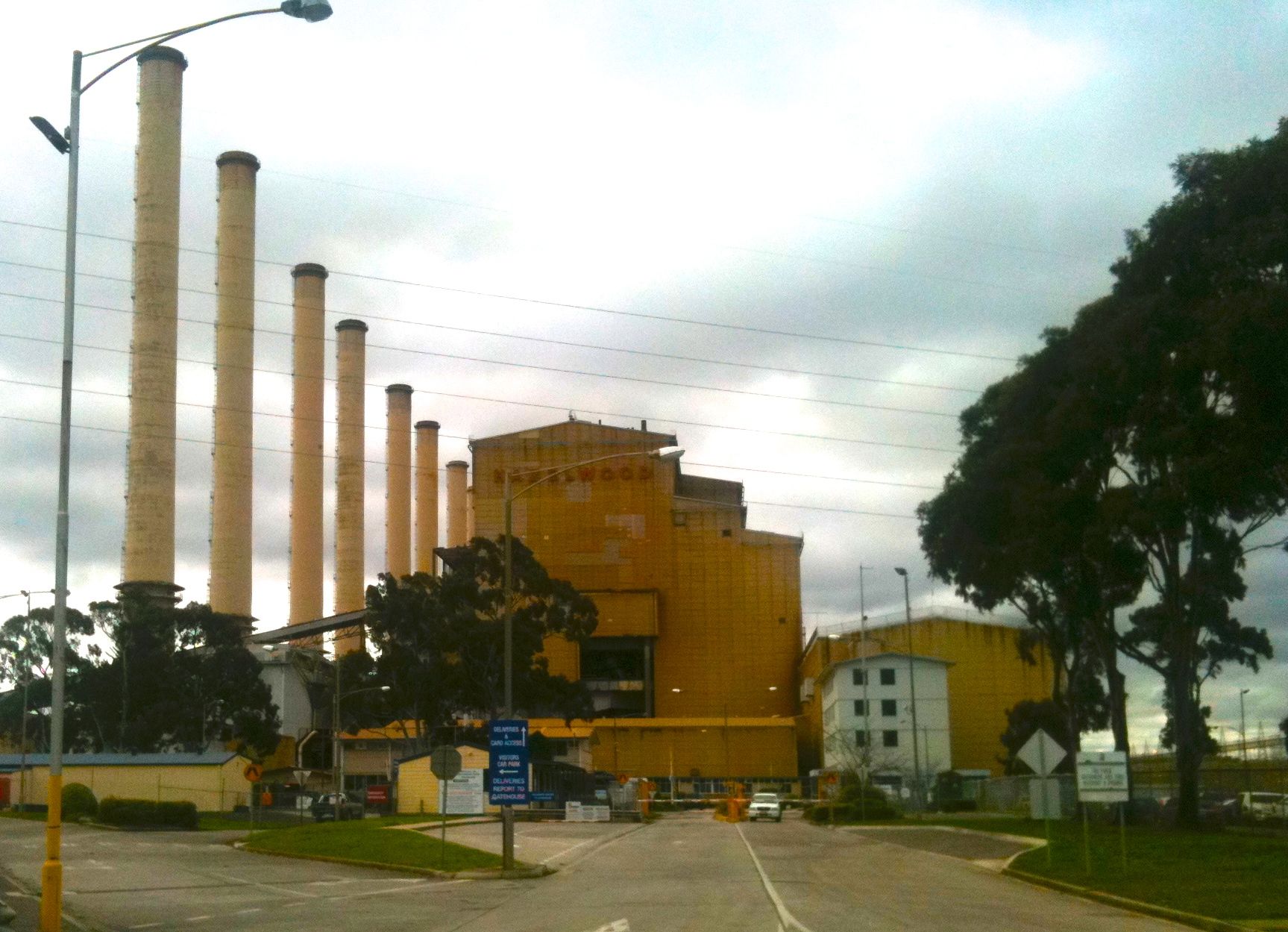
Hazelwood power station
Hazelwood Power Station


I went to Hazelwood in 2011, for work. It is a weird thing – not shiny, glossy, or modern. It looks like the sort of facility you might encounter abandoned in a video game, or where Batman has a showdown with his nemesis.

It was strange to look up at the eight big smoke stacks and think that carbon emissions on an enormous scale were happening before my eyes.

Hazelwood Power Station

The outdated hulk of Hazelwood is the symbol of dirty electricity in Australia. It burns brown coal, the dirtiest kind of coal there is. Brown coal currently accounts for 85-90 per cent of Victoria’s electricity production. But it is easy to oppose brown coal, and I don’t doubt a few environmental campaigners were secretly barracking for the fire yesterday when it briefly threatened the power station itself.

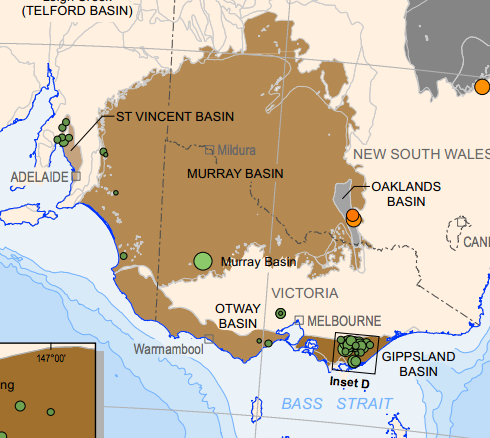
It’s easy to oppose brown coal, that is, until you see how much of it we have.

Image

When you see the amount of brown coal in this state, it’s hard not to say, “Gee, we should find a way to use that.”

[Brown coal, like black coal, is long-dead bio-stuff. But it has had less geological pressure applied and so is less energy dense. Brown coal is just one step up from peat.]

There are 430 billion tonnes of brown coal in Victoria, estimated to be one quarter of the world’s brown coal. It starts around 15 metres below the surface and goes down as much as 250 metres. 

Every hour, the Yallourn power station burns 2200 tonnes of brown coal to power 2 million homes, according to their publications. That implies a kilo of brown coal powers a home for an hour.

Image
High moisture, low ash coal. Source: Vic Gvt

The billions of tonnes could keep the lights on in this state for a very very long time. By my estimate we could get to 14,000AD without energy efficiency improvements or solar installation.

It’s good quality too – low in impurities. But the problem is this: Moisture. Our brown coal is very wet, at up to 70 per cent water. That means it can’t be exported, because it is too heavy. That’s why the big electricity generators are out there, right on top of the coal deposits.

The problem with brown coal is that the opportunity cost of leaving it in the ground is so high. If you don’t burn it for electricity or turn it into briquettes, you don’t get anything for it. There are, as yet, no other economically viable uses for brown coal.

If the cost of carbon rises high enough it could become uneconomic to burn brown coal even for electricity. Hazelwood is a leading candidate for shutdown to help Australia meet its carbon-emission targets.

If that happens we don’t have a resource at all. It would be like having a lot of telegraph equipment. Using it will actually leave you behind when better alternatives exist.

Unless of course you can find a new use for it.

The Victorian government is, for this reason, spending money trying to raise the opportunity cost of burning brown coal. To make another use for it, so that burning it for electricity stops being the best idea we have.

There are research programs into drying it, turning it into liquid fuels, etc. From the energy resources website:

“In the future, brown coal may even be refined into a purer form of carbon for use in production of a myriad of carbon products including carbon fibres, carbon anodes, activated carbons, filter aids, pigments, graphite lubricants and conductors and formed carbon materials.”

A company called Brown Coal Innovation Australia is supposedly leading the charge, with state government support. They handed out a few $10,000-a-year PhD scholarships and are currently assessing research funding proposals worth $3.5 million. Is that really enough?

Whatever happens, the best-case scenario is definitely not brown coal burning up due to bushfires. That delivers all the downsides of carbon emission without even any electricity to show for it. And it could be some time before the fire in the hole goes out. A 2006 fire in the Hazelwood mines ran for a week before being extinguished. 

Hot Blogs

On the right hand side there are a bunch of links, under the heading Blogroll.

They are the work of a bunch of people I respect. Some I know personally and some I don’t know, but all are blogs I visit and enjoy.

Today I draw your attention to two more economics blogs I am about to add to the list.

Market Failure, run by a political science student at MIT called Alex. He has impressed me in the last week with posts about the Superbowl and opiates.

Messy Matters, a blog run by some ex-Yahoo! scientists. It impressed with an amazing blog about racial preference in dating this week but going further back there is also a great one on using data from those crappy opt-in online polls to forecast important things like elections.

Click on through and check them out!

The decline of economics?

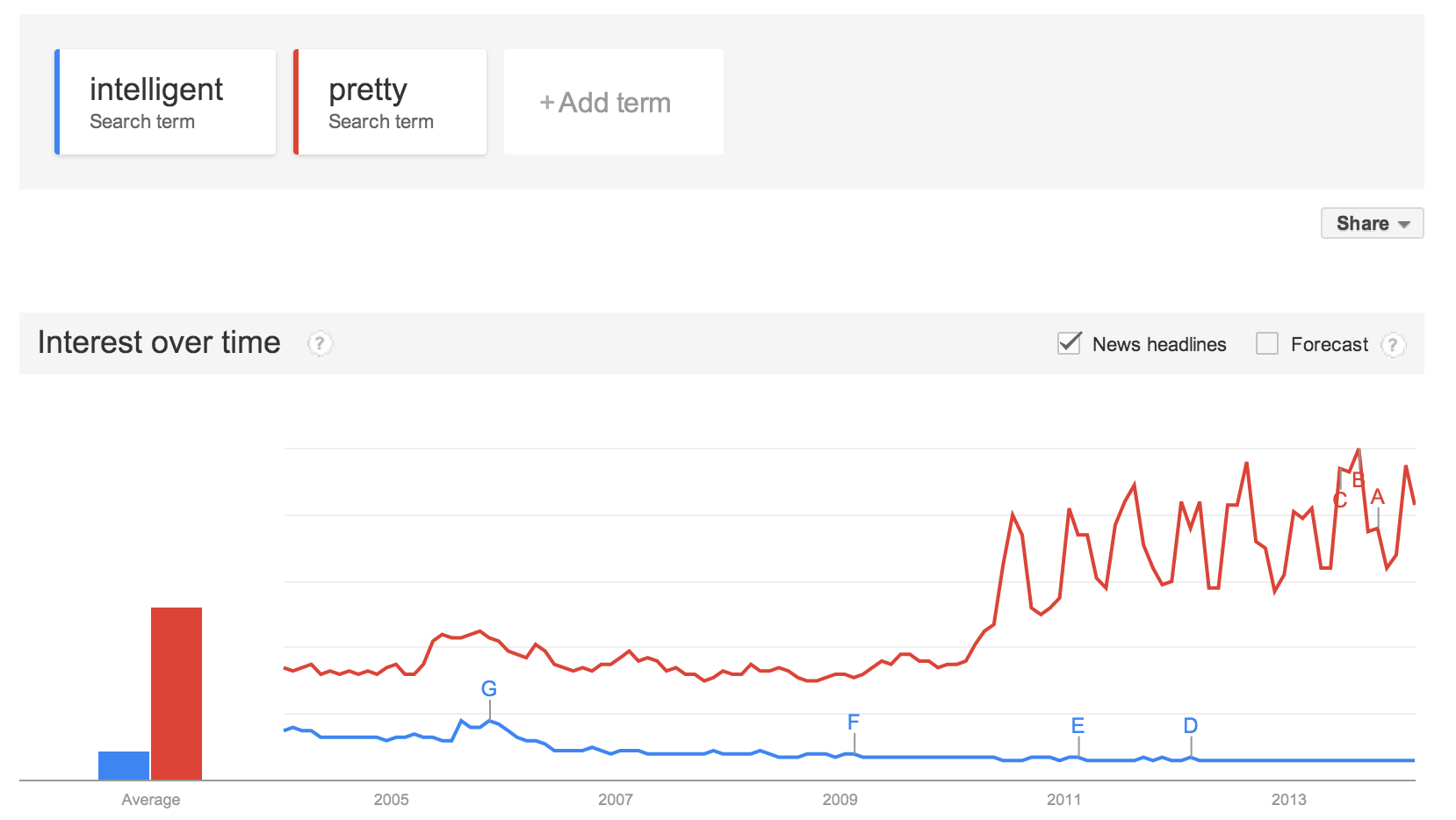
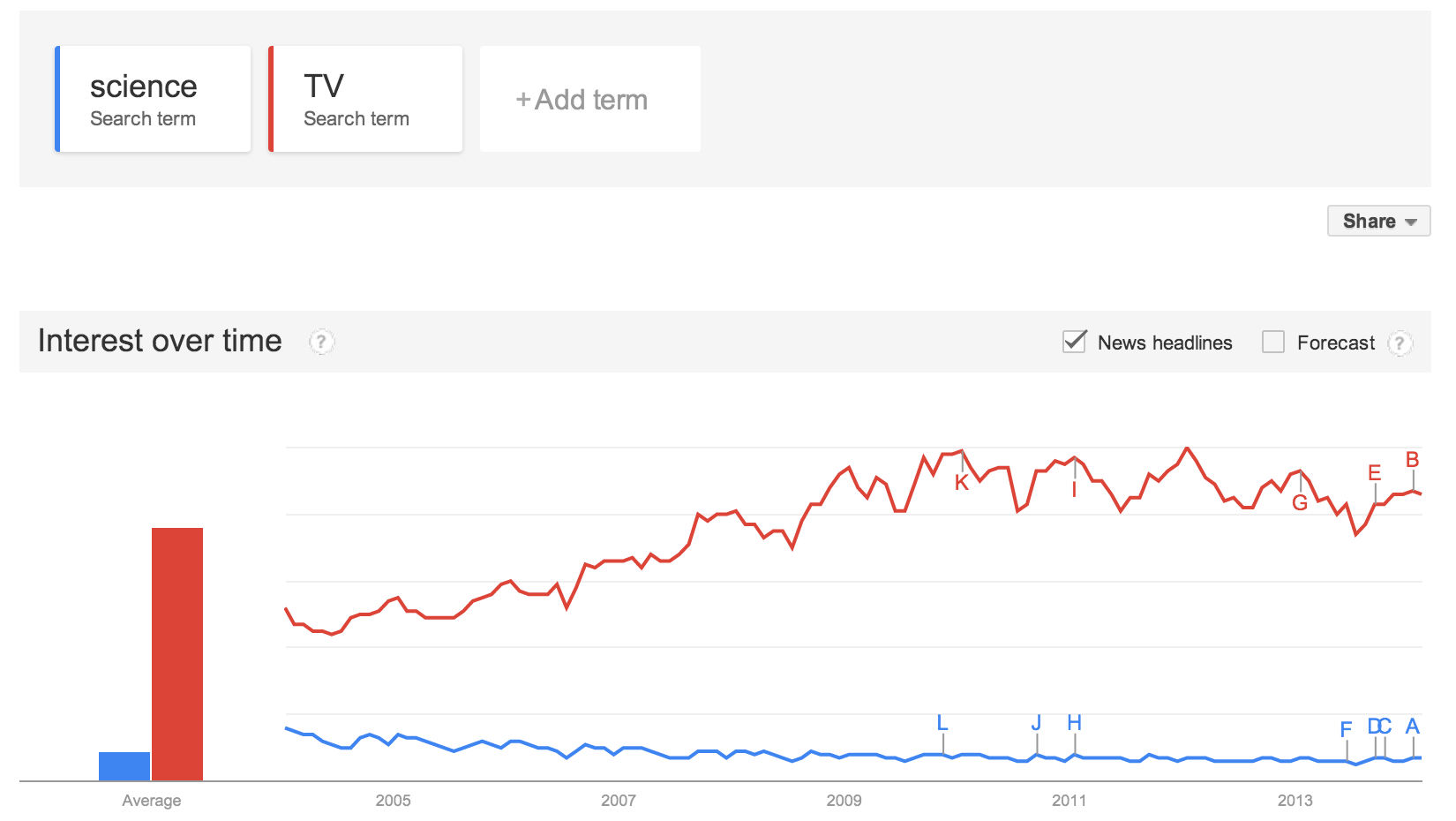
Google trends showed me this.

Screen Shot 2014-02-07 at 8.47.01 am

That graph shows that economics share of total searches is in big decline.

I was worried. Not only was my discipline apparently out of favour, but I was re-launching this blog in a climate where its subject matter was of fading interest!

I pondered. Could the global financial turmoil of previous years set people against the study of markets in a formal way? Was economics unfashionable because of rising inequality in the first world – the rise of the 1 per cent? Was the world turning its back on economics after the roiling controversy of Rogoff and Reinhart making an elementary Microsoft Excel error in a crucial paper?

I was about to set up a multivariate regression to try to nail down the true cause when I had a thought. Perhaps economics wasn’t declining per se, perhaps everything else was on the rise?

Witness the democratisation of the internet, wherein the information tubes are wrested from the sole control of the nerds.

Screen Shot 2014-02-07 at 8.48.04 am

This is why it seems like the internet has been dumbed down. (I’m referring to you, Youtube commenters.)

Screen Shot 2014-02-07 at 12.40.13 pm

Screen Shot 2014-02-07 at 12.41.59 pm

The internet is increasingly just as smart as the real world, no more, no less. That’s why we have Buzzfeed Australia now, I guess, serving up articles like this one, about people mooning a train. But we shouldn’t forget that we also have things like Reddit’s economics page, where the content is given over, for today, wholly to submissions from economics journals.

The internet is still as good as ever, you just need to know where to look.

Big pokie-filled “Clubs” – A Victorian calls it as it is

This country may be federated, may be full of “common wealth,” but its the things that divide us that catch the eye.

So when I crossed the Murray recently, I was hyper-aware I was in Club land. A fact that left me simultaneously enchanted and repelled.

For those not familiar, a “club” is a multi-tiered pleasure dome, full of salad with viniagrette, taps dispensing Tooheys New, tucked-in shirts, and screens on which are displayed simulacrae of spinning wheels, creating a vortex into which many a fortune has fallen.

Like this:

Image

 This blog has been coming to you from a secret bunker in the last week, but secret bunkering can only take up so much of your time, and so it was that last night I was able to visit Tomakin‘s club yesterday evening.

These clubs retain vestigial connections to the like-minded groupings that formed them, once upon a time. There are tennis courts and bowling greens out the front at Tomakin, for example. But those were empty.

These days the clubs, which can be found across NSW, the ACT and Queensland, serve a primarily different function, which is to do house the functions of a good bar, a good restaurant and a good casino in one apricot-hued 1990s construction, while omitting any “goodness.”

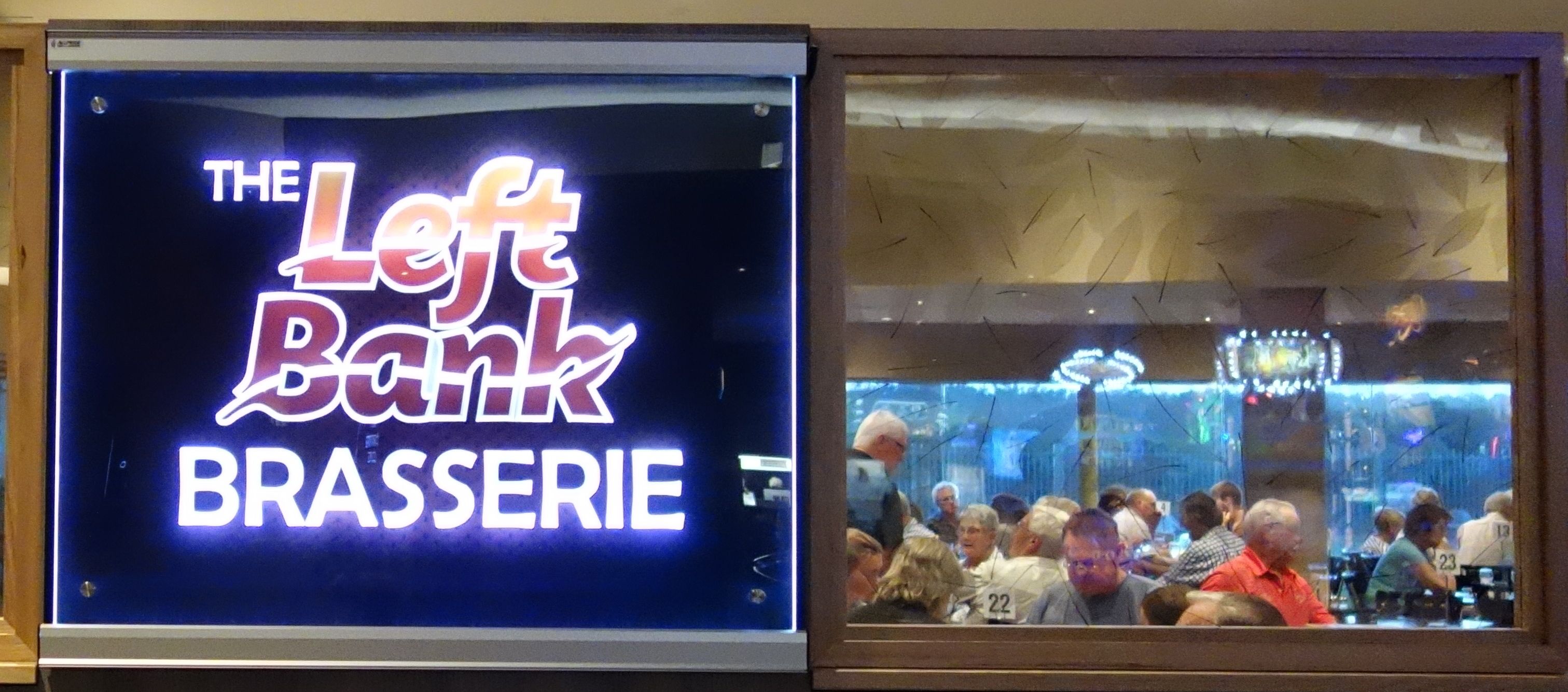
The purpose of our trip to Tomaking was to sample its lightly-famed Left Bank Brasserie.

Image

More gauche than rive gauche, the Tomakin Sports and Social Club Brasserie dishes up a mighty cheap lunch, at $6 Monday to Friday. At dinner time you can get a serviceable Chicken Schnitzel Parmagiana for around $17.

Image

 The crowd consists entirely of people of anglo-celtic extraction and the carpet features a repeating pattern.  One can easily get lost in there.

The dining experience is marked by frequent public announcements, piped at quite audible volume to all parts of the establishment. One is forced to assume the majority of the clientele do not still retain their hearing, but whether Tomakin Sports and Social Club can bear responsibility for that or is merely reacting is not clear. Nevertheless the identity of the raffle winner and the timing of the courtesy bus departures will remain seared forever into my brain.

But the true raison d’etre of a club is to house pokies. They sit in the centre of the club, visible from every food outlet and every bar, encouraging those who ride the courtesy bus home to do so substantially lighter of pocket than on their arrival.

I rue the $3 I invested in this Jumpin’ Jalapenos machine, for nil return.

Image

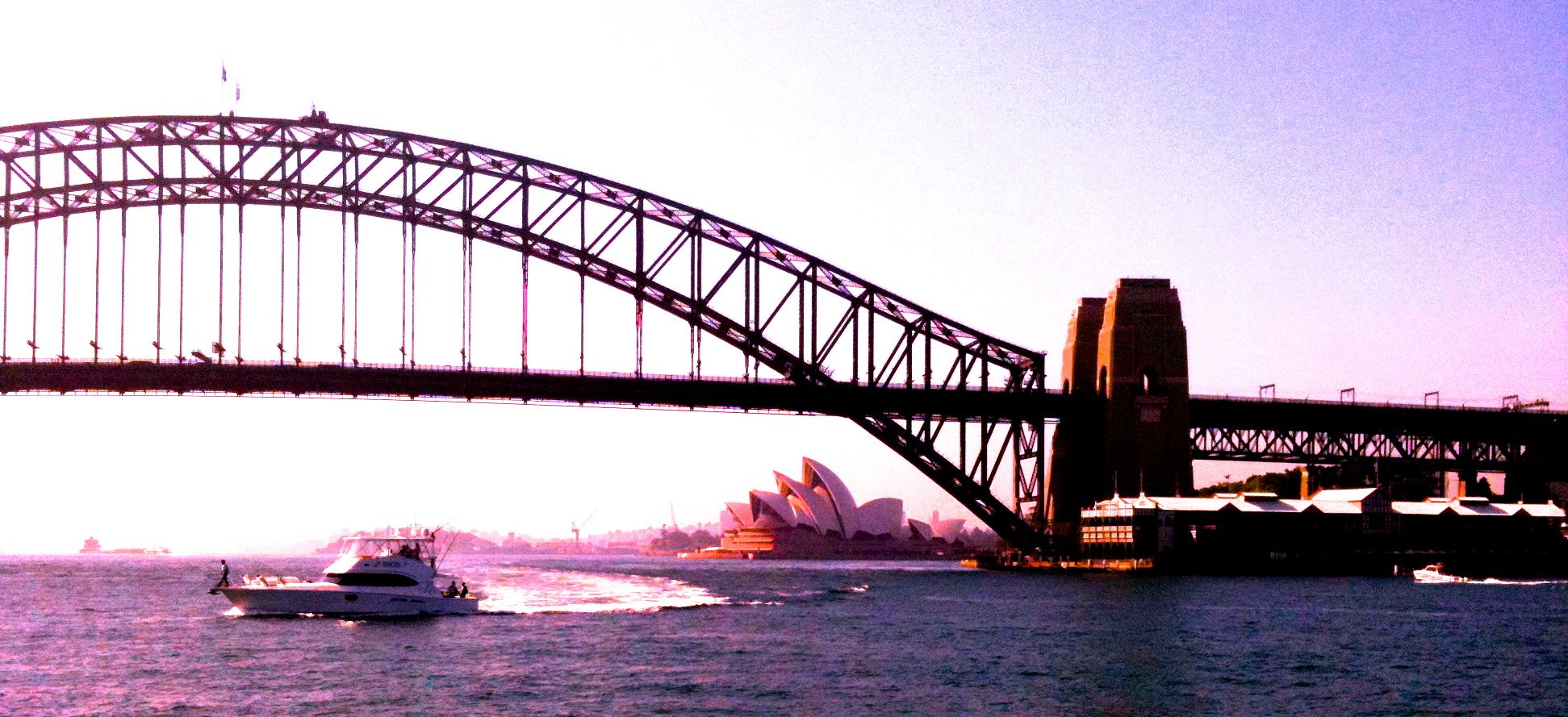
As a Victorian, my gut reaction is to find the downside of all things New South Welsh: Big bridge may look nice but it creates a terrible traffic choke point, exterior of Opera House is lovely but inside is entirely aria-hostile, warm weather is very pleasant but means a higher hatching and survival rate for bogans, etc, etc.

These clubs are popular. Wildly so. Am I being unfair to them?

I say no. The absence of such clubs in Victoria is telling. The only reason they have spread across the wide plains of Queensland and NSW, like the prickly pear and cane toad before them, is the legal quirk that permits not-for-profit clubs to put pokies on their premises. That has been permitted since 1956 in NSW.

These clubs serve the communities rather than making profit, sure. But such profist are calcualted after paying for the poker machines.

Here’s a telling quote from an article published late last year.

Anti-gambling campaigner Reverend Tim Costello said about 40 per cent of poker machine revenue came from addicts.

“The social costs are high, including relationship breakdown, mental health issues, unemployment, debt, financial hardship, theft and other crime, social isolation and all too often suicide,’’ he said.

Victorian clubs have only been permitted to have pokies since the 1990s. Their spread has not taken them as far as in NSW, nor have they become as deeply embedded in the community. Here’s why that’s a good thing.

“The maximum average loss rate per hour for Australian poker machines in Australian dollars is $720 per hour compared to $156 for New Zealand machines (outside casinos), $130 for the United Kingdom machines, $52 for Japanese machines and $705 for United States machines.”

Clubs Australia, the peak body for little outposts like Tomakin Social Club is powerful enough to defeat comprehensive pokie reform that everyone without a vested interest agrees would be a good idea. The centrality of poker machines to these clubs means they should be renamed pokie clubs. That or try their luck going back to being actual sports and social clubs. Surely communities like Tomakin would get on better if the residents were sitting around a Bridge table or standing round a pool table, instead of lined up in rows feeding the machines?Image

When job hunting is an endurance sport.

Image

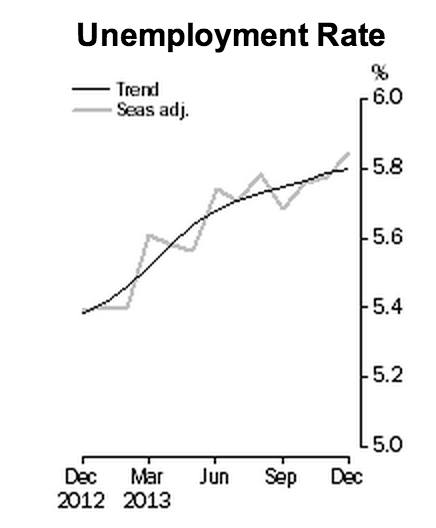
Unemployment in Australia is rising, and economists are relaxed about that generally, because it coincides with the end of the mining boom.

But new data out today show there is a hidden group for whom relaxation is just a dream – the long-term unemployed. The unemployment rate now sits at 5.8 per cent and rising, up from below 5 per cent in 2011. Getting a job is proving harder and harder:

The number of people starting new jobs (in the 12 months before the survey) is falling. It was 1.69 million in 2012, but had fallen to 1.67 million by 2013.

What that means is more and more people whose work skills are atrophying.

The proportion of unemployed people who had been looking for work for over 12 months has risen from 19.2 per cent in 2011 to 20.8 per cent in 2013.

And not all long-term unemployed people will show up in the figures. Some people will give up and disappear from the statistics if they stop seeking work, for example if they move onto the pension.

This is very bad news. Unemployment rates tend to rise sharply and fall slowly:

Image

[It’s possible my entire interest in economics and statistics is because of the spike in the middle of the above graph. My first awareness of anything called the “economy” was the 1990s recession, which was also when I first heard the word “unemployment” and heard job losses discussed in hushed tones. I remember seeing newspaper articles about 11 per cent unemployment. Then my whole secondary schooling and university education coincided with the long, slow reversal of the unemployment caused by that short sharp recession.]

Unemployment is very hard to remove because of a concept called Hysteresis. It basically says that high unemployment is sticky – the economy “gets used to” functioning with more people out of work.

What that means is that a period of high unemployment is not just bad in the here and now. Its effects echo down through time in the shape of higher unemployment rates.

Image
Like the top of the Rialto, jobs can be hard to find

The Australian situation is still the envy of the world. Our unemployment rate is well below that in the US. But that is cold comfort when you are scanning the job ads for the 53rd luckless week in a row.

The data also contain another interesting tidbit:

66 per cent of people look for job ads in the newspaper, but 84 per cent of people look for job ads online.

But young people use the internet more, with 85 per cent of them looking for jobs online. But for the first time even those 45 years and over reported they are now most likely to look for jobs online, with 79 per cent scouring Seek, Monster, etc. (And that’s why the newspaper business is in so much strife)

Myer and DJs – Stop Copying Me

At first glance, the idea of a merger between Myer and David Jones seems utterly natural. The two stores have been struggling in the dying light of the traditional retail industries. Their centuries-old premises in city centres seem like relics of a gaslight era, when the prospect of a lift ride was exciting and shoppers donned their Sunday best.

The department store concept seems somehow nostalgic when eBay and Amazon, Kogan and Net-a-Porter are rampaging across the retail landscape like barbarians, slaying all those that stand before them.

Must these revered icons of Australian retailing continue to fade, as Georges did before them? The message from the internets is: no.

Online, the department store concept has never looked stronger. eBay does not stick to just one line of merchandise. Nor does Amazon. Speciality stores are not a natural reaction to a burgeoning online world.

And in other corners of the retail universe, companies that offer a range of goods seem to be thriving.  What is Target, but a department store that happens to be a bit cheaper? Same with KMart.

The biggest and most sucessful retailer in the world offers 100,000 different items in its stores, everything from bling to black beans. I’m talking about Walmart, which made almost $4 billion in profit in a three-month period in 2013.

So there is nothing inherently fail-worthy about trying to sell a lot of lines from one company.

But if you bought $100 worth of Myer shares when it split off from Coles, they would now be worth around $66.

Screen Shot 2014-02-04 at 10.03.56 am

If, that same day, you’d bought $100 of David Jones shares, they’d now be worth about $55.

Screen Shot 2014-02-04 at 10.06.32 am

Why are Myer and DJs failing? It’s not because their death is inevitable. In the UK, a department store called Selfridges is operating the upscale department store model, but doing it a lot better. It is hitting new record profits and expanding its stores.

In a way the problem is the Hotelling model. That suggests that when there are two competitors, they should try to match the other, whether on location or concept. DJs, for example, has a promise of “lower everyday prices” to combat the perception Myer is cheaper

The two stores have matched each other step for step. They have been so frightened to differentiate themselves from each other that they have, while staring the other in the eye, walked into the same tar pit.

But the Hotelling model works best with only two competitors. The world of retail has changed and so the strategies of Myer and DJs need to diverge.

As Myer and David Jones struggle for the same huge swathe of middle-class customers, they are hurting each other. One needs to make a bold break for freedom.

David Jones was traditionally the more fancy of the two – perhaps it could ramp that up to appeal to the increasingly self-assured and aspirational Australian Market. Or perhaps it could move to serve the growing market of elderly – our ageing population has to be good for a few pennies.

The crucial thing is to make a move the other won’t follow. There has to be room for two big department stores in this country, but not two that are perceived as so similar. David Jones has recently announced a plan to set up smaller stores in rich suburbs. That attempt to make a break for freedom might be why it had the confidence to reject Myer’s $3 billion merger offer.

January weight loss wrap-up and future pledge

Many readers of this blog will be aware of the weight-loss challenge I undertook in January – to lose 4 kilograms.

The challenge got interesting because of the unusual motivation I chose. If I failed to shed the flab, I would owe the Australian Motoring Enthuisasts Party $500.

A lot was on the line. I updated my daily weight loss page, and even the Guardian took an interest, publishing a story I wrote about the challenge.

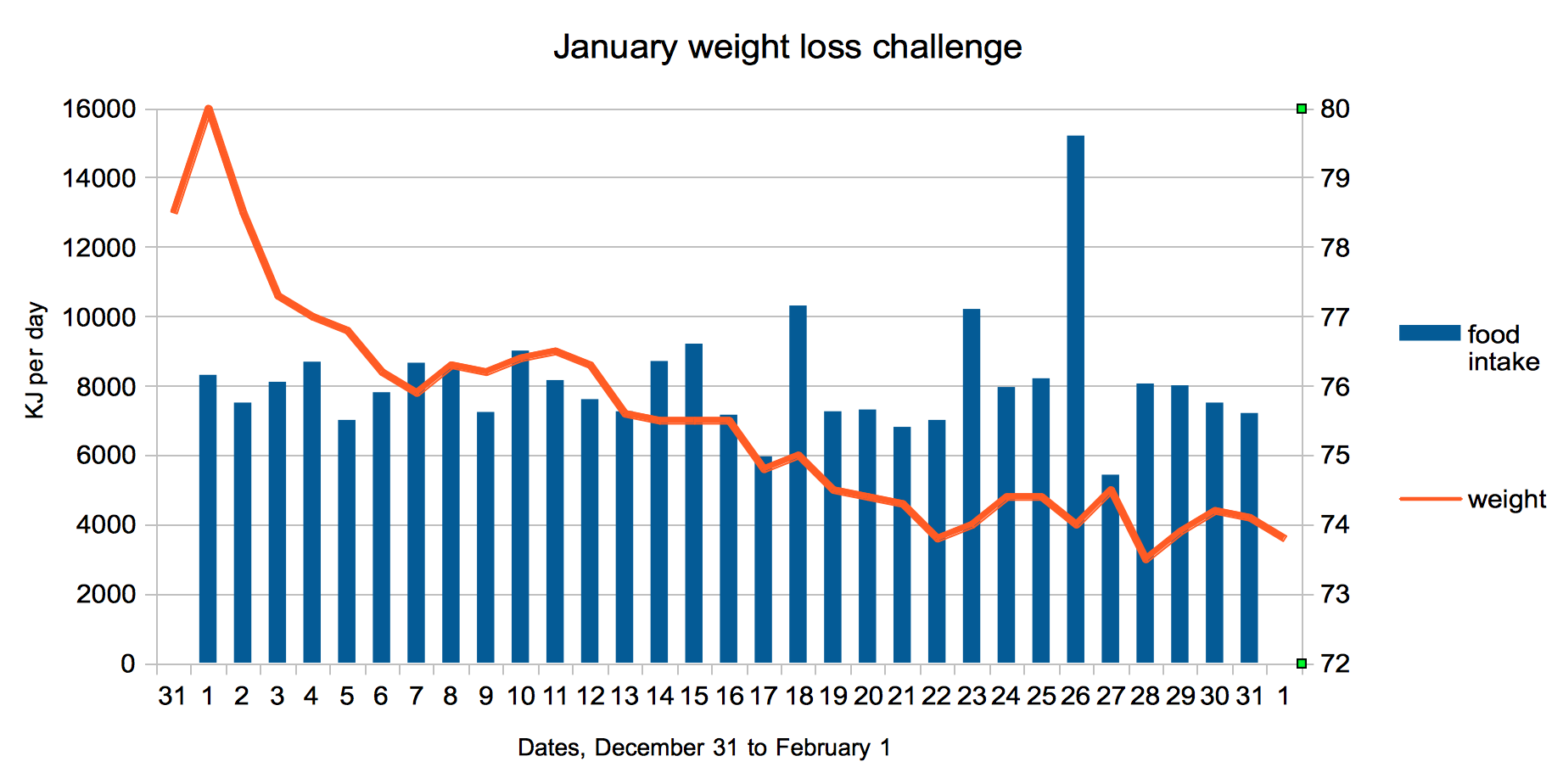
So it is with pleasure that I announce that the challenge has been successfully completed. I had to get from 78.5 kg to 74.5 kg, and I surpassed the goal.

Image

The blue bars represent my daily food intake in KJ. I averaged just under 8000, a big discount on my real-life intake of probably closer to 12000-15000. There was plenty of cycling, walking and strength exercises during the month too. But of course it was easier to lose the first few kilos than the last few. And the peaks of the blue lines toward the end show that superhuman feats of self-control are hard to keep up, especially on Australia Day.

The use of the Motoring Enthusiasts Party as a motivator was a spectacular success, the only downside perhaps being a commentator on the Guardian Piece who wrote:

“I pledge to give $2,000 to the Australian Motoring Enthusiasts Party if Jason Murphy looses weight this month.”

Nevertheless, his pledge did not impede me and I trust his cheque has already arrived at AMEP HQ.

Now the challenge is to not put the weight back on. To that end I make another pledge. To weigh less than 74 kg (i.e. my current weight) at the end of February.  I will put $100 on the line this time and I open up the comments section to suggestions on who the money should be kept from…

Lessons for the first female Fed Chair from a first female Prime Ministership

Janet Yellen and Julia Gillard should get together. Ms Gillard, who served as Prime Minister of Australia from 2010 to 2013, would have timely advice for Dr Yellen, who will take over as the head of the US Federal Reserve next week.

Gillard was subject to a campaign of unrelenting gender-related criticism and attacks from a large swathe of the media. She handled it, but she is a career politician. Dr Yellen is not a career politician, but she is about to step into a role that is intensely politicised [1, 2, 3]. The chair of the Federal Reserve is the object of non-stop scrutiny, the subject of countless opinion pieces.

Yellen has already been called “the most powerful woman in the world,” and “the most powerful woman in US history.” The role of Federal Reserve Chair creates winners and losers – meaning it creates friends and enemies.

Her tenure will not be smooth sailing. Her confirmation by the senate was relatively narrow at 56-26:

The stage is set for a battle that will, one way or another, involve gender. And the most vocal stakeholders in the Fed’s decisions are the wolves of Wall Street. Not people used to having a woman for a boss.

According to the 2013 Catalyst Census: Fortune 500 Women Executive Officers and Top Earners, which counts the number of women in upper management in Fortune 500 companies, women are 17.6% of executive officers in the finance and insurance industries. Source.

Wall Street’s preferred candidate for Fed chair was Larry Summers, a former Treasury Chair who has argued women are genetically inferior at science. He missed out on the top job in favour of the lady.

Yellen’s job is going to be difficult and controversial. She will not only have to answer for her own mistakes, she will have to answer for those of Bernanke too, since she backed his policies. It is difficult not to make mistakes as Fed Chair. Bernanke and Greenspan both made screw-ups in relation to easy money, house prices and the GFC.

The stage is set for a great big gender battle. So, what can Gillard tell Yellen?

1. Being qualified won’t save you from criticismImage

Gillard was perfectly technically qualified to take the role. She had been a very capable Minister in the Education portfolio, and also a stand-out performer in Parliament. 

Similarly, Yellen – with experience as the head of the Reserve Bank of San Francisco and academic roles – is considered  the most qualified candidate ever for the role of Fed chair. [Hardly a coincidence – McKinsey has found “women are often evaluated for promotions primarily on performance, while men are often promoted on potential.”] 

2. Expect attention on extraneous details.

Julia Gillard’s glasses. Julia Gillard’s bum. Julia Gilard’s absent handbags. Julia Gillard’s jackets. Julia Gillard’s house. Julia Gillard’s earlobes. Julia Gillard’s fruitbowl.

Dr Yellen will find many aspects of her life are now public property.

In fact, she has already found this. From an article in The Scotsman:

“The 67-year-old was dressed in the same black suit she wore a month earlier when President Barack Obama announced her nomination, enough for her to be targeted by bloggers Warren Rojas of Roll Call and Patrick Tutwiler of FishbowlDC.

“Good thing the Fed Chairman is only the most powerful position in the world, and not a walk down the red carpet,” Tutwiler wrote. “Otherwise we’d be worried.”

Rojas said it had yet to be seen whether Yellen was the “financial genius our sputtering economy so desperately needs”, but “at least we know her mind won’t be preoccupied with haute couture”.”

It’s not just clothes, partners matter too. While Gillard’s partner was a former hairdresser, Yellen’s partner is a former Nobel Prize winning economist. Nevertheless, Time Magazine is apparently obsessd with Dr Yellen’s homelife. The fact that these women’s partners matter suggests something is different about their tenure. Who even knows what Mrs Bernanke does?

3. Expect the unexpected.

When Australia’s first female Prime Minister was criticised for having a “big arse,” it came from trailblazing feminist icon Germaine Greer.

Australia’s first female Prime Minister was also the only one to enjoy, while still in office, a satirical comedy about her homelife, including bedroom scenes, featuring left-leaning comedians and run on the national broadcaster. Dr Yellen can probably count herself lucky if she only shows up on SNL.


4. Stand ready to be accused of playing the gender card when you defend yourself.

Gillard was filled with “murderous rage” over the sexism she faced. When she complained, she was accused of starting a “clumsy and manipulative gender war.”

An ugly gender war could easily happen even though WSJ and Bloomberg will be sure not to print anything directly criticising Dr Yellen over her gender.

That sort of criticism of Yellen will start in the blogs. Yellen will be asked about it. Her reaction will be immaterial. The mainstream media will feud over what the correct reaction is. Is she getting distracted? Is she missing a chance to make social change? Is she giving the issue air to try to draw attention from her failings? Is she refusing to make a comment that would put the argument to rest, to try to draw attention from her failings?

5. Blaze a trail, take the heat, and leave a better world behind.

Julia Gillard’ prime ministership taught millions of Australians the meaning of the word misogyny, put gender issues on the front page week after week, and lifted awareness of the many insidious ways in which discrimination can occur.

But the process is not a happy one. It is bitter.

In Australia, Ms Gillard was replaced by Tony Abbott, whose views on gender are, shall we say, unreformed

And the damage of a rolling multi-year debate about the role of gender in American business and public life could even be enough cruel the chances of one Hillary Clinton. The better world may take some time to come about.
The story of McCafe: when competing on price can fail

US McCafe is failing, according to an article in Bloomberg today that quotes McDonald’s executives conceding Starbucks has them on the ropes. It also cites market analysts who say the attempt to move into coffee is hurting their burger business.

This is despite a McDonalds latte costing only around $2.50, compared to around $3.50 for a Starbucks latte. But that price is hurting them – McCafe in the USA is seen as too cheap, too nasty.

From that Bloomberg article:

“Pushing coffee is “probably a good idea if they can get their customer to buy more of it,” said Peter Saleh, a New York-based analyst at Telsey Advisory Group. “I don’t think they’re going to be attracting the Starbucks customer to go there — I really don’t.””

Why is McCafe unpopular? For the same reason people won’t buy a suit at KMart – because coffee is a social signifier.

Coffee is not just a drink over there. It is redolent of sophistication. And Starbucks is Louis Vuitton. It would be shocking if a celebrity was papped without at least one mermaid-emblazoned frappuccino.

Image
Frappucino Styles

If you think that there’s no prestige in something produced by a global chain, look in your cellar. See any Moet? Look in your wardrobe. See any Nikes? Just because in Australia we think we value independent coffee does not mean we can sneer at “masstige“.

But this is not just an American story or a business story. It’s a personal story. Melbourne is a coffee town. When McDonalds launched the McCafe in 1993, they launched it in Melbourne.

I remember when they opened a McCafe near my school. I drank their $1 cappuccinos, and it was good. There may not be a lot of quality there, but there was a lot of value. I have a soft spot for McCafe that I will never have for Starbucks.

And McCafe Australia is thriving.

Image

Wait! What? Why is McCafe succeeding here but not America? I thought we were the sophisticated ones!

Pradoxically, the success of McCafe in Australia is because of our well-developed market.
Image
I bought this McCafe latte today in the interest of research. At $3.55, it was too hot and overpriced. The longer I sat the better the coffee tasted – the beans were fine. But sitting in McDonalds – with the TV blaring and the bland-on-bland decor –  palled fast.

Latte-sipper was an insult once, a signifier of being a toff or a snob or a Vaucluse doctor’s wife. Now baristas are taking complaints that their latte ‘had shit mouthfeel’ from blokes with prison tattoos.

This is not despite, but because we have a more developed coffee culture.

They call it product life cycle. Something new starts off as being for just the few. A mobile phone, for example was once a sign you were or aspired to be Gordon Gekko. But if that product is good it will spread to all comers. They call that maturity, or saturation. The reason Australia can support both Seven Seeds (“carefully sourced single origins” $4+) and 7-Eleven (“freshly ground beans: $1) is that the market for coffee is … everyone.

Melbourne has had espresso for fifty years, since the first espresso machine was installed in Lygon St, at the venerable University Cafe.

Maccas has strived to keep themselves just out of the reputational gutter. In 2011 they issued a public apology for their coffee and pledged to train up baristas.

That depth of history means there is a strong bottom end as well as a strong top end in Melbourne’s espresso market. (But no room for a brand that peddles a unique combination of expensive and ordinary. In 2008 Starbucks announced it would close three-quarters of its 80 stores and it is still waiting to make an official profit.)

Not like America, where Starbucks is expanding into tea (and also expanding people’s body sizes. Starbucks offers a drink that, at 30.9 ounces, is larger than the human stomach.)

What American McDonalds needs to do is this:

Stick at it.

Eventually US coffee culture will mature. Espresso drinks will become a staple not a luxury. Then their years of offering McCafe will pay off.

As for me, after visiting a McCafe today in the name of research, I pledge to stick with Melbourne’s independent scene for the rest of my life.

Paid Parental Leave – worth cutting eligibility to $100,000?

Tony Abbott’s paid parental leave policy is one of the most expensive pieces of social policy Australia has been offered recently. It is a $5.5 billion scheme funded by a 1.5 per cent levy on big business. It proposes full replacement salary to new mothers, for six months, up to a maximum of $150,000.

But nobody thinks the PPL scheme is well-designed or good value for money.

The jaw-dropping part of the scheme is the $150,000 salary cap, which works out at a maximum rate of pay of $600 per weekday. That’s wildly expensive childcare – even in Sweden, people taking parental leave get only €105/day.

If this policy had been proposed by the Motoring Enthusiasts, the Greens, or the Palmer United Party, everybody from Janet Albrechtsen to Ross Gittins would be arguing they had no concept of how the economy works and were demonstrably unfit to govern. Arguably, Albrechtsen, Gittins et al would be right.

But would cutting the generosity of the scheme deliver a big saving? The Coalition thinks not. This quote is from an article by Phil Coorey, of the Australian Financial Review.

“The difference between a $100,000 and $150,000 salary cap is not seen as a major impediment to reaching a deal because about 90 per cent of women of child-bearing age earn under $100,000.

The Coalition has been looking at ways to make its policy more affordable and dropping the salary cap to $100,000 was not deemed worth it in terms of savings.”

The truth is that while plenty of Australians make over $100,000 – over 837,000 people, statistics say – only 18 per cent of them are women.  And of course, earning power tends to increase with age.

Screen Shot 2014-01-29 at 10.53.24 am
Number of women earning over $104,000, sorted by age and state. (Incidentally, in WA and QLD, women aged 15-24 are more likely to make the big bucks than those over 65. One guess why.)

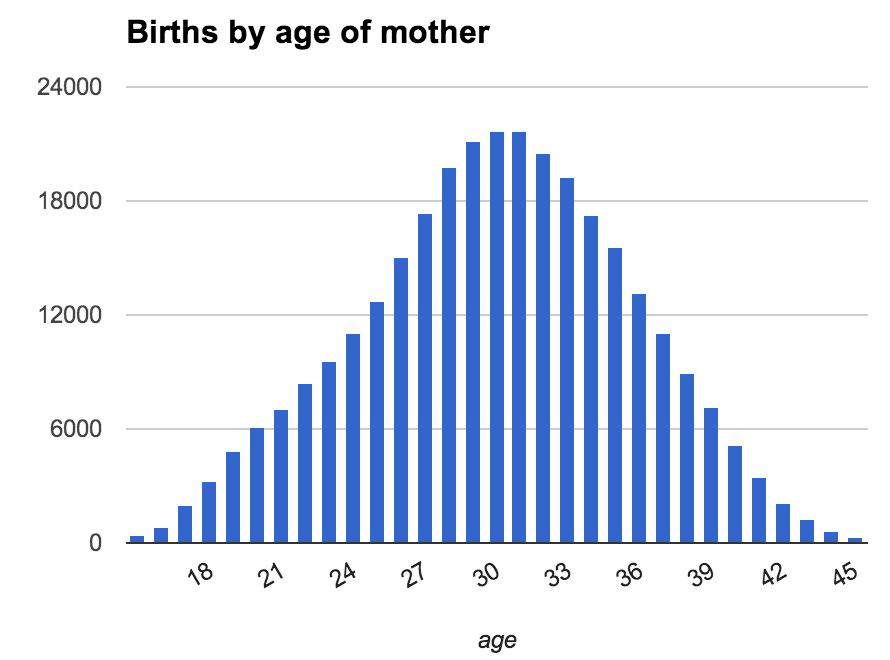
Women’s earning peak happens after their fertility peak. Earnings peak around age 40, while the most common age to give birth is 32.

Screen Shot 2014-01-29 at 10.11.29 am

That means only 5,400 women earning over $104,000 would be eligible for the payment each year, according to my calculations. [Don’t thank me for making the data category end at $104,000, thank the ABS.]

Births, categorised by state of residence and age of mothers

[This link will take you to a big google drive spreadsheet where you can check my calculations and see some interesting graphs.]

The Greens are proposing a similar policy to the Coalition, but with a $100,000 eligibility cut off.

So what would be the saving of cutting eligibility to $100,000?

Assume the average claimed salary is $130,000. The net cost of 6 months extra pay is $15,000. 5,400 births @ $15,000 =

Just $81.2 million, or 1.48 per cent of the total cost of the $5.5 billion scheme. (Likely a conservative estimate, given some assumptions I had to make.)

That’s a rounding error in the Australian Government’s social policy budget. Do we just blink and move on?

I say no. The Commission of Audit is currently moving through the Government’s books, trying to find savings everywhere. They are likely to have a very fine-tooth comb. An $80 million saving is one they would pocket with delight. The government also has a social welfare review running, looking at Newstart and the Disability Support Pension.

Politically, $80 million seems like a small price to pay to garner headlines and combat a “women problem.” But from a policy perspective it makes sense to cut the rate. If you frame the question as “how can the Australian people best spend a spare $80 million,” the answer is never “funnel it via the government to the very rich.” 

Realistically, Paid Parental Leave is unlikely to be introduced in the same format it was sold to the Australian people.

If I was advising the government, I’d say: pledge to introduce it slowly. Start off paying up to a salary cap of $60,000 and say you intend to ramp it up by 10 per cent a year.

Then wait.  Something will come up for which there is great public support. It might be rebuilding after a flood. It might be sending troops off to the South Pacific to help restore stability somewhere. It might be a surge of support for pre-K education. Then you can raid the PPL cookie jar to fund that.

Farewell, America?

Aussies love the United States.

Ezekiel
Sure, go on and eat that atheistic All Bran. Enjoy being regular in HELL.

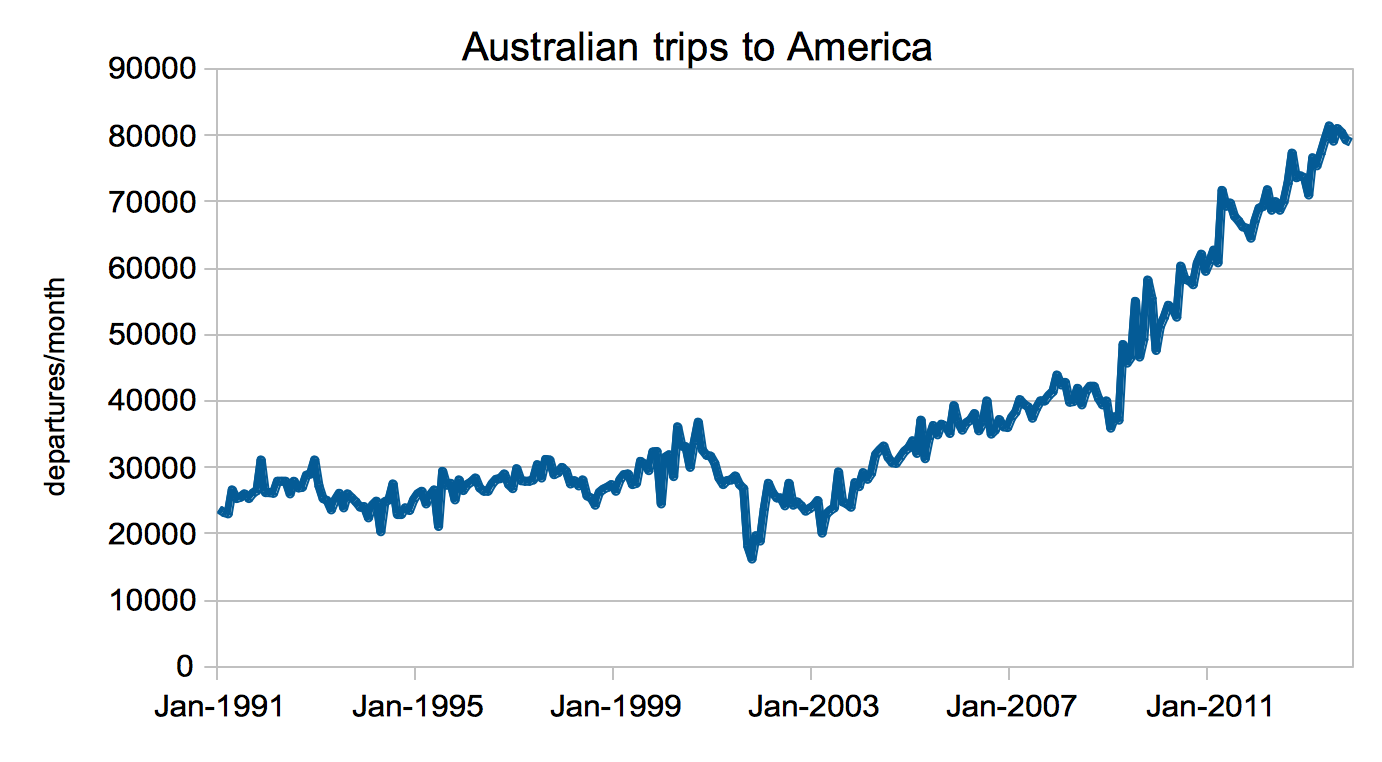
I’ve been three times in the last four years. And I’m not alone.

Screen Shot 2014-01-28 at 11.00.59 am

Part of the attraction is flights that are suddenly very very cheap. When the Qantas/United duopoly on the Sydney-LA route was broken in 2008, the price of flights halved.

home of the brave
Life, Liberty and the Pursuit of Horned Things.

When V Australia entered the market in 2008, their killer price offering was $1899, 16 percent below the existing lowest price. I’ve since seen return flights below $1000.

You can still buy a flight Sydney-LA for just a little over $1300 if you are bold and foolish enough to trust your travel to United. [My last trip to the States involved an unscheduled night in Sydney when someone crashed a luggage cart into our United Jet. Their initial compensation offer was accommodation in Woolongong and a flight 3 days later…]

California is... different
California is… different

At $1300, the appeal of a trip to the US is strong. The politics may be stuffed, but much like China, that doesn’t ruin it as a place to visit. I have been there more than any other country, without feeling like I’m running out of towns or states I want to go to.

mericuh
Where freedom is just a bail bond away!

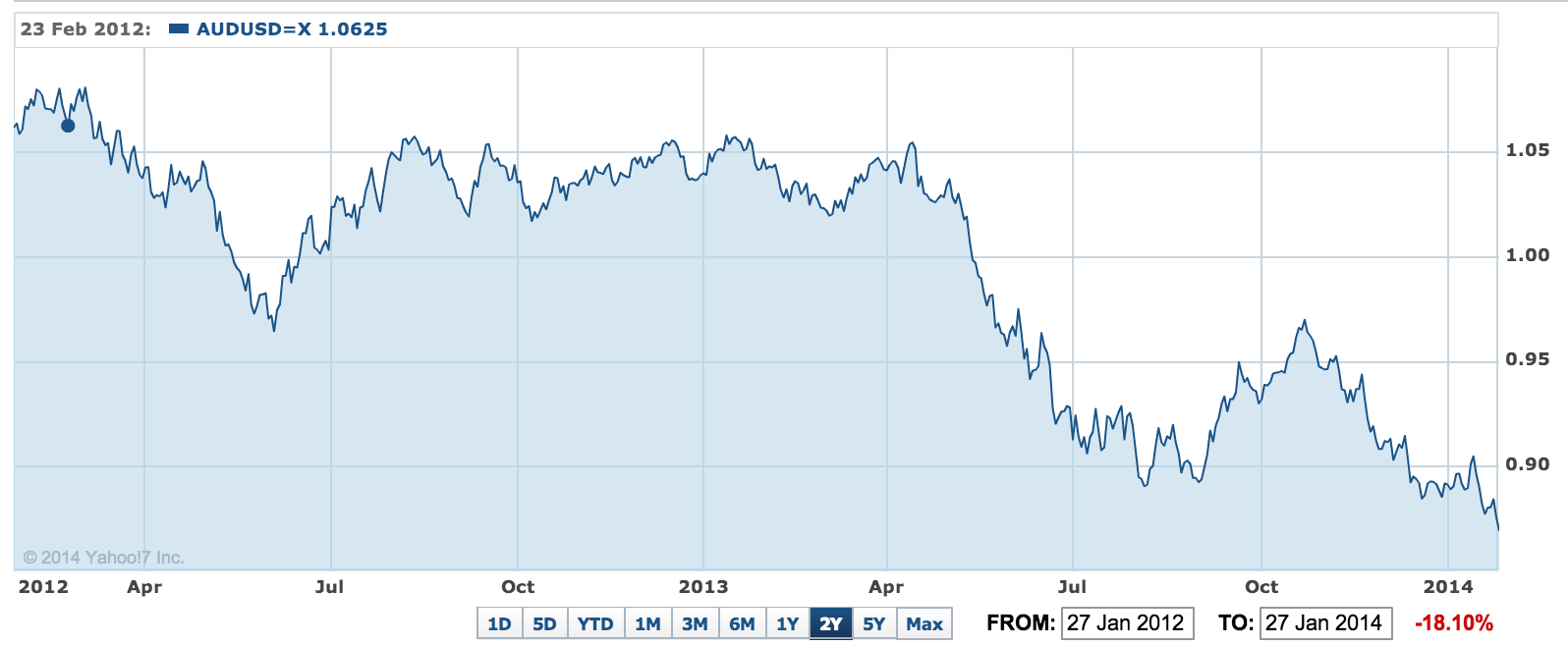
But, sadly, the best time to visit America is now past. The weird period in global financial markets is over, and US quantitative easing is heading (slowly) for the exit. Our dollar might be lucky enough to get back over US90c, but the word parity can now safely be taken by currency writers and put in the top cupboard, along with “gold standard” and “the great moderation“.

Late last week, the Aussie dollar dipped to a its lowest level since 2010: US86.5c.

Screen Shot 2014-01-28 at 11.39.58 am


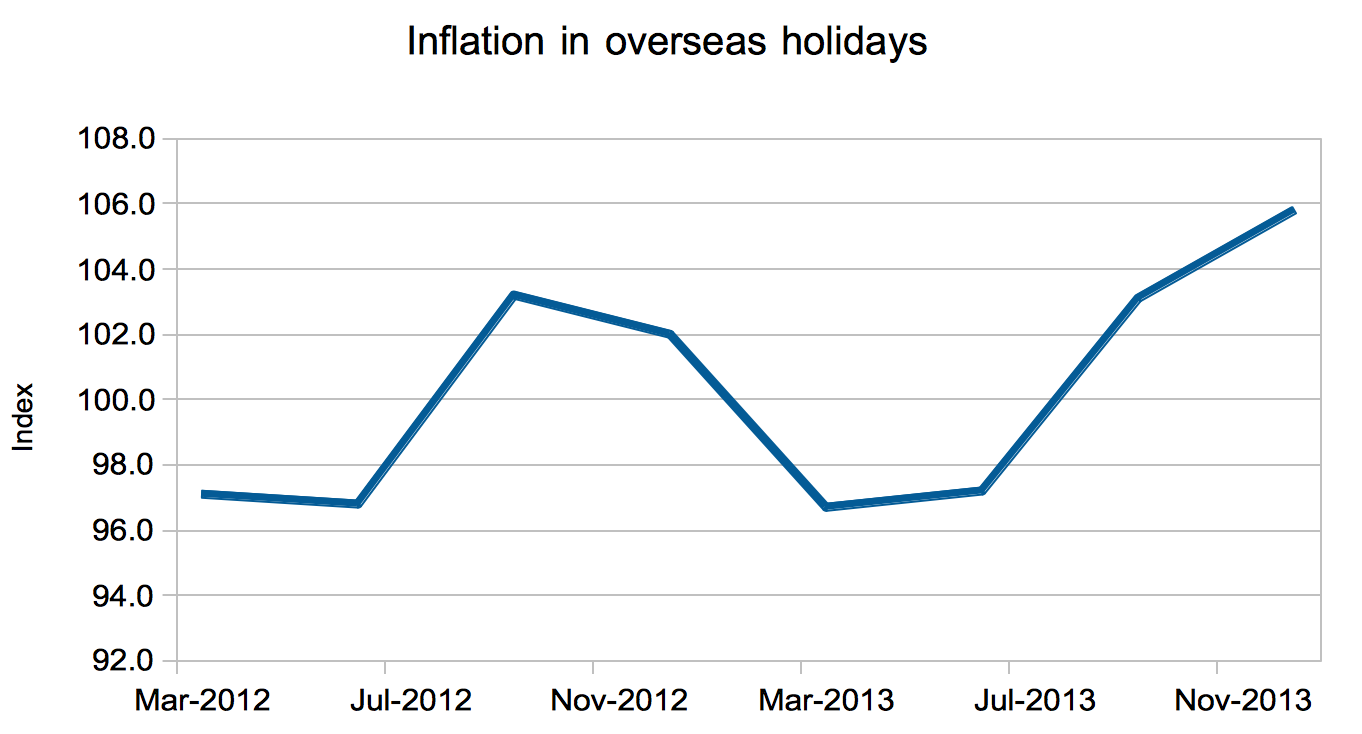
The effect of the falling Aussie dollar is already showing up in the ABS inflation statistics. There is likely to be a lag too, so that might not be the end of it.

Screen Shot 2014-01-28 at 11.45.21 am


So, it’s farewell America.

America, the wind beneath my wings
You were the wind beneath my wings. *sniff*

So what are our alternatives?

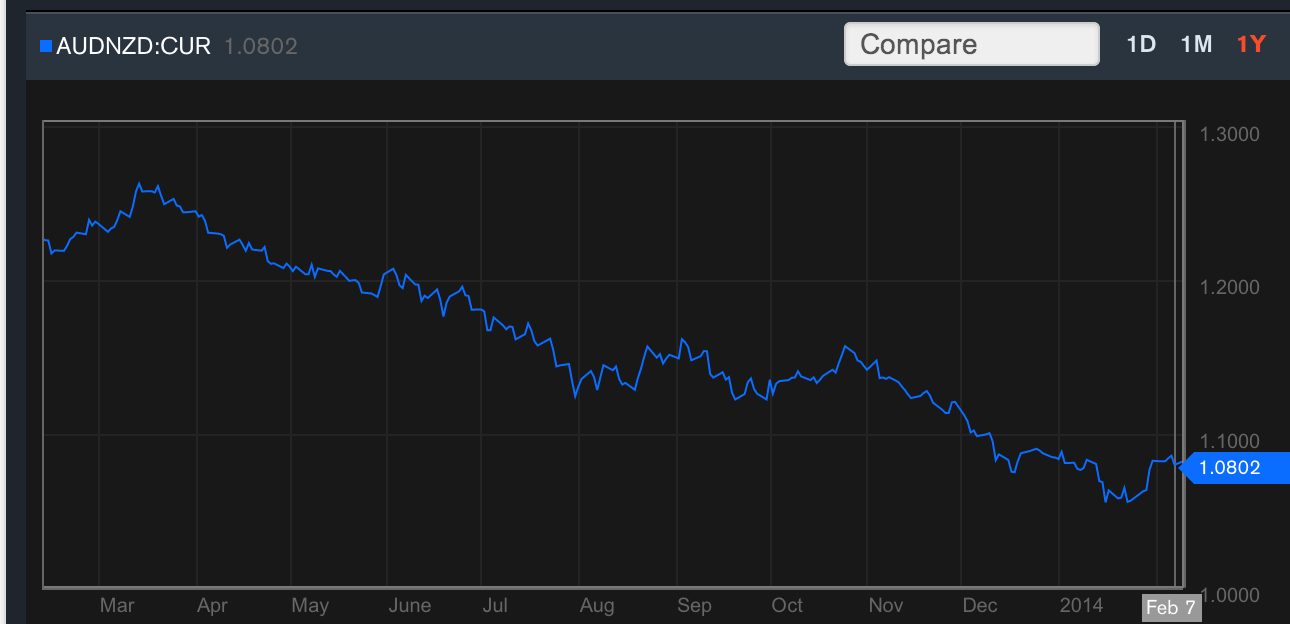
New Zealand is also going to feel more expensive than it has in years.

Screen Shot 2014-01-28 at 11.56.22 am
AUD v NZD

 Europe is just as bad.

Screen Shot 2014-01-28 at 11.59.02 am
AUD v EUR

But luckily, the second-top holiday destination for Australians has  a currency that’s even less popular than ours. In November 2013, Indonesia pipped the US as our second-top travel destination. I predict that by November 2014, there will be daylight between them.

Screen Shot 2014-01-28 at 12.03.33 pm
AUD v IDR

Or, I suppose, if things got desperate, you could always take a holiday in the place where the exchange rate is always 1:1.

sydneyI hear it can be quite nice.

Debrief – failed prediction

In a post I wrote ten days ago, I made an attempt to predict the future.

“I went to the website of a certain sportsbetting company and put $100 on Daft Punk to win this year’s Hottest 100 with the song Get Lucky,” I revealed.

I can now report I lost that $100 backing my own judgment. The song in question came 3rd in the Hottest 100. I had never even heard the winning song before.

Hopefully I have traded that $100 for some useful perspective and humility.

That is going to be an important theme this year as I play my part in the Good Judgment Project. I’ve been assigned to a team and just finished my training.

The training emphasised the importance of putting time and effort into exploring both “inside” and “outside” views of a prediction.

In the case of the 2013 Hottest 100, I over-emphasised the “inside” view. I was so sure Get Lucky was the best track I had heard all year, that I didn’t go and run any real analysis of what sort of tracks won the Hottest 100.

If I had done that “outside” analysis, I would have found a dearth of French disco tracks and a preponderance of  acoustic / folk tracks, such as Mumford and Sons’ Little Lion Man, which topped the poll in 2009.

I may also have noticed a lot of Australian tracks, like Gotye’s Somebody That I Used to Know (#1, 2011) And of course, the killer combo, acoustic/folk tracks by local artists like Angus and Julia Stone’s Big Jet Plane (#1, 2010).

With that sort of analysis to hand, Vance Joy’s win with Riptide is not so surprising.

It ticks all the boxes… except actually having an emotional reaction to it. It doesn’t tick that box.

So, anyway, my forecasting record is reduced to ashes. But, like the legend of the phoenix, all ends with beginnings. One is not going to make progress without making a few mistakes. The important thing is to shine a light on them and try to improve.

China Series Part 5: Is democracy over-rated?

This is the fifth in a five-part series on China. You can see the preceding parts here One, Two, Three, Four.

The achievements of China in the last two decades are incredible.

The share of China’s population living in poverty has fallen from 84 per cent to 13 per cent since 1980.

A nation with an average income of $205 in 1980 now has average income of $6000.

If the world’s aid programs had lifted 400 million people out of poverty, aid policy makers would barely be able to get out of bed for the pile of OBEs, Pulitzers, Nobels, Honorary doctorates, emmys, grammys and groupies littering their house.

Image
Beacon of hope (retired)

These crucial policy changes in China have come while “leading” democracies have spent billions of dollars on wars of whimsy in the middle east, blown up their financial systems, had great big shouting matches over threats to shoot themselves in the leg (i.e. government shutdowns), and put the greatest policy development efforts into “stopping the boats”.

When governments make policy with the “assistance” of the editor of the Daily Telegraph, the appeal of technocratism is huge.

That’s one reason why Australia’s biggest policy success of recent times has been monetary policy. It is set by an independent body, the RBA.

That’s also why Infrastructure Australia was set up, to try to wrest control of important billion-dollar investments out of the hands of here-today, gone-tomorrow MPs.

Just yesterday I read this story at the Federalist about the death of expertise, by Tom Nichols, a professor of National Security Affairs in the US.

“People in political debates no longer distinguish the phrase “you’re wrong” from the phrase “you’re stupid.” To disagree is to insult. To correct another is to be a hater.”

He cites the Dunning Kruger effect, which Wikipedia describes thus:

“unskilled individuals suffer from illusory superiority, mistakenly rating their ability much higher than is accurate. This bias is attributed to a metacognitive inability of the unskilled to recognize their ineptitude”

Are we too stupid and arrogant to be allowed to manage our own government? They say you get the government you deserve, and when I look at Australian governments at federal and state level, I conclude we must have been very bad indeed.

So. Should we look into benevolent dictatorship? The argument is an easy one to make when you are browsing World Bank statistics.

But one morning in late October, as I was about to pass under the Gate of Heavenly Peace in a cloud of smog, we saw a big bunch of protestors being dragged off to one side by Chinese police and secret police. I’d lived in China in 2003 and never seen this sort of thing before.

Then, minutes later, while we were inside the Forbidden City, a car blew up where we had been standing just before, killing five and sending dozens to hospital.

Image

That was frightening. The Chinese government blames the East Turkestan Islamic movement, based out in the majority-Uyghur west of China. They seek independence for a sliver of China near Russia. The Chinese goverment’s behaviour out there has been described by Amnesty as “years of attempted erosion of the ethnic identity of the Uighur people of the region by the ruling Han majority.”

You can’t as easily get away with that in a country with a free press and representative democracy.

Perhaps the most enduring image of Tiananmen square, for me, is these fire extinguishers, which are dotted around. When I saw them, I thought “What for? This square is made one-hundred per cent of stone. There is nothing flammable here.”

Image Then I looked around. Realised what the flammable material was. And I started to feel a bit sick.

China Series Part 4: City-shaping

This is Part 4 in this week’s China Series. You can see the previous parts here: Part 1 Part 2 Part 3 

China has learned many valuable lessons from its growth. Among the biggest: you can’t just respond to demand for a certain kind of transport.

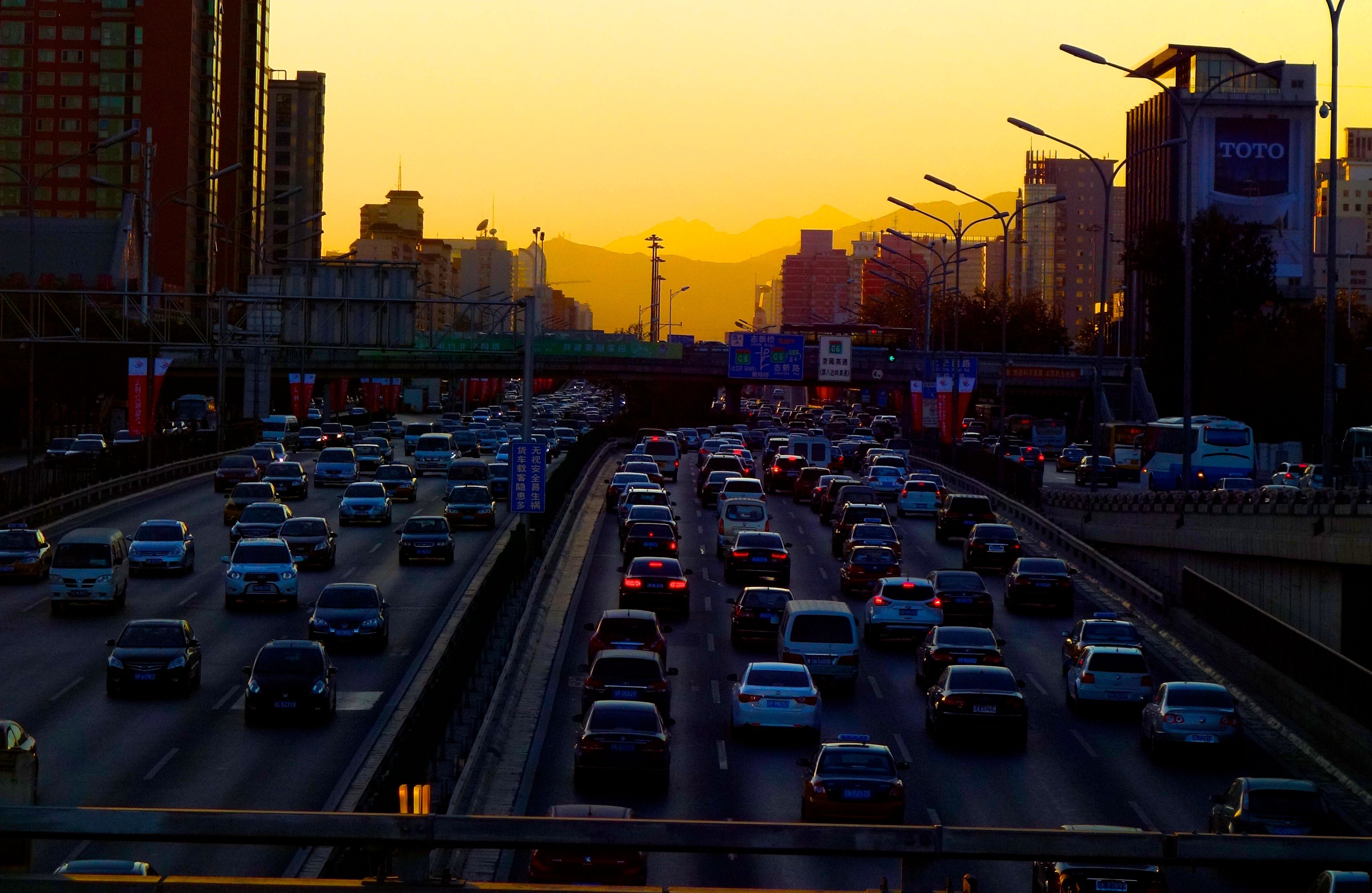
beijign traffic sunset
Too much of a good thing

Beijing built a series of ring roads between the 1980s and today. There are six in the city.

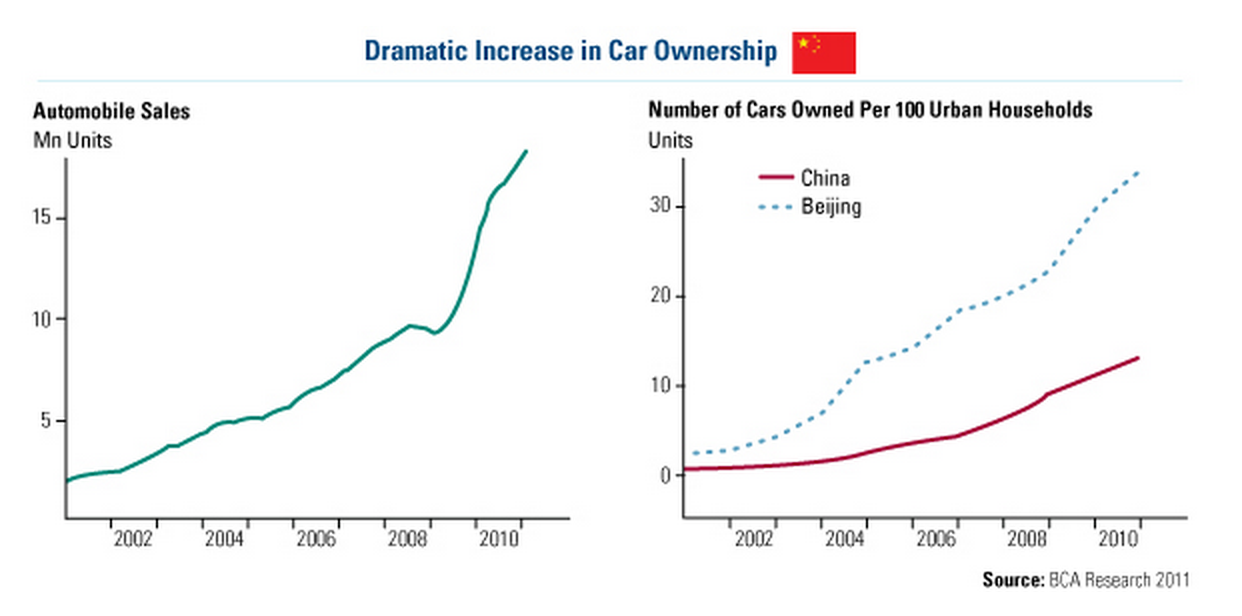
Loads of new tarmac coincided with a boom in wealth. That meant an explosion in car ownership and traffic that got out of control.

Screen Shot 2014-01-23 at 11.48.34 am

China has tried to respond with rules to limit traffic and car ownership, such as quotas. But they have not always worked.

killer smog
Killer smog, 2013

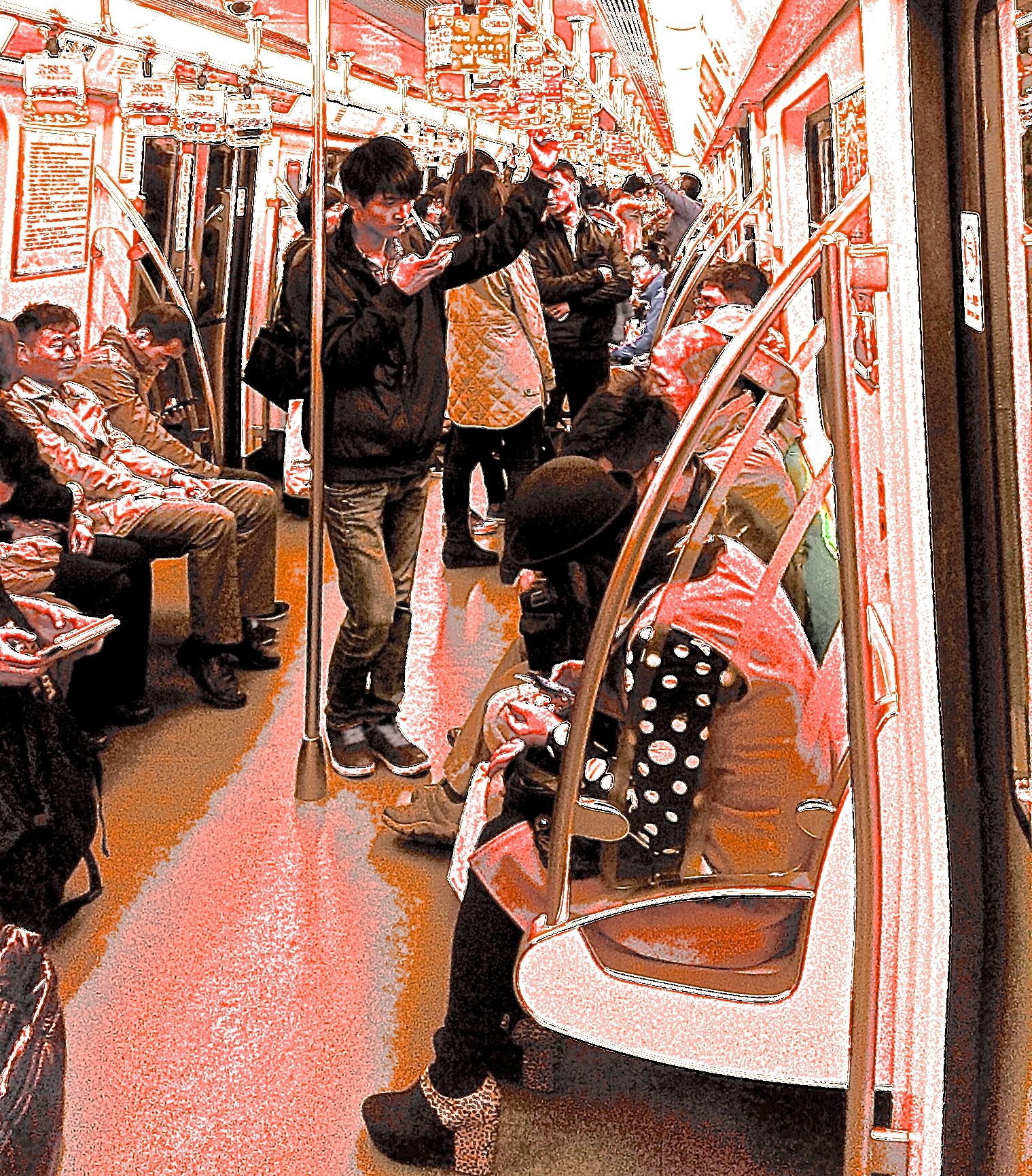
beijing subway interior

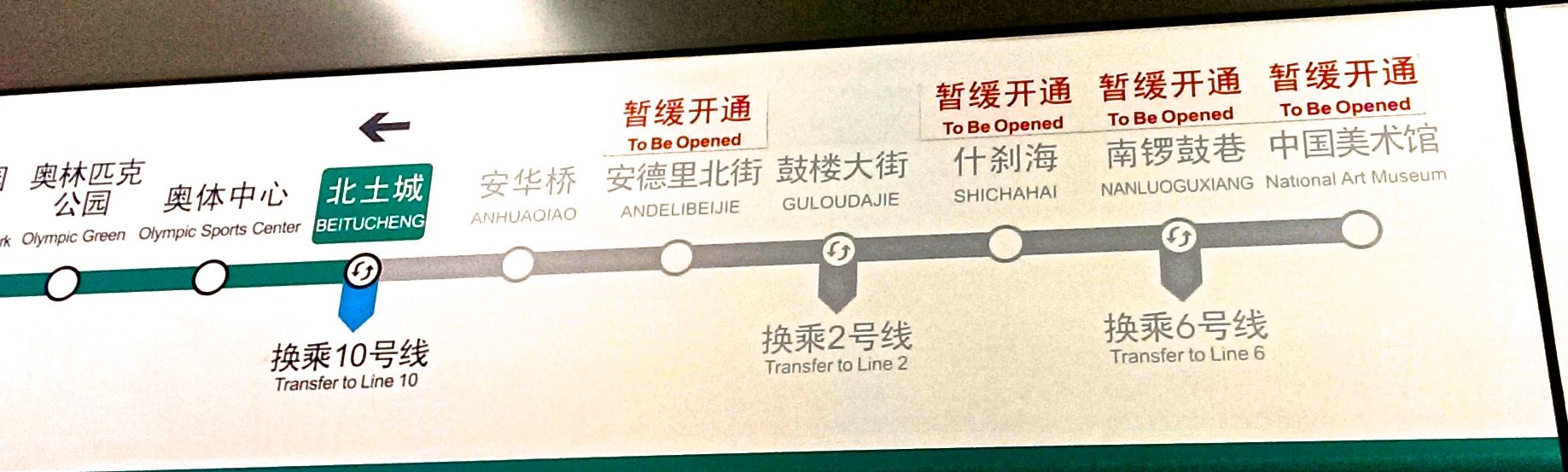
But that does not mean Beijing has given up. When I was in Beijing in 2003, there were just three subway lines. Now there are a dozen.

New stations are popping up everywhere like a game of whack-a-mole. On our holiday in 2013, we picked up a subway map (actually it said subwang) at our accommodation, and it was already out of date.

beijing subwang

This is something Australia could learn from. When you build a road to solve a traffic jam, that road will likely last until the collapse of the civilisation it supports.

Sydney’s George St is now over 200 years old. There are just a handful of examples of freeway removal worldwide. A road lasts longer than a building, longer than the technology that uses it, longer by far than the average road engineer.

What you are doing –  in the long run – is not “solving a traffic jam” but shaping your city.

People like to talk about induced traffic from new roads – “if you build it they will use it.” I don’t doubt this is partly true, but I think the long-run effect of a new road is far greater than whether or not you get your traffic jam back within 18 months.

This is why I am so excited about the prospects of improvements to rail networks. They can also last a very long time, and have long-run positive effects, not least of which is discouraging the building of more roads.

train stations beijingBut while Beijing’s improvements are underway (see right), Melbourne’s are just on paper.

The city-shaping effects of an efficient metro system in Melbourne would be huge. But a great deal of political change will have to happen for it to get built.

China Series Part 3: If You Are The One

This is part 3 in a five part series on China. Part 1 is here, part 2 is here

Last night “tea guy” came on the show and talked non-stop about tea. He may have been on the autistic spectrum – couldn’t listen, kept talking on top of the hosts and other contestants. No wonder he got kicked off.

Oh you didn’t see that episode? I’m talking about If You Are The One, the Chinese dating show that is currently storming the world.

Last night, on twitter, the hashtag #ifyouaretheone was trending higher than the hashtag for the tennis #ausopen.

The format of If You Are The One is elaborate:

24 accomplished and attractive women are arrayed behind podiums. A man comes down in an elevator with music blaring. From the minute his shoes appear, the women can start “turning off their lights.” The man has to answer a bunch of questions from the girls and the three hosts, and he shows videos about himself. If any of the girls leave their lights on until the end, he gets a date. You can watch an episode here.

What makes the show so fascinating is that within a few minutes of his arrival, the male contestant’s score – shown on a big screen – is generally down to about 4/24. It is nail-biting. Then he says one dumb thing and it’s down to 0/24. Then he has to leave. With the demographic imbalance in China, the women are harsh.

It’s like an episode of the Bachelor where all the ladies walk out in the first few minutes and we watch the Bachelor’s bottom lip tremble as he struggles to hold it together.

“Tea guy” who I mentioned earlier, bombed slower than most, because it was like watching a car crash in slow motion.

For the failures, they put up an email address on screen at the end, which interested parties can email in search of love.

All this is a breakthrough for China – the first TV show that has proved to be a successful export. That has the capacity to dramatically change the way we see China.

Soft Power has long been the key to American hegemony. The US is the creative crucible of the world, from Mary Tyler Moore to John Stewart, from Ella Fitzgerald to Skrillex.

China didn’t have that. Monolitihic state-run media strangled the life out of the creative sectors.

And that means people believe things about China that are not true – Chinese people are all the same; Chinese people just love to work; Chinese people are not funny. It’s this last one that gets me the most.

Sure, Chinese people aren’t always funny in their second language. That requires a lot of fluency. But over there, there is a huge premium on being a joke-teller. A night out with Chinese people involves lots of raucous laughter. And there’s an extremely popular kind of stand-up comedy, unique to China, called cross-talk.

China does have cultural exports. It’s just that at the moment, most Chinese icons are from a previous era – the great wall or the forbidden city.

There’s not much out of contemporary China to love. Top Chinese brands are Hai’er, which makes white goods, and Lenovo, which makes computers. They lack the cachet of Miele and Mac.

But “Made in China” is losing its shame. We know Chinese-made products will be of good quality. That can extend to cultural products, not just physical products.

What If You Are The One shows, is that a Chinese PSY (gangnam style), is not too far away. A breakthrough cultural product that reveals modern China to be more than just smog and factories.

On my most recent trip to China I visited the 798 Art precinct in the north of Beijing, a former industrial zone packed with more galleries, studios, craft shops and street art than you could see in a day. (as this blog calls it, the hipster district.) It was amazing. Chinese creativity is there and it is just about to break out of its cage.

Image

The work of Sui JianGuo

China series part 2: The coming crash

This is the second in a five part series on China. You can see part one herePart three is here.

Chinese growth is steaming along.

Source: World Bank
Source: World Bank

But the thing about growth is it seems to lead to imbalances. There’s always something funny building up in the economy and/or financial system.

In 2008, it was US subprime loans that proved the spark for a big global recession.

The 1990s “recession we had to have” was also driven by an asset price bubble following the long boom of the 1980s.

In China, I’m worried about property prices.

China’s property prices have grown incredibly fast. Here’s an article reporting 20 per cent growth just last December.

If you think you can sell property at high prices, you build a lot of it. The world’s media has gone crazy for the side-effect of this: ghost cities. Vast towns where there are buildings but not enough people to live in them.

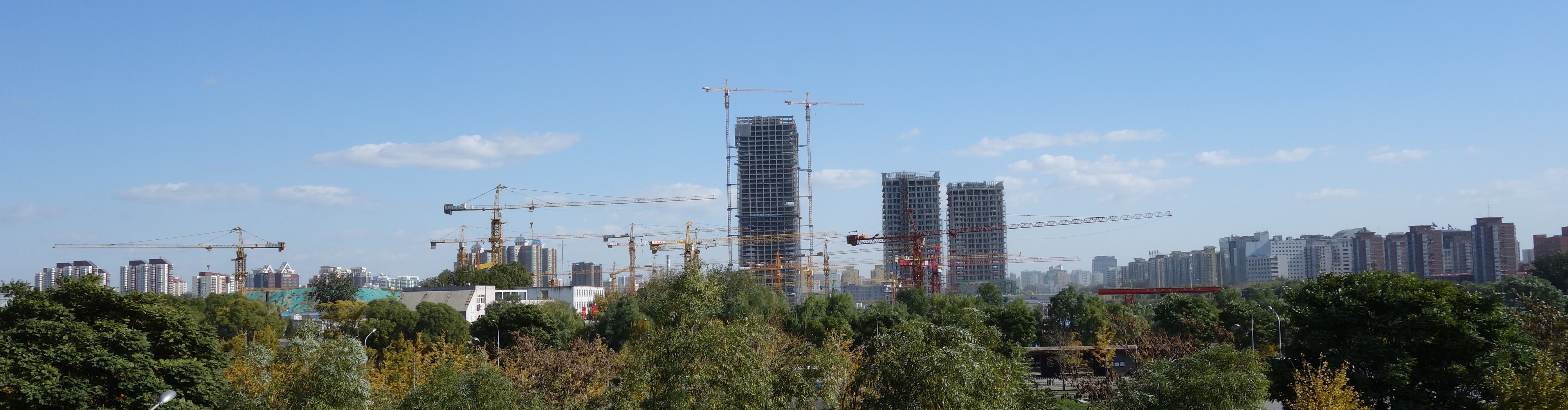
On my recent trip I was gobsmacked by the number of buildings going up in China.

bulding 5
North Beijing
Way outside Beijing
Way outside Beijing
Just off the Bund, Shanghai
Shanghai
Shanghai
Shanghai
Shanghai

Economists are trained to be cautious around their intuitions and gut feelings. The best bits of economics are, after all, counter-intuitive.

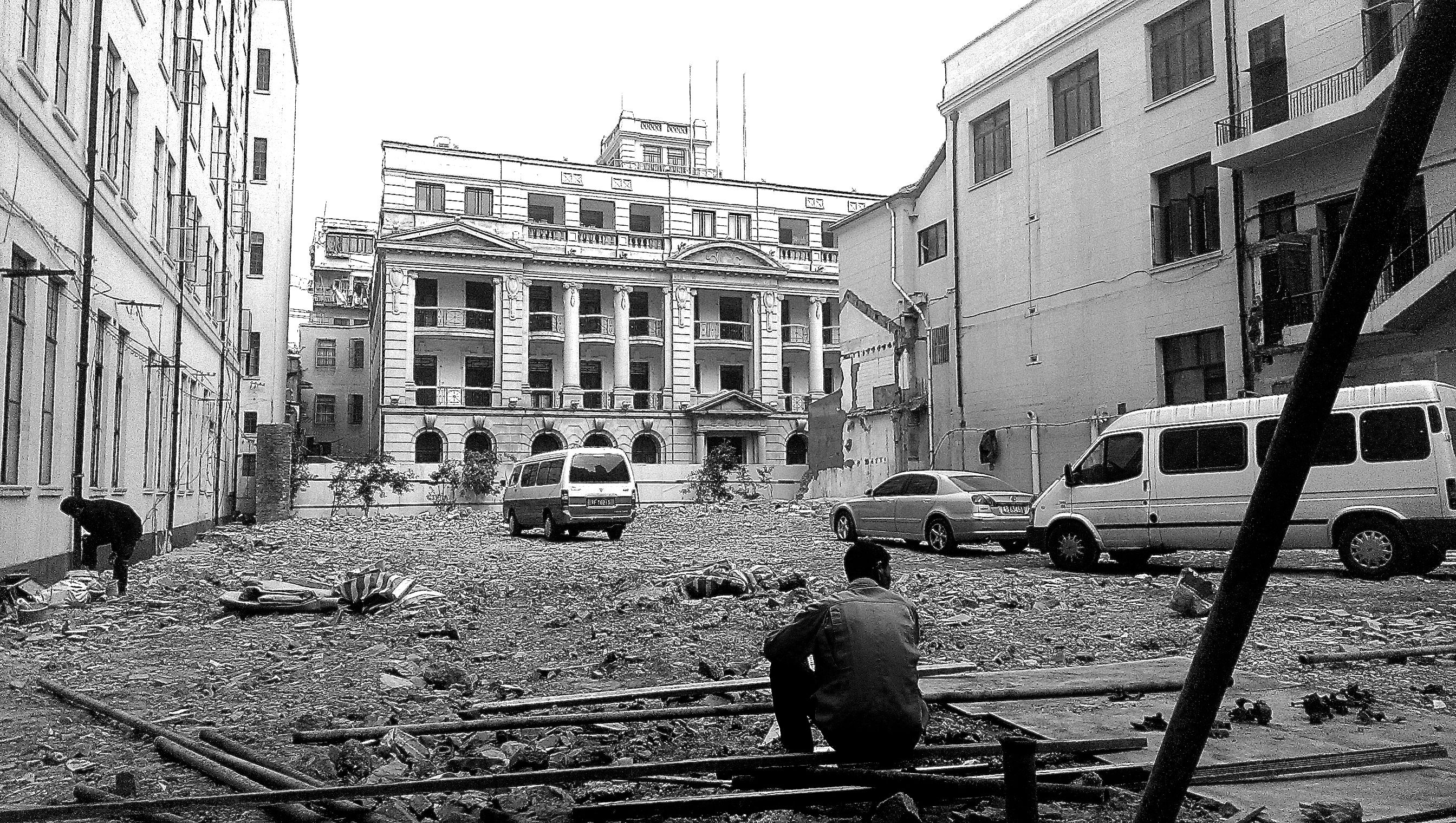
But I couldn’t help wondering what would become of all this building. A lot of old buildings are being knocked down, sure, but if the replacements for two storey courtyard houses are 20 storey apartment blocks, and there is no population boom afoot, the risk of over-building is real.

If China’s property boom turns out to be a bubble, and Chinese growth slows or reverses, the effect on Australia will be nothing short of a calamity. The mining industry and the housing market will do a simultaneous nose-dive. The biggest companies in our stock exchange will lose a lot of their value. Wealth will be crushed, spending will stop, bankruptcy will be rife, firings and downsizing will follow. In short, a recession.

(And if we have Tony Abbott and Joe Hockey in charge at the time, we are unlikely to get an adequately Keynesian response)

One closely watched canary in the coal mine is the interest rate between Chinese banks.

It spiked in JuneDecember, and again this week. The precise meaning of that is uncertain. But it certainly looks like the central government trying to discourage cheap capital flows. So far, each spike has been short-lived.

Here’s a quote from a guy who claims not to be worried, Hermes Fund Managers Gary Greenberg.

“Yes, the property market has overheated in certain areas and yes, perhaps property prices will come down, but it won’t necessarily have a major detrimental effect on the banking system, primarily because the banking system hasn’t been the main funder of property prices.”

The thing about the Chinese financial system is that because the banks are so regulated, people lend money through the “shadow banking” system. That name sounds a little spooky, and so it should.

The Alibaba group offers a savings product that pays 6.7 per cent, compared to the official banking rate of 3 per cent. Managed funds like this have reportedly doubled inside 6 months.

That reminds me of the Pyramid Building Society, which went broke in the 80s. Crazy high rates can genuinely prove too good to be true. If Alibaba is raising capital at a high rate, and lending to property investors, it is worth asking if it could end up insolvent when property prices fall. And it is worth asking if that might spread.

Here’s Ben Bernanke earlier this month reflecting on his big mistake – being sanguine on property prices.

“[O]ur expectations about the possible macroeconomic effects of house price declines were shaped by the apparent analogy to the bursting of the dot-com bubble a few years earlier. That earlier bust also involved a large reduction in paper wealth but was followed by only a mild recession. In the event, of course, the bursting of the housing bubble helped trigger the most severe financial crisis since the Great Depression. It did so because, unlike the earlier decline in equity prices, it interacted with critical vulnerabilities in the financial system and in government regulation that allowed what were initially moderate aggregate losses to subprime mortgage holders to cascade through the financial system. In the private sector, key vulnerabilities included high levels of leverage, excessive dependence on unstable short-term funding, deficiencies in risk measurement and management, and the use of exotic financial instruments that redistributed risk in nontransparent ways.”

China’s shadow banking system has helped propel the country’s debt-to-GDP ratio over 200 per cent. The biggest burst of economic growth in history stretches back to 1975. It will end one day. Probably not in 2014. But it will be worth being prepared when it happens.

China Series Part 1: Beijing’s terrible tourist tram

Since Chinese New Year is approaching, this week will feature a series of posts on the biggest fish in the economic pond. Click through for Part 2, and Part 3

I recently went back to a town I used to live in. Beijing.

They say: “You can’t step in the same river twice,”

Nowhere could this statement be more relevant. Since I arrived on a snowy afternoon in 2003, until late 2013, Beijing has experienced average annual economic growth of 10.4 per cent and changed presidents twice.

P1030139
OLD
DSC00204
NEW

To return to Beijing is to find yourself in a very easy game of spot the difference.

When I emerged from the subway on my way into town from the airport, I was sure I could navigate to the hotel.  But before long my companion saw my confident stride slow, my mouth hang open, my head swivel side to side as I searched for familiar landmarks.

Beijing Dazhalan Hutong
McDonalds DaZhaLan

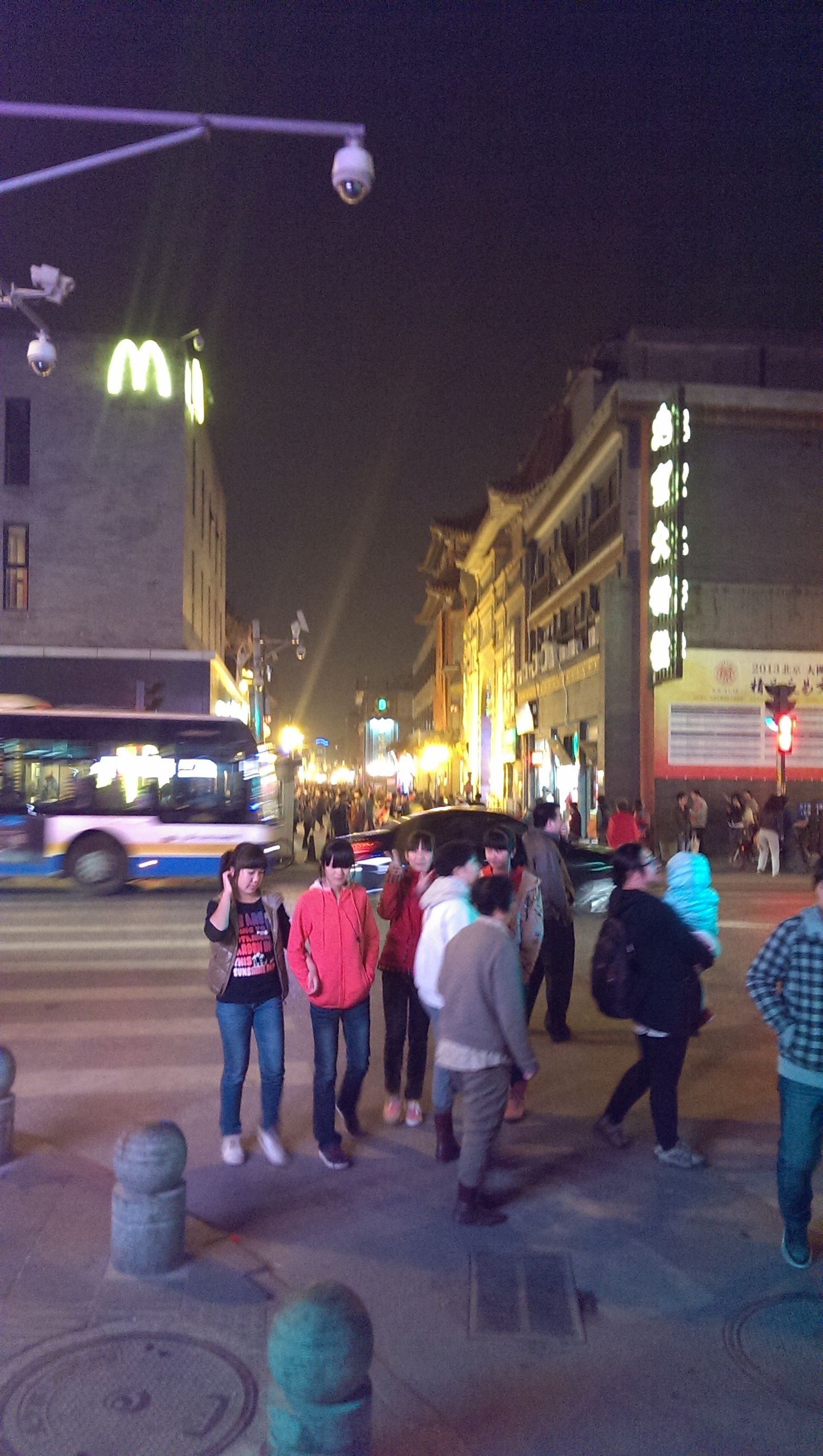
Right in the middle of Beijing, in a place I knew inside out, a brand new six-lane road had been built, right through what had once been an area of narrow alleyways and traditional courtyards. And on the corner of that horrible traffic funnel and one of the famous silk-selling streets was now a McDonalds.

I was upset. I raved on and on about it until my companion put earplugs in.

It was only a couple of days later when I discovered why this disruptive and massive road – Meishi Jie – had been built. And I was suddenly willing to forgive it entirely.

There is another road  two minutes away called Qianmen Street. It lies on the crucial north-south axis of Beijing. If you followed it north, you’d drive right through Mao ZeDong’s resting place, the monument to the people’s heros, the gate of heavenly peace, the centre of the Forbidden City, etc etc.

Despite its feng shui importance, when I lived in China in 2003/04 it was a traffic-choked abyss of unpleasantness. I avoided walking down it when I could.

But now! Now it was a pedestrianised mall. And not only pedestrianised. I could have just about died of delight when I saw, rolling along among the tourists and touts, a tram.

Beijing Qianmen tram
ding ding!

China’s reputation for traffic problems and air pollution problems is well-deserved. As the traffic status of the old Qianmen Street was a bellwether for the state of China across the following decade, so this new, improved Qianmen Street might be a sign of a smarter, more urbanist future. So I thought.

My eagerness to ride the tram was at boiling point. [nb. I am not now, and never will be, cool.] So imagine my shock, nay abject disgust, when I learned that the thing travels just 840 metres and costs 20 yuan.

At today’s exchange rate that’s $A3.77, or $US3.31.  That is not just more than a Melbourne tram ticket ($3.58), it’s ten times the price of the Beijing subway fare (2 yuan).

Even the outrageous San Francisco Cable Car ($5 a ride) is only about 50 per cent more expensive than taking a ride on BART.

In the time I saw the tram rolling up and down, it had at most two passengers. Of course it won’t go broke – it has the might of the PRC behind it.

But the tram is pure symbolism, which has an insidious effect. It undermines people’s views about the true usefulness of that kind of transport. (Incidentally, this is why Canberra should not build a tram. It will run very visibly empty up and down the middle of the city and reinforce perceptions Canberra can’t do PT.)

Thank god China has an undying love affair with trains, or their troubles would be about to multiply very fast indeed.

train stations beijing

I can predict the future

I can predict the future, with the following caveat:

Not all the time.

I’m rather chuffed by a couple of predictions I’ve made recently, and after I tell you about them I’m going to describe the surprising results of some recent research that has me abuzz.

The first thing I predicted was the fall in Apple’s share price when it was heading to around $700 and people were excitedly predicting a price of $1000. No, I did not put my money where my mouth was.

The second thing I successfully predicted was the beginning of the end of US monetary easing, in December. No, I did not put my money where my mouth was.

Image
Would this have happened to me if I really could predict the future?

So, is it possible to predict the future better than randomly?

Research suggests the answer is yes. A Research project sponsored by IARPA (the U.S. Intelligence Advanced Research Projects Activity) over the last four years has assembled huge panels of forecasters. It is called the Good Judgment Project. They get asked hundreds of questions on world events, such as what might happen in Syria, will  a certain country exit the euro, etc.

The Economist describes the big finding of the project:

“The big surprise has been the support for the unabashedly elitist “super-forecaster” hypothesis. The top 2% of forecasters in Year 1 showed that there is more than luck at play. If it were just luck, the “supers” would regress to the mean: yesterday’s champs would be today’s chumps. But they actually got better. When we randomly assigned “supers” into elite teams, they blew the lid off IARPA’s performance goals. They beat the unweighted average (wisdom-of-overall-crowd) by 65%; beat the best algorithms of four competitor institutions by 35-60%; and beat two prediction markets by 20-35%.”

Aggregated forecasts of the Good Judgment Project are submitted to the IARPA forecasting tournament, which they won last year.

I have applied to join the panel of forecasters in 2014, and have sat a battery of online tests, including some very difficult questions! Such as:

True or False, Cuba helped to organize negotiations between the government of Colombia and FARC (Spanish acronym), the Revolutionary Armed Forces of Colombia

and:

the meaning of DESUETUDE

and complete the pattern games:

trauma  tuna          flight  fit          wife  __ a __ __          glossy  gravity

They did political spectrum testing, put me through an ultimatum game, did lots of spatial, mathematical and verbal IQ stuff, and checked basic general knowledge.

I’m excited to get started. The project provides feedback directly to participants on their forecasting prowess as events transpire or fail to transpire. It should serve as a check on overconfidence.

In the meantime, I have one last forecast that I have publicly made. I went to the website of a certain sportsbetting company and put $100 on Daft Punk to win this year’s Hottest 100 with the song Get Lucky.

I mention this here only in the interests of extreme transparency. While to me it is obvious the song is the best of last year, there may be a certain youth and antipodean bias at triple J. Promotion for the Hottest 100 features the teenage Kiwi heavily:

Image

Will that bias the vote? Will I lose my $100? Will that instil new levels of humility in me? That I can’t predict.