With deregulation of higher education fees announced in the Budget, we will see Australian universities put their prices up. The prices charged to overseas students (around $20,000 a year) might only be a stopping point on the way to competing with the global “best”.
Putting up the price of an education won’t hurt demand as much as putting up the price of a textbook.
In a market like this, price is a quality signal that drives a virtuous circle – attracting better students and staff in turn attracts better students and staff. This is why the applications process for the world’s top universities is so competitive.
“Sandstone universities” are likely to be the first Australian institutions to move. But which will move most boldly?
It can probably raise prices without holding too much fear of empty classrooms.
Of course, average incomes in Sydney are even higher, and so are private school fees. But then Sydney’s rental market is tougher.
A uni that wants to call itself Australia’s Harvard needs to drag the best students in from across the nation and the world, not just the eastern suburbs. So far, only the tuition fee cost of university can be put on a HECS/ HELP loan, so living costs will be relevant for many.
I suspect Melbourne*, with its forays into the Melbourne Model, and its previous attempts at setting up a private university, has a lead in trying to distinguish itself.
And other proposed changes in the budget may cap student fees well below the US level, by making Australian students less willing to pay a lot for university.
The government is proposing that the HECS/HELP student loan system use a real interest rate (the government bond rate, capped at 6 per cent), rather than just indexing loans to inflation. This will make student debts rise faster. Experts have speculated that student debts could go over $120,000. Raising prices would only make that even higher.
Of course, higher headline fees can be matched with “generous” scholarship programs. US universities know that a $50,000 course and a $10,000 scholarship is a better marketing proposition than a $40,000 course.
But those scholarship programs don’t change the fundamentals.
The average income of the parents of current Harvard undergrads is $450,000 (source: Thomas Piketty)
The US model of elite universities does not serve the goal of public education more generally. They do not help people get an equal start. They help the advantaged get ahead.
Whether it is Melbourne or Sydney University that takes the crown – and starts getting a lot more attention in our status-obsessed world – or whether it is ANU or UQ, the result will be the same. A more unequal Australia.
[*disclaimer: I went to Melbourne Uni, and I really liked it]
Australia’s economy seemed to be repairing itself, right?
Unemployment was finally falling.
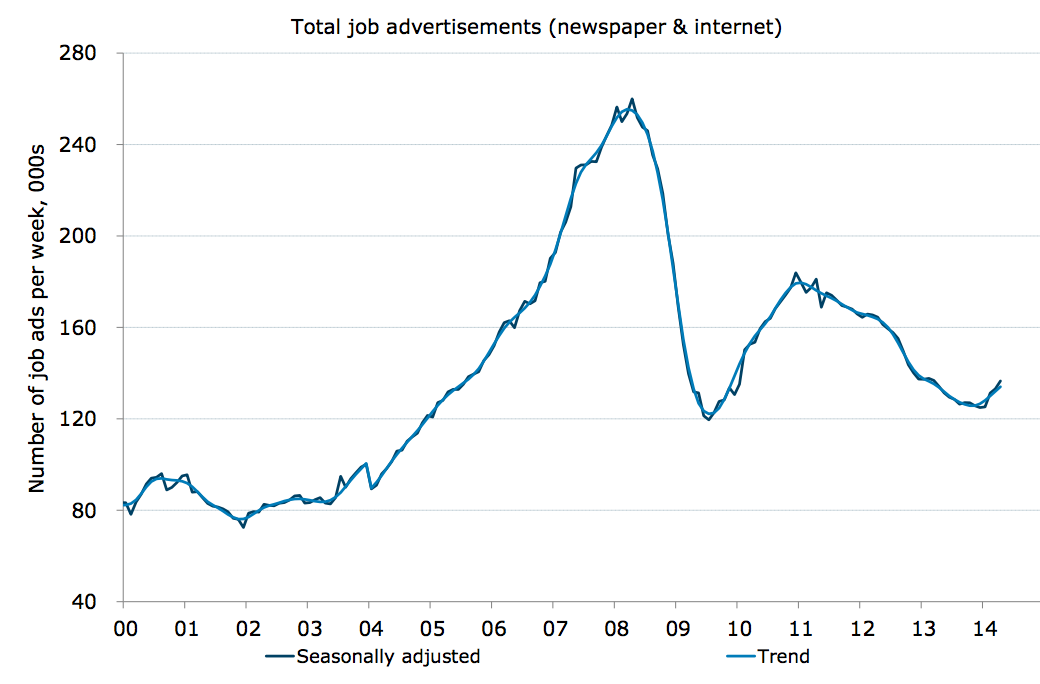
Job ads were rising.
Growth was out of the doldrums.
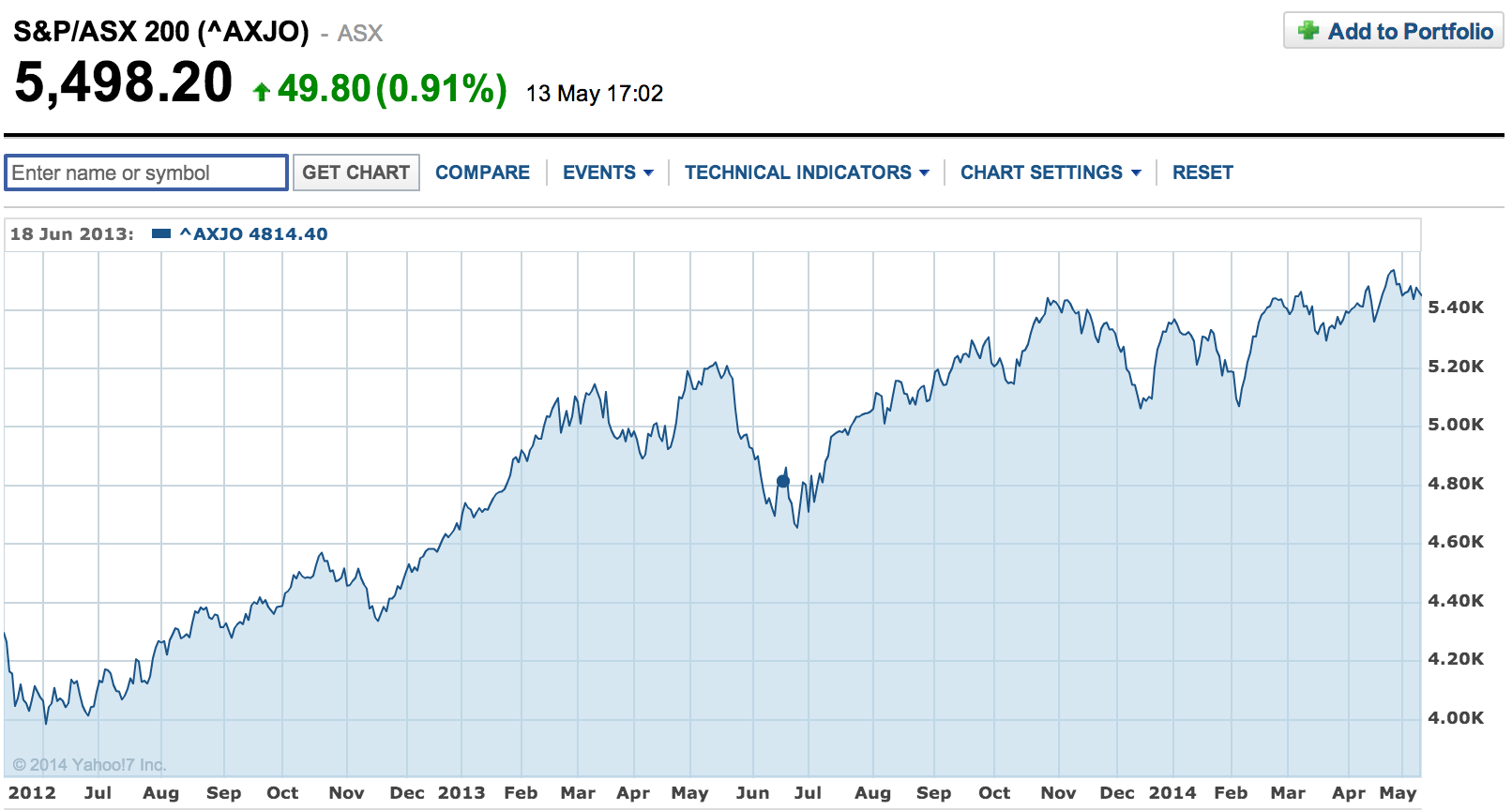
Corporate profits were rising and the stockmarket too.
So how come the Budget forecasts the unemployment rate to worsen?
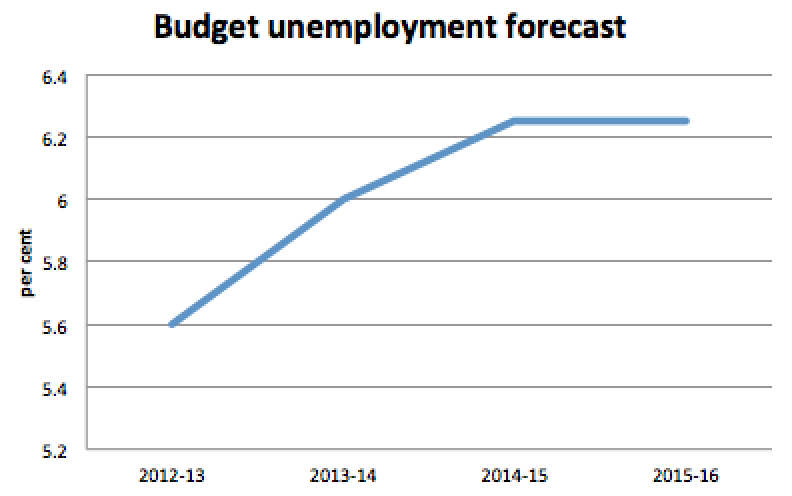
The documents released by Joe Hockey last night forecast unemployment rising from 5.8 per cent up to 6.25 per cent by 2014-15. That would represent around 50,000 people out of work.
It makes this forecast despite expecting a fall in labour force participation and a rise in growth in our “major trading partners,” from 4.6 per cent to 4.75 per cent.
There’s been plenty of good news recently. I thought unemployment forecasts might go the other way. In fact unemployment forecasts haven’t improved since MYEFO, despite this:
“Since MYEFO, the near-term outlook for the household sector has improved. Leading indicators of dwelling investment are consistent with rising activity, while household consumption and retail trade outcomes have improved recently, consistent with gains in household wealth.”
No change since MYEFO? That surprised me. Unemployment forecasts often change between a MYEFO and a Budget. For example, 18 months ago, that MYEFO tipped unemployment of 5.5 per cent in 2013-14. Twelve months ago – at the following Budget – the world looked worse and the forecast was 5.75 per cent.
This time, all the good news since MYEFO seems to be nullified by the government’s surplus rush.
The qualification in this sentence is perhaps important:
“The timing and composition of the new policy decisions mean that the faster pace of consolidation in this Budget does not have a material impact on economic growth over the forecast period, relative to the 2013-14 Mid-Year Economic and Fiscal Outlook (MYEFO).”
You could read that like this: ‘All the good news on the economy in the last six months is about to be wiped out by austerity.’
The Budget talks a lot about lower investment in the resources sector. It notes in passing that non-mining businesses are waiting to see what happens. It doesn’t note that a slashing budget might frighten them out of investing. (There are exceptions of course: a business selling new work outfits to School chaplains would be wise to get a new warehouse, ASAP.)
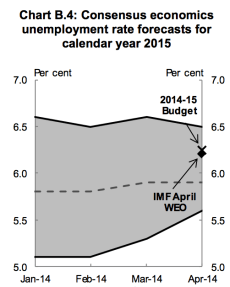
The Budget’s unemployment forecasts are higher than the consensus economics forecast (see chart at right). Perhaps because they wouldn’t cut so hard at the moment the economic recovery is gaining momentum.
All spending helps short-run growth, whether that’s government or private. That’s Keynesianism for you in a nutshell.
The government is apparently allergic to Keynesian concepts of economics. They rail against the spending that flowed during the global financial crisis: cheques for $900, funding for insulation, school halls. All they see is the years of deficits. They can’t see a counter factual where Australia’s economy hit the skids.
But this allergy is now apparently inflaming the ranks of unemployed.
This budget is austere:
“The headline annual pace of consolidation is 0.7 per cent of GDP over the forward estimates. Abstracting from the one‑off nature of the Reserve Bank of Australia transaction, the pace of consolidation is 0.6 per cent of GDP.”
If you’re thinking, “I’m okay because I have a job,” consider this:
“Subdued wage growth is expected to continue until the spare capacity in the labour market is absorbed. The wage price index is forecast to grow by a still subdued 3 per cent through the year to the June quarters of both 2015 and 2016.”
Also know that your taxes will pay more unemployment benefits. Despite cuts to access to the dole, total spending on it is forecast to rise because of the change in the unemployment rate.
Essentially the budget is pushing more people into a position where they need the dole, but then compensating by – for some – whisking it out of their grasp.
Politicians make and break more promises in one electoral cycle than the rest of us manage in a life-cycle.
We call them names and rant and rave. But really, we seem to forgive them, because we rarely vote them out. We know much of what politicians “promise” is actually contingent on several factors coming together.
It’s like hearing a footballer promising to kick four goals on the weekend – there are only a few circumstances in which they can deliver. We, the voters, form judgments about which promises are dependent on the most unlikely circumstances, and which seem more solid.
But even then we can be wrong. Politicians can be very inventive when it comes to wriggling out of promises.
It would be simpler for them to nominate the circumstances in which their promises will be kept, and the circumstances in which they will be abandoned.
John Howard spoke of “core” and “non-core promises” after his election win in 1996. I propose a more nuanced promise ranking, with three levels of political promise. Even the top level has plenty of political escape hatches.
1. Cross my heart and hope to die.Exclusions apply in the case of budget-stretching new priorities that may take the shape of major land wars, significant domestic earthquakes, sharp recession, nuclear attack, or mutations that create mega cane toads. Also not applicable in the case of a minority government. nb. Promised policy may mutate like a cane toad in the Senate.
2. Scouts Honour.Exclusions apply if revenues fall below $400 billion a year, or if expenditure on level 1 promises blows out by more than 15 per cent. Also, don’t expect this to happen if News Limited papers start to oppose it.
3. Best efforts.We will implement this if we can get the National Farmer’s Federation and Friends of the Earth to agree on terms of reference for a report before the winter sitting, and assuming the senate committee delivers its report into the issue before the end of the year. If that report aligns with the advice from the department, then the policy has a chance. But only if you deliver us a pliable senate and the rest of the legislative agenda goes smoothly, company tax receipts look healthy, and no other issues – oh, look, asylum seekers! – capture our attention. In fact, this is more of a second term promise.
I struggled not to write the above in a facetious fashion, but I honestly think this idea – contingent commitments – would be the fairest approach.
We elect leaders because we want people who can react sensibly to evolving circumstance, not just automatons who will carry out a plan long after it ceases to be a good idea.
Stop treating voters like goldfish who will forget not just what happened after the last election, but the very nature of political promises. Contingent commitments would hint at where the government’s focus will be, even in the case of major distractions.
If a political party opted for this, the initial headlines would be predictable. I imagine a media-cycle would obsess over the political party that no longer made promises! It would go global. Everyone from Fox News to Le Monde would get excited.
But if the innovation was developed long enough before an election, the brouhaha, the laughter and the op-eds would quieten down. After perhaps six months, the contingent commitments of one party would force the public to look closely at the promises of the other side and start asking questions like: Will you really deliver that expensive new social policy even if we have a recession?
Sometimes I ask myself if market forces are broken. All over my suburb I get art, totally for free.
An army of workers accept nil pay, terrible hours, and poor conditions to head out and paint each night.
Not only do they work without pay, but they are forced to buy their own materials and if they get busted, the justice system is not kind.
I guess the economists whose models rely on rational actors maximising their consumption never woke up to find this on their back fence:
What motivates these characters? Is it the cash??
Once upon a time, the notion would have been ridiculous. Graffiti was a way to raise your status among people who never had the chance to finish school or get the Benz. There was no money in it.
The graffiti economy works for guys like Cope2, who grew up in the Bronx and illegally painted subway trains for 20 years before cashing in. He sells pieces for around €3000. Banksy is the other case in point – probably the most notable street art millionaire.
Sheaprd Fairey (the HOPE guy) has also cashed in big time with his OBEY clothing line. Even Justin Bieber is dabbling in “street art.”
Then there’s things like this:
Posh dinnerware company asks: has street art jumped the shark?
How has graffiti gone from definitely underground to potentially lucrative? The difference is in the web.
Then the internet came along. I contend that it has done for graffiti what radio did for music. Made some superstars.
The first Melbourne artist I really googled is Rone, who paints pretty girls all over the place and is kind of a gateway drug for graffiti appreciation
Rone and Wonderfresh mural, Wellington St, Collingwood
The guys who I first noticed up around Collingwood and Fitzroy are from the Everfresh Crew. They have an extensive internet presence and advertise services for rent. Oh yes, there’s money in them thar walls.
Collingwood’s Backwoods gallery is also in the game. They bridge “the gap between the street and the gallery wall, whilst remaining authentic to their artists’ history and vision,” by selling prints for around $100.
There’s not heaps of cash in it, but there is certainly the opportunity for travel.
It seems the internet lets the artists who patrol the night control their image, and helps make money from it.
So is graffiti just another culture co-opted by capitalism?
Jetso and Pzor
Not yet. Melbourne’s graffiti scene is arguably dominated by two names. Jetso and Pzor. And this is where you can go down the rabbit hole and end up like me, taking a photo of a dumpster.
If you start looking for them, they are everywhere. Their work tends not to be elaborate pieces but quick bubble-letter throw-ups, tags and stickers.
pzor left, jetso right
They have no website, no instagram, no representation in the gallery scene (as far as I know). Their art is not visually appealling at first. The art is in the effort. It’s hard to find a part of inner Melbourne, east to west, that shows none of their finger prints. Once you start to notice, it’s hard not to admire.
For these guys, there’s no money in it. And that tells you that for them, graffiti is not work. The question I asked above about market forces being broken is irrelevant. For these guys, painting is leisure. They’re doing it for the love of it. I respect that.
Melbourne is an amazing place, and it gets even better if you can appreciate the art that’s all around you. Here’s three amazing Melbourne graffiti artists you should know.
Apparently we consume on average 3.1 kilograms of food and drink in 24 hours. It’s gross to think about.
I’ve gone to the ABS website (or as I call it, the Sizzler of data) and brought you back a doggy bag of sample treats from this survey of 9500 dwellings.
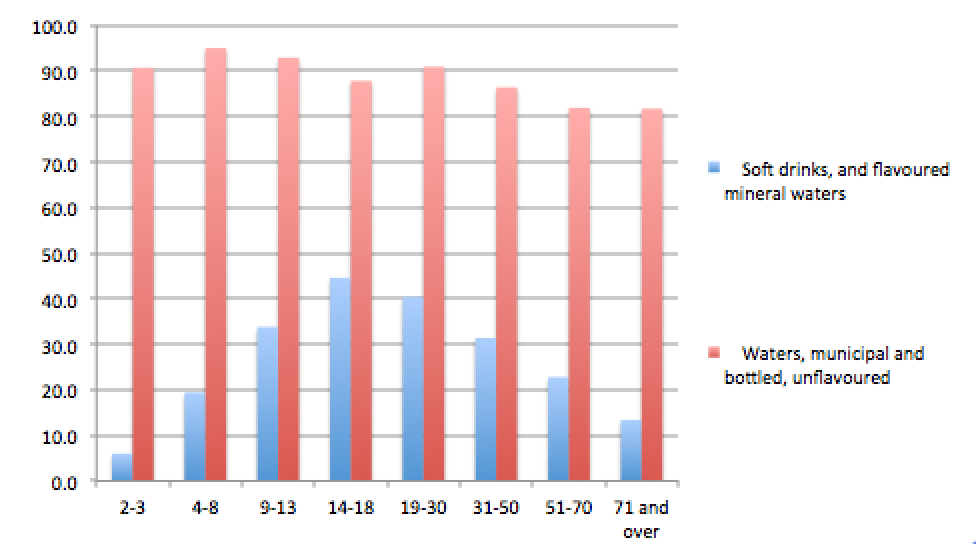
For example, guess what demographic drinks the least water??
Proportion in each group consuming the item in the 24 hours before the survey
The aged! I always imagine them sipping tap water and doing the crossword while muttering darkly about Tony Abbott and their pension. So I’m somewhat amazed. I guess they’re not running 10km very often so perhaps they’re not that thirsty. (Meanwhile, the 14-18 year old bracket loves fizzy drink. No surprises there.)
How about this? Coffee is clearly for people with work to do, while the under-13s and over-71s are busy hosting tea parties.
Proportion in each group consuming the item in the 24 hours before the survey
And how about this one, which shows why you easily sell a bottle of wine for the same price as 24 bottles of beer:
Proportion in each group consuming the item in the 24 hours before the survey
I’d note the ABS probably did this survey during the week, and alcohol consumption is more skewed to the weekend.
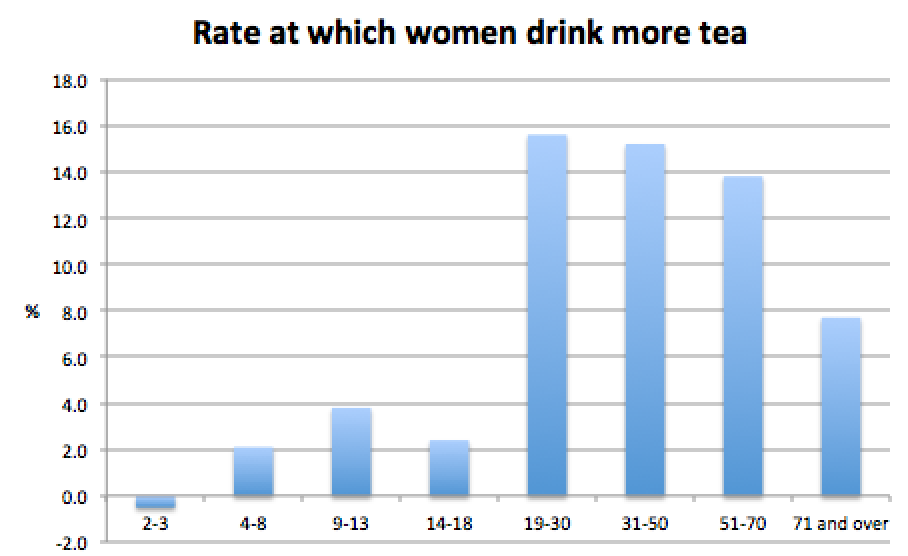
Anyway, the dataset is big and quite amazing, and I was able to run some numbers to see what foods and drinks are more skewed to men and women.
1. The biggest skew in the whole dataset was for men aged 51-70. In that age bracket, men were ten times as likely to have chugged back a brew in the preceding 24 hours. 26.8 per cent of men, vs 2.6 per cent of women.
Differences between proportion of women and men consuming in 24 hours preceding survey
2. The next biggest skew in the whole dataset was from women aged 19-30. In that category, women were nearly twice as likely to have sipped a cuppa as men. 35.6 per cent of women vs 20 per cent of men.
Differences between proportion of women and men consuming in 24 hours preceding survey
3. For food, the manliest thing there is, is breakfast cereal, and this is especially so in the nutri-grain demographic, 9-13.
Differences between proportion of women and men eating the food in 24 hours preceding survey
4. Meanwhile, and lastly For women, the biggest skew is in a little, tiny, unimportant category you’ve probably never heard of. Fruit. Across the age groups, 10 per cent more women had eaten fruit in the preceding 24 hours.
Differences between proportion of women and men eating the food in 24 hours preceding survey
Damnit, men, why’ve you got to be so stereotypical, eating nutrigrain and beer your whole lives and toppling off the perch by having a heart attack?!
Anyway, it’s Friday so I should probably not lecture you any more about this. See you at the pub.
Tony Abbott is throwing his promises under the bus with glee. He promised no new taxes and has now pledged a debt levy and an increase in petrol tax.
He knows how electoral cycles work. Pain and broken promises early in your term are forgotten later:
The 2014 Budget is full of taxes and cuts.
The 2015 Budget will have a few more cuts and be austere.
Then in 2016, election promises will start getting made. “How can we afford these?” people willl ask.
Finally, with an election probably just a few months away, the 2016 Budget comes out. Lo and Behold! Australia’s fiscal position is in surplus, taxes can be cut and the spending can begin.
The press goes into a fury of congratulation over Mr Abbott’s “strong leadership.” Lots of photos appear of him standing outside new hospitals, with a big smile on his face.
To most people, the grumbling of early 2014 is as relevant to the political situation as the result of the 1974 VFL Grand final. Labor can’t get over the broken promises and keeps talking about the past, while Mr Abbott is focused on the future.
Don’t believe me? Evidence for how this works is right under our noses.
The coverage of the Victorian government’s first Budget looked like this:
“THE Baillieu government has been forced to slash more than $2 billion in spending from its first budget in an attempt to insulate the state economy from looming financial pain and deliver on its election promises.
And with Treasurer Kim Wells’ budget predicting a $4.1 billion hit to GST revenue alone over the next five years, the budget also launches a tax crackdown, with 50 new jobs at the state revenue office to raise an extra $235 million.
The Coalition went to the election promising $1.6 billion in savings, but yesterday announced deeper cuts totalling an extra $638 million.”
Coverage of the pre-election budget looks like this:
Mr Abbott is playing the long con. But with a shorter election cycle than was available to Mr Napthine, (federal is three years, not four) it’s more of a gamble. Will it work?
1. Today’s unemployment data show the trend in unemployment is finally pointing downwards. The first time since 2012.
Today’s data were kind of big news. Of course, the unemployment rate fell a lot in March. All the way down from over 6 per cent to 5.8 per cent. So much that it seemed like statistical noise. The fact April has given the same result is amazing.
This means – maybe – you can quit your job and the unemployment rate gets better while you look for a job, not worse!
2. Unlike last month, this result is driven by a lift in full-time jobs, which rose by 14,000.
3. Unlike recent years, the improvement in the unemployment rate is not caused by fewer and fewer people bothering to look for work. The movement in the participation rate this month was rounded to zero.
4. The number of new jobs being advertised is on the up and up. For most of the past few years, Seek.com.au has been an ever more arid wasteland.
But now it is starting to blossom with opportunities. In each of the last four months, the number of jobs advertised in Australia has risen – that’s the best positive streak since 2010. Get amongst it.
Don’t feel bad about quitting your job. It could be good for the economy. This paper suggests you probably will self-select out of a job where your productivity is relatively low. The US even tracks the number of people quitting jobs as a measure of confidence.
“Yes, you should not worry too much about the consequences and you should definitely quit your job that you hate and it’ll probably all work out great. Job quitters are the happiest people around.”
Until the mining tax debacle of 2010/11, the term sovereign risk was used in Australian political discourse very sparingly. The term traditionally refers to a government not paying back a loan, but now is used for all sorts of situations where government is a risk to someone’s business.
Now “Sovereign Risk” is not applied to Africa or Greece, but has become a political weapon to be wielded on policies – or indeed entire governments – with which one is unhappy. For example:
“BHP Billiton, Rio Tinto and most other world minerals and energy groups have now concluded that Australia is one if the most dangerous places in the world to invest. We are going to see a capital strike of immense proportions, which will take a long time and much effort to reverse. And when it is reversed miners will still require much greater returns from Australia because of the demonstrated sovereign risk of investing here.”
Most recently, the concept of Sovereign Risk has been used in a debate over whether contracts for a big road tunnel called east-west link can be torn up. This is a specific kind of sovereign risk, unlike the mining tax issue, where the sovereign is also party to your contract.
But the way governments work these days is in partnership with companies. From welfare to infrastructure via defence and health, government has become more and more entwined with private sector suppliers and implementers.
Governments should avoid flip-flopping, because it will raise the cost of contracting. But where policy change is desirable, changing contracts is also desirable. To fetishise sovereign risk is in many cases to say that policy change cannot happen.
If we make sovereign risk our key yardstick, a horrible political trick will become possible.
Say Labor is about to lose an election and the Libs are promising some expensive policy. All Labor has to do is enter into an expensive contract the Liberals have to honour. Then the Libs can’t implement their promise without going into debt. Liberals look bad, Labor gets back into power.
To me that is obvious. There’s a big difference between cancelling a contract before any work has been done, and reneging on paying a bill after the fact. The latter is clearly bad for a state’s reputation. The former should be acceptable, given some compensation for preparatory work.
The Greens say they’d tear up contracts. Labor says that even though it opposes building the $8 billion road, it would honour the contracts. (The latter position is seen by some as a way of Labor eating their cake and having it too. They don’t actually want to be seen to deprive people of a new road.)
Sovereign risk in contracting with the government is one thing. But blaming the government for changing laws that hurt your business is another.
Anyone doing business in a democracy should know the law is fluid. A smart person can tell what laws might be about to change. (Tobacco supply laws – likely. Tariffs on textiles and clothing – unlikely).
Just as people manage their lives through changes to road rules and tax laws, so companies must manage their business around possible law changes. If a business exists to exploit one small loophole, like selling fireworks in the ACT, then their cost of capital should be higher than a business like Woolworths that will be more resilient to any single legal change.
Of course, changes to law can make investments worthless.
Of course prospective changes to law raise companies’ risk, and thereby their cost of capital.
Of course companies will try to make the legal environment as stable as possible – that delivers the biggest bump to their bottom line.
So of course they want to make the concept of sovereign risk current and valid.
But these companies should remember why they are headquartered in New York and Sydney, not in Beijing, or Havana. In the long run, a functioning democracy is the best environment for stable investments, and in a fast-changing world, policy change needs to be rapid too.
The real sovereign risk is that people are no longer sovereign.
The Victorian Budget, released today, sees the government replacing the planned metro rail tunnel with a “Rail Link” that will stop at Fisherman’s Bend.
The point of the Melbourne Metro rail tunnel was to take pressure off the loop and better serve the city. This does not do such a good job of that, but it does serve Fisherman’s bend.
Is that worth it? Let’s look at a map. The map below shows the redevelopment area, with the station in the middle of the Montague section of the Fisherman’s Bend redevelopment. The four yellow areas are the four sections of Fisherman’s Bend.
As you’ll see below, the new station is not quite as useful as you might hope for a suburb that will supposedly be home to 80,000 residents by 2050. I have followed planning protocol and put an 800 metre pedestrian catchment around the train station (black circle) and a 400 metre pedestrian catchment around the stops of the existing 109 tram (red circles).
Hey! That black circle barely overlaps at all with most of Fisherman’s Bend! What’s going on? [CLICK THIS MAP TO OPEN IT IN MORE DETAIL]It seems obvious that a train station is most useful near the centre of a population cluster. But putting the train station on a link between South Yarra and Southern Cross Stations means it has to be at the eastern end of Fisherman’s Bend (or do a very sharp turn of the kind trains can’t ). That eastern end already has good tram and pedestrian access.
Civilised folk ought steer clear of the forums at railpage.com.au. That’s why bloggers get paid, to do that sort of work for you.
Digging through those forums, the idea came up that Fisherman’s Bend does deserve a rail link. But it ought not be on this train line.
“Fisherman’s Bend should be on a new line from Merri (Northcote) to Newport (Wydham Vale – Mernda line).”
Such a solution would permit the Fisherman’s Bend station to be nearer the middle of the suburb, and further from the area well-served by the tram. The rail link would then cross the river, linking fishermen’s bend to the west.
For a government that goes on and on about the need for another river crossing, this could be a tempting proposition.
They compare the results in two types of local elections:
1. Where multiple candidates are elected; and
2. Where one winner rules.
In the latter, voters opt for clever moderates. But in the former, voters identify hard-cases and elect them.
“We propose a theoretical model where the difference in the quality of elected officials between the two electoral systems occurs because elected legislators have to bargain over policy, which induces citizens in (type 1) elections to vote strategically for candidates with more polarized policy positions even at the expense of candidates’ competence. Consistent with the predictions of the model, we find that elected officials in (type 2) elections are more educated than those in district elections and that this effect is stronger in more heterogeneous villages. We also find evidence that elected officials in (type 1) elections have more biased preferences.”
Negotiation is a staple of politics. Greek democracy was founded on the idea of thesis and antithesis entangling in order to forge synthesis. Our modern-day parliaments are the inheritor of this intellectual tradition.
But negotiating is tricky.
Coming to the negotiation table with a smile on your face and a sensible plan immediately marks you as the loser. President Obama found this out the hard way in his first term.
“When it came time to deal with the expiration of the Bush Tax Cuts, President Obama again immediately abandoned the liberal — and his own original — position of allowing all of the Bush Tax Cuts to expire and started negotiating from the centrist position of allowing only the Bush Tax Cuts over $250,000 to expire. By holding hostage the extension of unemployment benefits, Republicans quickly got their way in the tax talks.”
“I suppose what I could have done is started off with no tax cuts, knowing that I was going to want some and then let them take credit for all of them. And maybe that’s the lesson I learned.”
By his second term, Obama took a hard-line position to negotiating and the Republicans were the ones that copped the blame for the government shutdown of 2013.
For example, Ted Cruz, the barnstorming Republican Senator from Texas who led the Republicans into the debt default impasse (an issue that required negotiation to resolve).
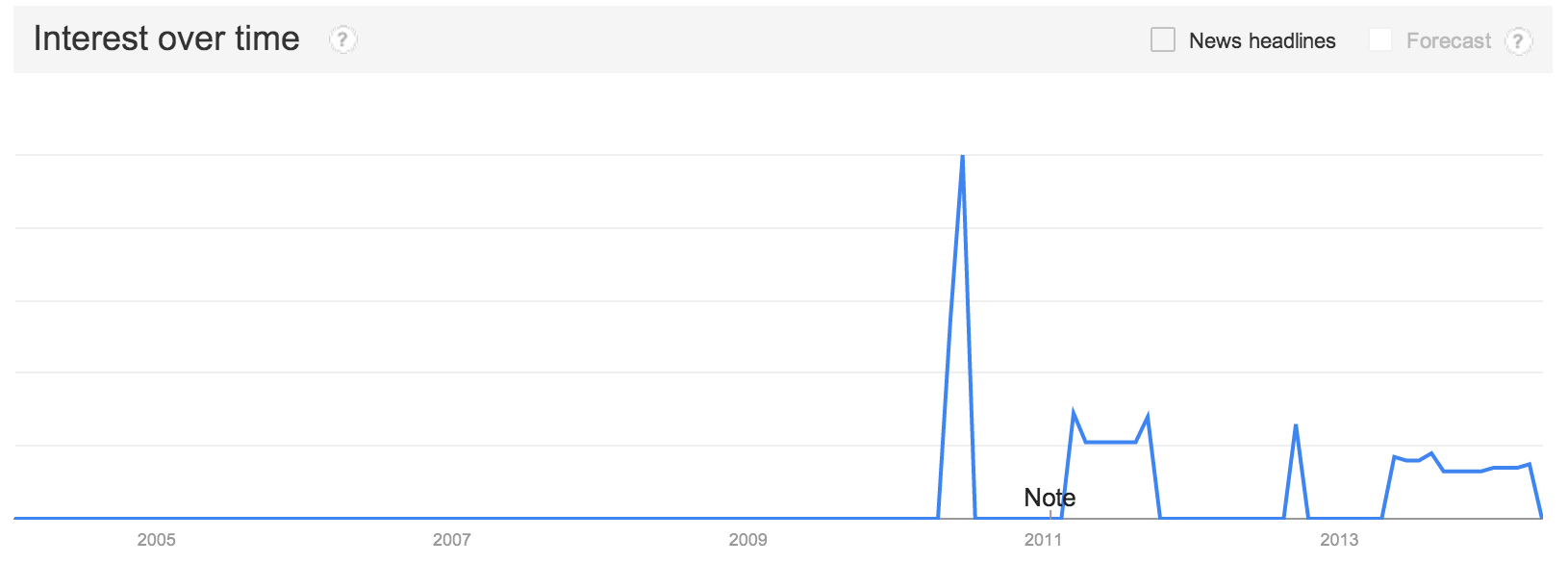
Cruz is described as…, well, let me Google that for you.
Now, Cruz lost the wrangle over the debt default. He was cut out by his own side. But his ploy might have been the only way to win. If the other side thinks you are an idiot before you start negotiating, you’ve convinced them they need to offer something stupidly good to close the deal.
The lessons for Australia are many. The moderates in parliament hold less power than the wildcards. And this is especially so in the Senate, where neither party currently has a majority, and negotiation is far more important.
This may be why you hear so much from the Greens Senator Sarah Hanson-Young and so little from the ALP Senator Carol Brown. The less mainstream your position, the more you can expect to gain in concessions, and so the more favour you can expect at the ballot box.
Evidence the Australian public is savvy on this topic can be found in the most recent Senate election, which sent a full box of Froot Loops to our nation’ capital.
This line of thinking raises two important questions:
1. Does this way of voting represent an inherent conservative desire? If we want to gum up the works of politics, matching the other side’s wildcards with wildcards of our own should just about do the trick. A government system stocked with outliers on the spectrum will create a lot more noise and fireworks than one stocked with moderates, but perhaps just as much in the way of real reform.
2. Where we see moderates elected to rule a system, can we assume this means we don’t expect any negotiation to happen? That if someone seemingly sensible like Bill Shorten is elected to head the ALP, that we expect him to rule it with an iron fist?
I value your thoughts on all this – please leave a comment below!
Thursday night: Special occasion dinner for two at a restaurant. (which boasts a chef’s hat in the Good Food Guide – the Melbourne equivalent of a Michelin star.)
Friday: Peking Duck at a Peking Duck restaurant in the suburbs.
Late Friday night: My partner engages in copious vomiting.
Saturday: She spends the day in bed, speculating about the possible effects of so much Peking Duck.
Saturday night: I discover that I too have a ticket on the vomit comet. I suppose that I also ate an excess of Peking Duck.
Sunday: I spend the day in bed.
Mid-week: Our housemate also falls violently ill. Speculation about the role of the Peking Duck falters and wanes. No decent alternative theories emerge.
Time passes. All recover.
A week later: A missed call from the Victorian Government Department of Health Communicable Diseases Unit. (A frightening voice message if ever there was one).
The lady on the end of the phone is duty-bound to provide no information and engage in no speculation. She’s a bug detective, not a news service. But the questions she asks tell the story.
“I got your telephone number from the booking sheet at Easy Tiger. Did you eat there on the night of April 17?”
“I did,” I said, having an aha! moment.
She then goes on to ask a range of questions about symptoms. She also reads out the whole menu, in a seeming attempt to isolate the cause. She tells me not to go to work if I work in the food industry.
Now. It’s very nice to know that the Victorian Department of Health is out there fighting the good fight. But the fact they are involved suggests a certain level of seriousness. I wouldn’t, for example, report a quick spew to the government. But hospital emergency departments are obliged to.
The fact that we passed the bug on suggests it was not your standard food poisoning, but either norovirus or Salmonella, and the fact the government cares enough to investigate may, perhaps, imply it is Salmonella, which is potentially fatal.
The end point of this, and the part where economics comes in, is what we did next.
Kudos to you if you noticed they don’t match. It seems to be policy to remove accusations of food poisoning from review websites, due to legal issues.
We considered the possible ramifications for the restaurant of writing a review linking them to food poisoning. On the one hand, there remains a chance they are not guilty.
On the other hand, making such a review could do a lot of good. If it prevents somebody with a compromised immune system from eating infected food, it could save their life.
But the long-run effect is also important. If restaurants know they can’t poison their diners without facing the consequences, their food safety standards will improve. (It could be the fault of their supplier, but shaming the restaurant will have an effect back up the supply chain.)
So we left a story on Urbanspoon (a restaurant review website) that delivered the facts, as I did above. A chronology of eating, spewing and taking calls from the Communicable Diseases Unit. Nothing definitive, nothing defamatory.
That has since been removed from the restaurant’s Urbanspoon page (while remaining visible via the users page, which nobody would visit).
“My friend ordered the coconut braised wagyu beef in a soupy broth, which the waitress said, came with a “complimentary” serve of rice. And she never got to taste the broth/gravy, because the waitress took her plate away before she could touch it! My friend had finished removing the beef and putting it onto her plate with some rice. She was going to take a spoonful of broth/gravy, but suddenly a waitress appeared, and without asking if she was finished, the waitress whisked the broth-full plate away!”
If you can’t communicate assertively with your waiter, you get to rant and rave. But if something genuinely serious happens, you can’t write about it.
The quality of food is what marketers call an unobservable product characteristic. You can’t know everything about it before you buy. Firms use signals to try to tell you about these unobservable characteristics. For example, they may set prices high (check), or make very public the awards they have won (check).
But with food, quality has an important dimension. Will it make you sick? This dimension is one which the restaurant won’t signal, and consumers are currently blocked from signalling in the most obvious place.
This blog post is therefore designed to stand in place of all those deleted reviews. I do not know for sure what made us sick, but I do know for sure that I’d like to hear about people’s reasonable suspicions before I make my next booking.
1. Letting states raise income tax to pay for services.
States have responsibility for things people really care about, like schools.
The Commission proposes dividing up the ability to levy income taxes between states and the federal government. (States lost this power in WW2). States would start off with a 10 per cent rate, which they could then move up or down. If implemented in Australia, there’s plenty of reasons to believe this would result in higher taxes and higher quality of services. People move house to access better schools all the time. State governments live and die on stories about ambulance waiting times.
Competitive federalism is a classically liberal idea. But these days one could argue the left, broadly defined, has as much claim as anyone to be the custodian of that tradition. Providing the right amount of government services efficiently is as much a left-wing idea now as right.
You give your money to the federal government they will only spend it on fighter jets and diplomats. You give money to state governments, they spend it on schools and hospitals, roads and transport.
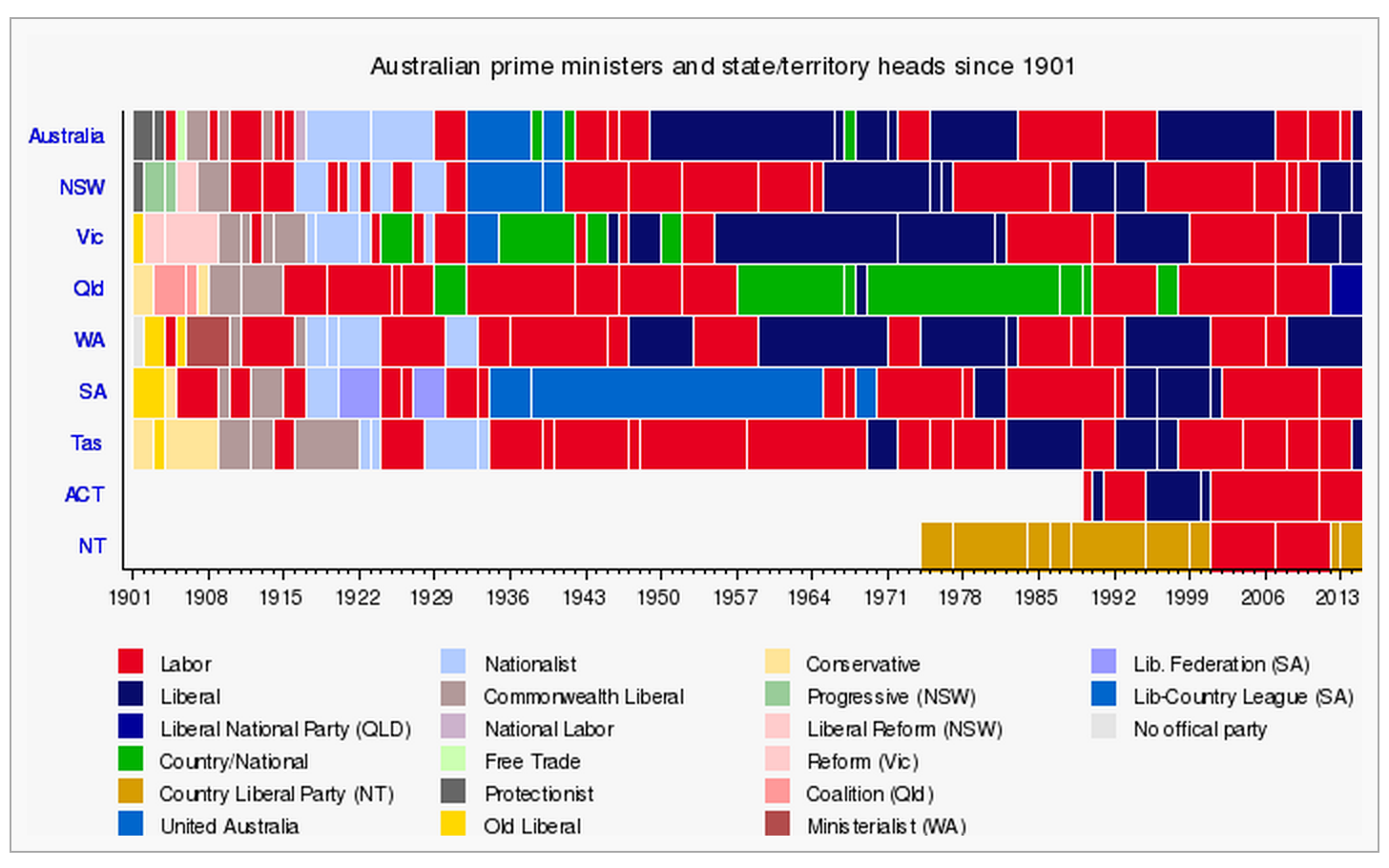
The states have been, in the last 50 years, more red than blue. Anyone who doubted states leaned left before the last SA election got a big surprise when they gave Labor another chance. Putting more tax and spending power in the hands of a demonstrably more left-wing level of government will likely lead to more spending on – and better outcomes in – health and education.
If we had a lot of border towns, there would be big risks of distortion where states had different tax policies. Luckily most Australian population centres are far from the borders. The Gold Coast (QLD) is the closest big town to a border, being 23km from Tweed Heads (NSW).
This idea is the only really big game changer in the whole report. Every thing else is about levels of spending or ownership of entities. This one is about the fundamentals of our Commonwealth, and it is not a bad idea. Locating responsibility for expenditure and responsibility for taxation in the same level of government makes perfect sense. Of course commentators are opposed, and it will be, ahem, looming understatement, tricky to get off the ground.
2. Paid Parental Leave to clock out at incomes of $58,000, but keep the surcharge on the profits of big business.
This week, Tony Abbott cut maximum wage matching for the PPL from $150,000 to $100,000. (I estimated this would impact the payments of around 5400 women.) The audit commission argues it should be far lower, at Average Weekly Earnings, or $57,460. But the tax introduced to pay for the scheme should be retained, it argues, and spent on child care.
No upper middle class welfare, and higher taxes on big business? It’s like Bob Brown himself wrote this part of the Commission’s report.
3. Cutting a promised boost to Defence spending.
The Government, in its madness, has promised to boost defence spending to 2 per cent of GDP. Why 2 per cent? Not because that’s proven to be the level we need to keep the barbarians from the gate, but just because.
The Commission rightly argues we should choose our spending level based on strategic and fiscal need, not on easily memorable even prime numbers. (It then waters down the strategy-first argument by saying the government should prioritise: “reducing the staffing size of Defence headquarters in Canberra, including senior staff, to 1998 levels;”).Nevertheless, the government’s 2 per cent of GDP pledge is a shocker of an idea, and the Audit rightly sends it out on to the firing range where it belongs
4. Benchmarking the ABC.
Now, this one is a bit of a stretch. The government is clearly looking for opportunities to cut. But if you benchmark honestly, and compare the ABC to its peers, you’re going to find it hard to do anything but conclude they are very very frugal and represent a good return on investment.
This excellent analysis finds the ABC spends 14c per Australian per day. The BBC gets 39c per Briton per day. Canada’s public broadcaster also gets 14c a day, but it has advertisements. The ABC, is the runaway winner. The article adds that it is 4 per cent of the price of subscribing Foxtel.
While the ABC pays its top stars up to $356,000, I have it on impeccable authority that ABC Melbourne journalists have to BYO teabags to work.
I cannot imagine how a benchmarking exercise would find anything other than great opportunities to invest in the ABC.
–
The Commission of Audit report contains some other ideas I regard as excellent, like cuts to industry assistance, better e-government and slashing the hell out of DFAT. It also contains ideas I oppose wholly, like restricting access to Medicare, and cutting the minimum wage.
Yesterday the Australian Labor Party made a stir by sending out a request for donations. It wants $95,000 to pay an editor to run its own newsroom.
“It will be no nonsense and it won’t be filtered through the mainstream media,” the soliciting email said.
The ALP move to having its own newsroom makes some sense. The number of “news outlets” that simply regurgitate press releases these days means the writer of a decent press release has considerable power already. Might as well cut out the middle man.
And the ALP is not blazing a trail.
Corporate newsrooms are the new big thing. ANZ BlueNotes is especially visible to me, because on the day I left the Australian Financial Review, two colleagues of mine left to work there – Walkley award winner Andrew Cornell and BRW publisher Amanda Gome. Both people I respect a lot.
“Business communication now has to be increasingly a conversation based on great ideas, new insights and the best content rather than a broadcast by media release, advertisement or brochure. While this won’t replace these traditional forms of communication, BlueNotes will extend and complement them.”
– Paul Edwards ANZ group general manager corporate communications.
Mr Edwards talks about a conversation. Broadcasting is easy. The most challenging part of this, I suspect, is finding people who will listen.
I find the content mix at Blue Notes to be a bit ANZ-heavy to want to visit it. The top stories are mainly by staff and/or about the company. I don’t doubt that that raises the click rate at this early stage of the game – who else will be an early adopter other than staff, shareholders, interested parties? But trust issues loom largest when you are writing about yourself.
So establishing a newsroom can have two goals. Making highly shareable content, or attempting to create, over the long run, a trusted destination for news.
The AFL is probably Australia’s leader in having a corporate newsroom, and it does the latter. But it can do that by writing about itself.
I go to afl.com.au to find out the basic AFL news, like who won the games on the weekend. The reporting is good and timely and includes great video. The issues at stake are clear cut – who won and who lost. (But if you want to find out who got caught drink-driving and who is on performance-enhancing drugs, it’s a less compelling news source.)
But is the AFL a good model for a bank?
The AFL is in the business of making nine simple but newsworthy events every weekend. ANZ is in the business of quietly making profit.
Successfully making loans and having them repaid – while as predictable as nine teams running out winner by Sunday night – offers a far less compelling narrative. A bank can expect to be in the news mainly when things go wrong. It will be interesting to see how BlueNotes responds if there is another big trading scandal, loss or personnel issue.
The Betfair Poker twitter account demonstrates how self-promotion can be perceived as a turn-off, by never ever doing it. It tweets funny content utterly unrelated to the product it ostensibly promotes.
A perception that your branded newsroom is too much like an ad might put me off visiting. But perhaps “visiting” the newsroom is not the point.
These days, stories tend to rise and fall on their own. The statistics for this blog show me that deliberate visitors seeking out the blog provide a low background hum, but the big roars come when a story takes off on social media.
For only the most established online media brands will this pattern be reversed. (e.g. In 2013, even the AFR’s most-read story was driven by a barney on Reddit.)
ANZ’s only way to get major traffic at this stage will be writing shareable articles.
BlueNotes could offer compelling stories to the general public by focussing on disasters inside the bank to which it has exclusive access (unlikely!). It will instead try to pick out meta-trends that affect readers as much as the bank itself. It is doing that to some extent, with stories on shadow banking, for example. But that story is written by a lawyer, and to be honest I didn’t read it to the end.
ANZ can never be Buzzfeed, and it probably won’t publish scandals. That means all the heavy lifting has to be done by imaginative ideas and great writing, all on serious topics. It needs a lot of quality writing. That is a major challenge.
Its trust issues will be greater than ANZ’s, far greater than the AFL’s. Every piece it publishes will be assumed to be propaganda suited more to the pages of Pravda.
But that does not mean it can’t be shareable. Unlike ANZ, partisanship and cheerleading can work to its advantage. Core ALP supporters may be very keen to push its message so long as it is lively.
Like ANZ, it is at risk of principally preaching to the choir unless the quality of the content is head and shoulders above the pack. Quality is key.
And the incentives of a branded newsroom to create content that shines bright is never going to be that sharp. BlueNotes, unlike Crikey, never has to pay its own way. It does not live or die on the love that people have for it. Every story is produced with half an eye on the effect on the brand and half an eye on the appeal to the audience.
So Branded newsrooms must live or die on quality, but their incentives are not as sharply arrayed to produce quality – where quality is defined as things the reader wants to read.
Our washing machine now makes a noise like an angle grinder. It started doing it two weeks ago and the spin cycle requires us to vacate the house or risk our eardrums.
This cannot last, so after ruling out repairs (it’s quite ancient) we are thrust into the market for a replacement.
I have some experience in the washing machine market. I bought a second-hand unit for under $200 a few years ago. It caused regular flooding and I came to know its innards closely as I pulled it apart and refitted the drainage mechanisms every other weeks.
I want a brand new machine, with warranty. How to choose?
My partner had a simple decision rule. Buy The Best. She fixated on a German brand, Miele. I was all for it until I heard about the $1500+ price tag.
I had a more complex decision rule. Satisfice by balancing off energy and water efficiency, online reviews, price, etc.
We had some stern discussions about whether “value” might mean replacing a washing machine again in seven years time.
In some ways my decision rule was worse than hers. It doesn’t simplify the question very easily. It doesn’t rule out enough to get me toward an answer.
In the end, we settled this the old fashioned way: We had someone who subscribes to CHOICE email us the guide to Washing Machines, picked the top recommendation, then Googled until we found a retailer offering a good price.
CHOICE is a body that compares products for consumers. The fact it exists points to a real problem in our economy. As the range of things on offer explodes, we increasingly cannot tell them apart.
Don’t blame the companies that sell and market these things…
The problem with our economy is us. We buy products when we don’t understand the benefits. We are easily convinced that the benefits the product spruiks are actually the benefits we seek. We substitute decision rules (aka heuristics) for actual analysis.
Do I want to Lie Flat on the way to Perth? Do I want to Control my Income using Annuities (to take just two examples from ads in a magazine I have here)? How can I know if some other aspect of my trip to Perth or my income is more important?
Smart people recognise that they can’t be sure of what they want, so they outsource the making of decision rules. That’s where CHOICE comes in.
But really, it’s just more mauvaise foi. We tell ourselves that the criteria Choice uses are the important ones. That the way they balance those criteria are the right ways to balance them.
We can never know in advance if a product will be right for us. Whether it’s a chicken sandwich or a four-storey house in Mayfair, we buy with our eyes closed.
This would be fine, if we recognised the issue. But consumers are sure they know. When we make a heuristic that says – I buy this brand of muesli because I got it last time, we don’t admit “the benefit of finding a better muesli is worth less to me than the cost of searching.” We say: “This is my favourite.”
We refuse to admit or acknowledge the doubt around goji or chia seeds or whatever, because the certainty of buying and eating them is so much more appealing. The problem with the economy is us. And there’s no real chance we are going to change any time soon.
As for the Washing Machine, in the end we chose the Bosch WAP24160AU. Fabian from the Good Guys in Preston is going to fix me up with a great price.
“Good decision. It’s the best machine there is,” he said.
Tony Abbott is floating a special deficit tax. If you earn over $80,000 you’ll be up for an extra $800 in tax next year.
Here’s four reasons it’s a bad idea, (and one reason it’s not so bad).
1. We do not have a Budget Emergency. Yet. Our deficits are small and our debt is manageable. What we do have is a looming structural trainwreck as health spending rises while labour force participation falls. A short-term Budget deficit tax fixes the non-problem, while ignoring the real problem.
2. Raising taxes while the economy is in poor shape won’t help the recovery. Australia’s growth has been meagre and our unemployment rate rising for most of the past few years (with a blip down in April’s numbers). Smart economics says to spend more and tax less when you’re trying to induce a recovery. This is Keynesianism.
4. If we are so allergic to a deficit of a few billion, we may never borrow again. With Australia’s long-term government bond rate at 3.93 per cent, borrowing is cheap right now. If we are ever to build any infrastructure round here, we need to borrow money. (Infrastructure costs a lot now and pays off in the long run, so if buy it using cash current generations subsidise later ones). Insufficient borrowing will mean the country comes crumbling down round our ears.
BUT
5. It’s hard to imagine Treasury proposing this idea to the government, except perhaps as a second-best alternative to slashing a lot of programs, and only if the government was hell-bent on returning to surplus immediately. Where you do discern the fingerprints of the department is in the progressive design of the tax, that would mainly slug high-income earners:
Hitting the high income earners may work for Mr Abbott politically too. He hurts only people who are likely to vote for him anyway, keeping western Sydney sweet. That means the people with the highest tendency to consumer their income won’t be hurt, so the economic effect of the tax will be more muted than if it were shared equally.
Google released a new smartphone game called Ingress late last year.
It’s extremely sophisticated, and very addictive. But it’s also very off-putting and not that popular.
Let me explain.
I downloaded the game knowing nothing about it . I was looking for a puzzle game to occupy a few neurons, and the Google Play Store suggested Ingress.
I opened the app and it said to navigate to the nearest “portal.” “Walk,” it told me. I tried shaking the phone, dragging the icon, double-tapping, everything I could, but I couldn’t get my icon to move.
Then a realisation dawned. Walk meant walk. It wasn’t really a puzzle game at all.
Near a blue portal
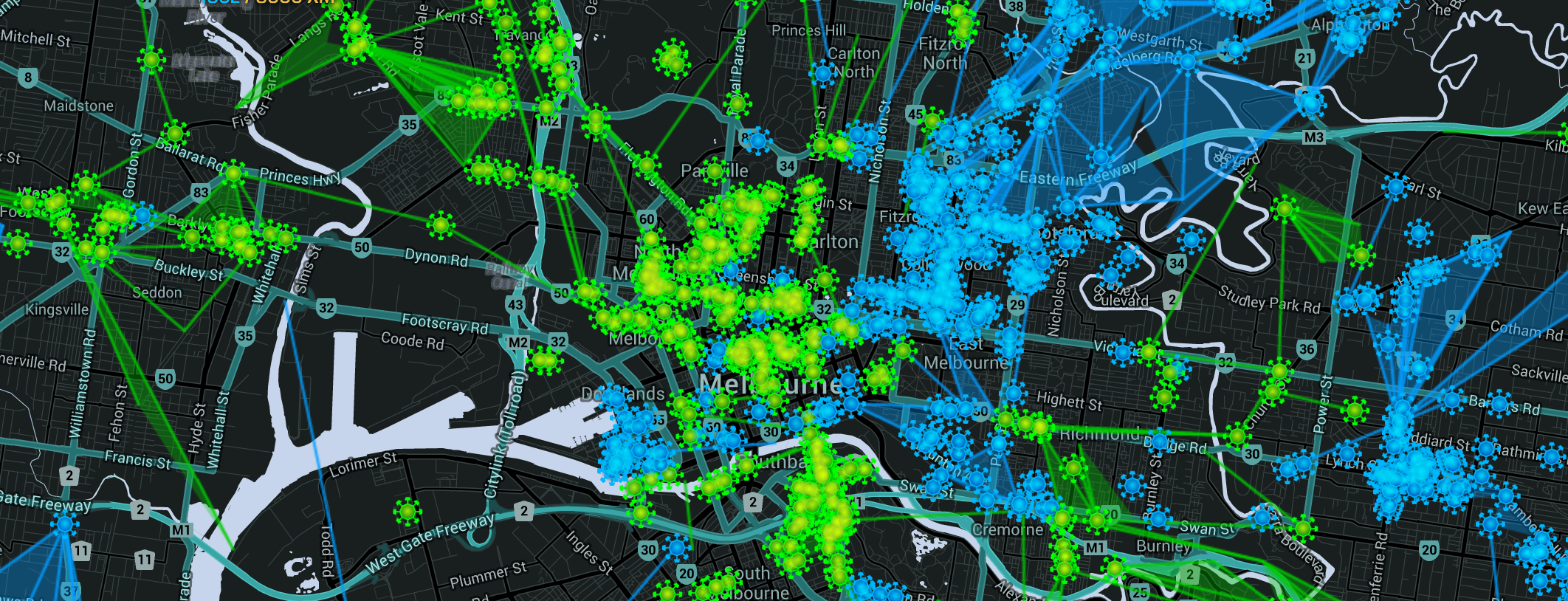
The game is an augmented reality game, built on top of Google Maps. You have to move around in physical space to play. Part of its appeal is getting people out there in the world interacting with “portals” that are almost always on public art or historic parts of the city. There’s an elaborate back story about exotic matter spilling into the universe.
But the game is dreadfully designed for mass-market impact. It is absurdly complex and hard to learn. In the first hour I played it, I twice put my phone back on my pocket out of frustration, swearing to never again play. (Obviously, these sworn oaths wore off).
It’s a team game. The portals I mentioned have two functions. First, you use them to get items you need to play. But second and more importantly, you can convert the portal to your team. There are blue and green teams and they compete to capture these portals.
My computer-game obsessed friend (who works for a computer game company and spends his life playing games) says he finds it not too complex. But I took a couple of days to feel like I knew what I was doing. Then it took over a week to no longer make mistakes. It does not fit the chess mould of “a moment to learn and a lifetime to master.”
There are six different actions you might take at a portal (hack, deploy, recharge, mod, link, fire). There are also around 40 different items you can collect from a portal, and rules about how and when you may use them. The game grows even more complex, verging on annoying, when you first try to learn how to link portals to make some “fields”. (Ostensibly this is the primary goal of the game.) Check out this YouTube video on field theory if you want to be put off forever.
How Melbourne looks through the eyes of Ingress
The language of the game is wholly foreign too. You need to learn about resonators, XM, AP, XMP bursters, multi-hacks, glyphs, and portal keys. The way they all work is not intuitive. Once you’re over the learning curve, of course, these are terrific fun. But that curve is very steep and the language is off-putting in another way.
The game is inherently nerdy. The set of people willing to scale the learning curve will be limited to those who are interested or experienced in gaming and science fiction.
One of over 200 items in my inventory
Trying to describe the game dynamics to others has led to a lot of blank stares (blank with judgmental characteristics). Just the words “hack the portal” are enough to turn 99 per cent of people off. But the fundamental concept of walking around, visiting new parts of your neighbourhood and capturing territory is something that could appeal to anybody, young and old, male, and even – wait for it – female.
All this is relevant because the game works best – is most competitive – when there are lots of players. This is a concept known as the Network Effect. As the number of people involved in a network rises steadily, the usefulness of that network rises exponentially. The game at the moment – in Melbourne at least – is a little static and features a few names popping up time and again.
Google could win over a lot more players quite easily. And that’s why this blog post is more than just a whinge on a fringe topic, but an idea that could be quite powerful.
Imagine an interface for Ingress that, instead of Enlightened vs Resistance, was Kittens vs Pirates.
Instead of “portals,” you’d have castles. Instead of “hacking” you’d “visit.” Instead of links, you’d build walls and instead of fields you’d build Pirate Lairs or Kitten Sanctuaries.
Instead of “resonators” you’d have kitten guards, to guard your kitten castle. Weapons would not be XMP bursters but a sardine catapult, to distract the kitten guards. Make the graphics cute and that would also go a long way to giving the gameplay more appeal.
The game mechanics needn’t even be simpler, because the familiar and more welcoming tropes would help people come to grips with them. This would be an example of Skeumorphism (like using a picture of an envelope to represent an email). A proven technique for acclimatising users to a new interface.
If Google brought this in as a new “skin” for Ingress they could break into larger demographics. The best part is that they would not have to lose the original skin. The two games could be wholly integrated. The original players could still see Kitten players as Blue and Pirates as Green, and have no idea they played the game quite differently.
If that helped broaden the appeal, even more skins could be launched. Beatles vs Rolling Stones. Manchester United vs Barcelona. Plants vs Zombies, or Democrat vs Republican. Whatever. The bulk of the coding work must be in the game mechanics (which is excellent and rarely crashes). I’m sure inventing a new interface would be a relatively minor challenge.
The concept could be extended to other areas in which big data might be useful.
A game that entices people to submit driving data, for instance, diet data, or maybe shopping data. You could multiply the number of interfaces available until you have a good sample of people involved. Games work beautifully for data collection because they are wholly opt-in. Companies or organisations that want certain demographics to do so could tweak the front end until they find a recipe that lures them in sufficient numbers.
I’ve written before on the National Broadband Network, under the following headings: National Broadband needlessness. National Broadband Nuff-Nuffs.
I believed the cost of the NBN was too high, the case for it had not been made, and the idea of rolling out fibre to every premises failed to recognise the differences in need between certain types of premises.
Also, I wrote this:
“I think there is a cap on how much data we can consume. No doubt data demand is increasing. From 286 MB/month in 2000 to 14,909 MB / month in 2009. But this is a result of moving real-world activities like photos and video onto the internet. YouTube’s audience is double that of the three big channels broadcasting US prime-time TV.
Data demand is limited by human constraints. Pixel demand is limited by the size of screens we can fit in our homes, audio quality demand is limited by our hearing and demand for video is limited by the number of waking hours in the day.
Camera megapixels are a good example of this. For about five years after the advent of digital cameras, the number of megapixels available grew exponentially. But then it plateaued at about 10-12. For the majority of people the marginal benefit of more and more data wasn’t worth it.
Similarly, telephone call sound quality is abysmal and noone cares. Most of the value is in the existence of the link not the quality.”
Well, the data is in, and while I hold fast to my fundamental point about eventual data satiation, that point looks far away. Data demand is nine times what it was five years ago.
There’s another point to make too. Both this data set and my analysis above are obsessed about downloads. But that’s not the only thing that happens on the internet these days. User-generated content is becoming more important.
It was not until I started making a bit of video that I understood how very very poor upload speeds are. The NBN as imagined originally would offer much better download speeds.
I still believe that the NBN should be subject to a proper cost-benefit analysis and weighed against other investments. It may be the NBN has an extremely positive return but still yields less than public transport investments. In which case we should probably reconsider our aversion to debt.
Also, this argument still stands:
“There’s a big difference between giving hospitals and the square kilometre array incredible internet speed (8 tbps!), and giving incredible internet speeds to every terrace house, flat and bungalow in postcode 3068. Where productivity demands better internet access, users should pay.”
But the idea that data demand won’t create need for the NBN, I concede, looks wrong.
How would you like to pay $1000 now for an iPhone 10 in 2020?
You’d have to deal with not knowing if Apple will still exist as a company then, if smartphones will still be a thing, and if they will be delivered on time and even have the promised features.
That’s the sort of decision a country faces when it buys a warship or fighter jet.
They commit to the delivery of an extremely expensive product – often a ship or a plane – before it has even been properly invented.
But if you get a smartphone, you at least expect to use it as intended.
There’s every chance that we will have our defence materiel for a 30 year lifespan and never even find out if it does what it says on the box. We sent some bombers to Vietnam, but the only Australian fighter jet action since the Korean war was 14 F/A -18 Hornets that dropped 122 bombs in the first Iraq war. The rest have been limited to training and ceremonial runs over the shrine on Remembrance day. (source)
One of the most interesting economic decisions a country can make is spending its defence budget. At around $7 billion a quarter it’s a similar amount to what we spend on home renovations.
We’re buying safety. But without ever knowing if we needed to spend it to feel safe.
On my very first day at Treasury, in February 2005, I went to my very first meeting with two colleagues from the National Security Unit.
Two senior air force men came to brief us on project AIR 6000. The Joint Strike Fighter. The project was then listed as 100 jets for $12-16 billion. They assured us everything was going well. I remember my clever and apparently prescient older colleague asking tough questions about whether locking ourselves in to Lockheed Martin was such a wise idea.
Treasury did Defence advice. Every time a submission went to cabinet, we got the chance to make formal comments. In one way, the merit of getting Treasury involved is a scarecrow effect. It makes Defence behave better just knowing we were there. We did a lot of analysis but rarely had any real wins as the Howard era coffers overflowed and the procurement juggernaut rolled on.
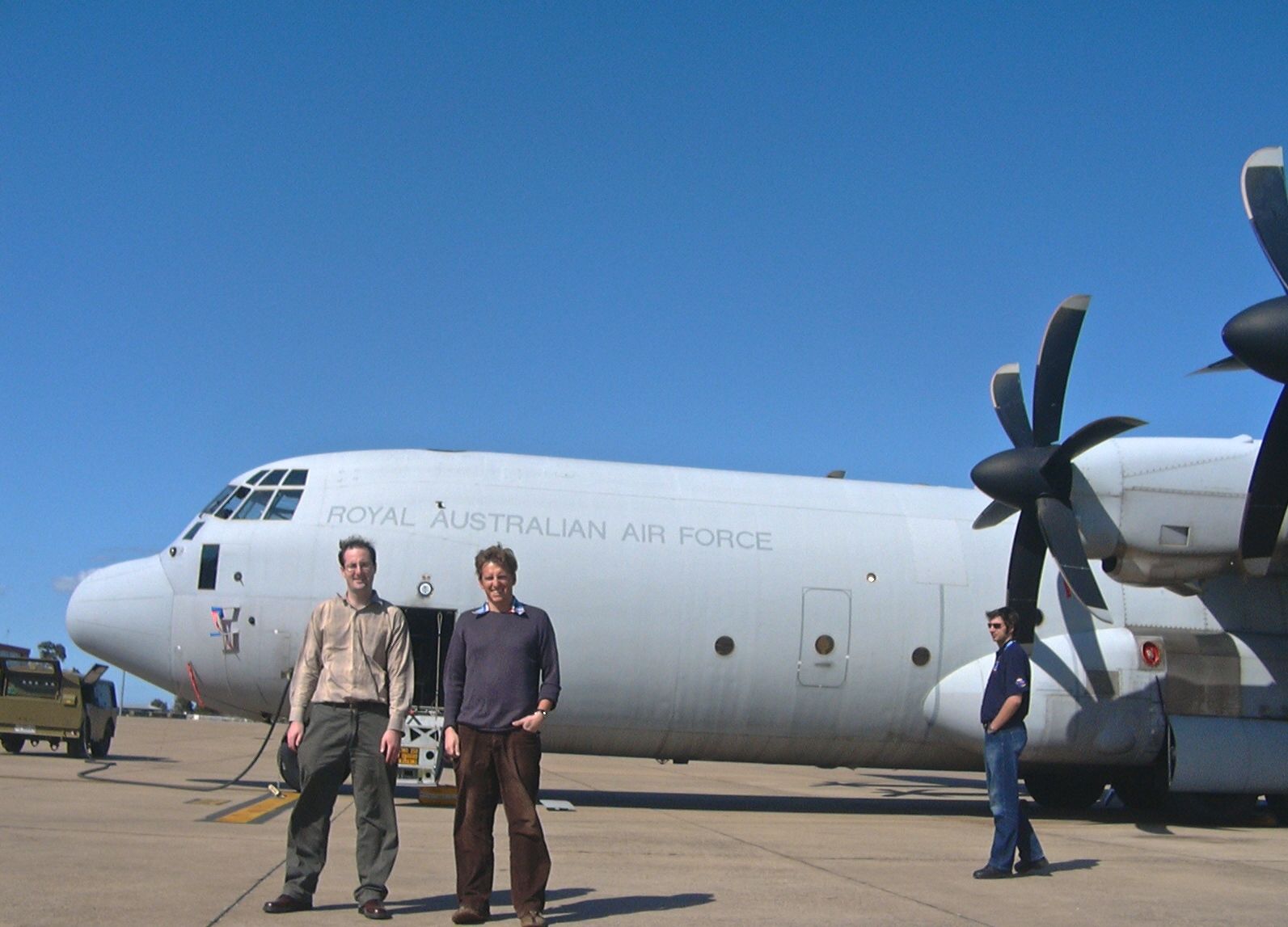
Field trip which Defence used to try to effect “capture” of young Treasury officers
Just yesterday, the Abbott Government announced it would spend another $12 billion on the Joint Strike Fighter jets, taking Australia’s total purchase to 72. That is fewer than was slated to be bought in 2005 and I see the fingerprints of my Treasury colleagues all over the decision. Kudos to them.
Defence procurement has always been a basket case. Traditionally the US makes its own things with great difficulty then sells them to us. It bears the development costs and we then pay through the nose. Or we make our own things with great difficulty (e.g. those damn subs).
The plan of the JSF program was to re-imagine the procurement process, by having a jointly developed platform owned by all western countries. It would share development costs and thereby reduce the risk to any one country. And everybody got to share in the supply chain, which meant local jobs.
It was just an idea. The risk was a lack of fall-back options. That would mean Lockheed Martin could get away with doing a bad job. That risk was identified and managed eight ways to Sunday with clause upon clause. But clearly no clause is as powerful as the threat of competition.
Is the JSF even a decent plane?
The point of JSF is not that it is agile. It is also not meant to be fast. The F-22 could kill it in a dogfight. Our old F-111s could beat it in a straight line.
It was supposed to deliver superior results by being really sneaky. Low radar profiles meant it could get very close to radar stations before it showed up.
That was combined with high-quality sensors that meant it would discover and network information. So not just one pilot knew where the missiles were coming from or where the bad guys were. Every pilot did. It was not supposed to ever be in a dogfight, because it was meant to shoot before the other plane was in sight.
Is that strategically wise? That is a hot topic. I am not an Air Force pilot, but the thing about a procurement program is that the parameters are set by air force experts. They know what they think will make them feel safe behind the joystick, and go buy it. I am not going to second guess that judgment here.
(Obviously, they set project parameters in 2002, and it’s now 2014 and other countries powers have increased. But that is not an issue just for JSF. It is an issue for all defence projects, because the world moves fast…)
Spending money on defence is difficult. Nobody, I think, would argue we should spend nothing.
But given our island location and our fairly un-strategic location on the way to nowhere, do we really need to be 13th in the world for military expenditure? As for Tony Abbott’s plan to lift expenditure to 2 per cent of GDP, that seems wasteful and quite backward. Should we not think about what we need first, rather than first thinking about how big our budget is?
I’ll leave you with this quote:
“A famous maxim in Australian defence circles is that “strategy without funding is not strategy”. … A reversal of the same maxim also applies to Tony Abbott’s new white paper. Funding without strategy is still not strategy.” (source)
Today, the consumer price index is released. Australian inflation appears to be in check, as the RBA keeps a steady hand on the tiller (If you are secretly unsure what the RBA does, click here.). Inflation gets really interesting over the long run.
Let’s look at what the damage will be in 2035, when we’re a lot older. It may shock you.
FOOD
A pie and a soft drink at the football?
I paid $14.40 for a Four’N Twenty pie and a bottle of Sprite on the weekend. The inflation rate for Food and non-alcoholic beverages over the last ten years has been 2.9 per cent a year. Applying that to the next 20 years means that by 2035, your half time snack will be a whopping $26.75.
BEER
If you want the exquisite contemporary Australian experience of drinking a bottle of Crown Lager at Federation Square, you now pay $9.The inflation rate for the Alcohol and Tobacco index over the last ten years has been 4.6 per cent a year. Applying that to the next 20 years means in 2035, the price of the beer will be $24.
TRANSPORT
A ticket permitting two hours of travel on Melbourne’s ‘world-class’ public transport system costs $3.58. The inflation rate for transport over the last ten years has been 2.3 per cent a year. The lowest rate we’ve seen so far. Applying that to the next 20 years means in 2035, a ride on a tram will cost $5.87.
A pair of ASICS Gel Kayano running shoes costs $250. In 2035 that will be $235. Wait, what? Yes, it’s not all bad news on the inflation front. Some things have fallen in price in the last 10 years, especially clothing. The average annual price change in the last decade was -0.4. There’s more detail on this in a post I wrote a couple of weeks ago.
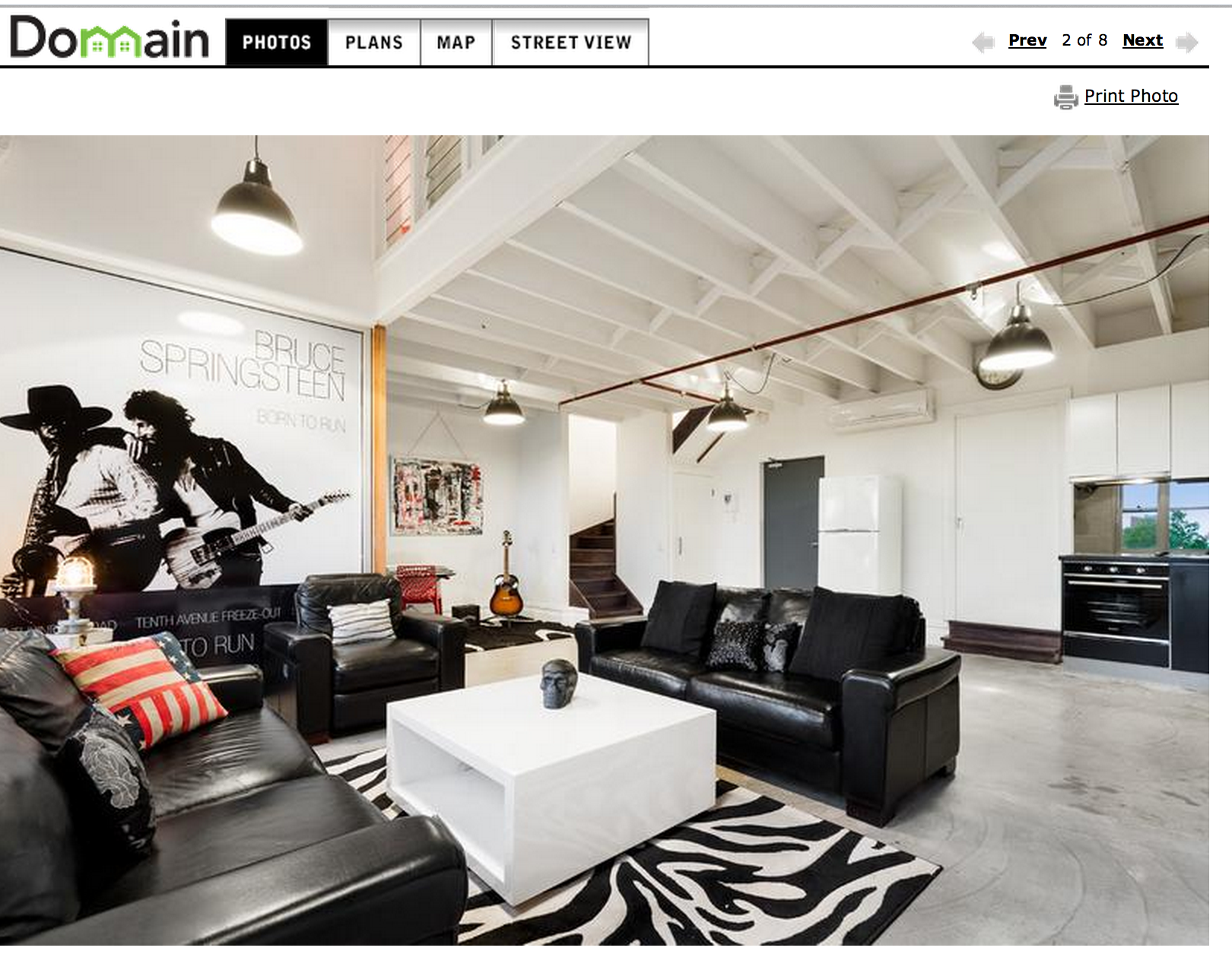
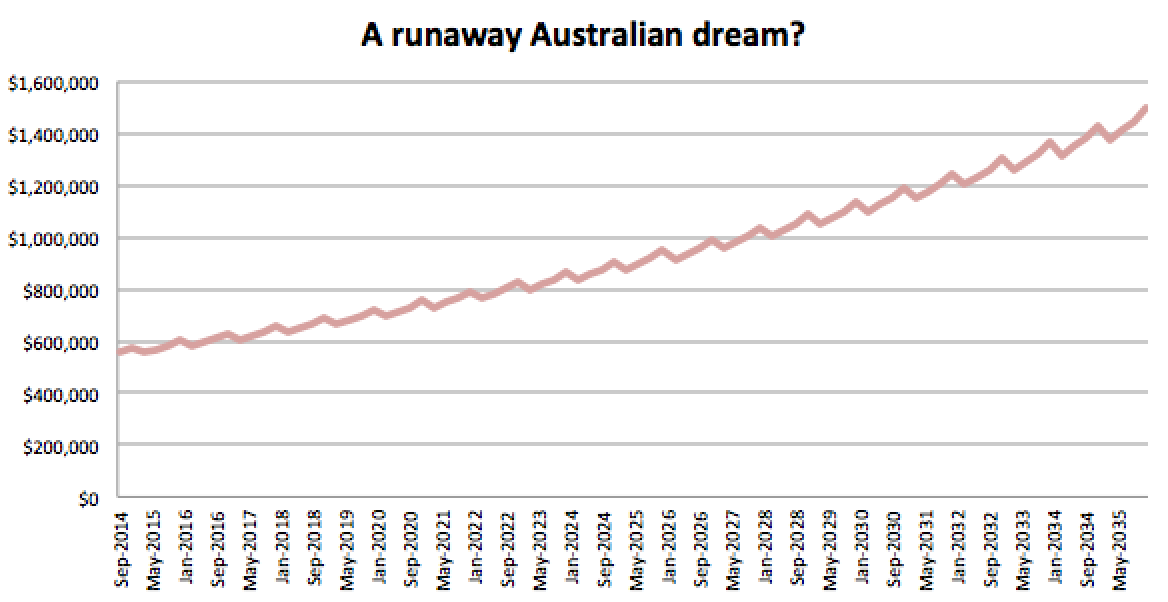
It has at an advertised price, now, of $550,000. Over the last decade, house prices have risen 4.6 per cent a year. If that continues, you’ll be looking at $1.49 million in 2035.
PAYCHEQUE
Here’s the good news.
If you have a full time job, and you pay 30 per cent tax on it on average, your fortnightly paycheque, based on ABS average weekly earnings, is $2012.
The rate of growth of wages in the past decade has been 4.5 per cent. By 2035, that fortnightly paycheque would have grown to $5294.
Will you be better off? Almost certainly yes. Wages have risen faster than consumer prices for most of Australia’s history, giving us improving real (i.e. inflation adjusted) income (see graph at right).
But if you can somehow arrange to want less housing and beer, and more clothing and shoes, you’re going to be even better off…
I just finished reading the Hunger Games (book one). I enjoyed it for a reason that might be unusual. It brought back vivid memories of my first-year economics textbooks. To me, the Hunger Games is clearly a secret primer in basic economics.
The free-market lessons kick in on page five, when Katniss – the heroine of the book – ducks under a fence to go hunting, in defiance of the rules that govern her district, which is both starved and ruled with an iron fist.
“Most of the peacekeepers turn a blind eye,” she explains, and we learn that a thriving black market – the Hob – is what keeps Katniss and family alive. Every time she hunts and then sells her kill Katniss defies a death penalty that prohibits trading.
LESSON 2: Central planning and colonisation are bad
The district itself is run as a sort of colony of the Capitol. The Capitol is the centre of a future North America torn apart by climate change.
The district where Katniss lives specialises in coal-mining. The citizens of this colony have no control over the coal production. They are forced to mine and send the coal to the Capitol. They are prohibited from engaging in commerce or choosing their fates. The result of their lack of freedom of choice is made clear in the first part of the book:
“Starvation’s not an uncommon fate in District 12,” says Katniss on page 28.
The parallels with the colonisation era of the 1800s are clear. The lust for cheap raw materials and labour makes the keeping of colonies highly advantageous. But the citizens have to be oppressed for colonisation to work. Katniss can’t bring her bow and arrows inside the District, because the powers that oversee it fear an uprising. The trade between the district and the capitol is anything but free. You know who else opposed colonialism? The famous economist Adam Smith.
Few services are provided from the capitol back to the colonies. Colonies get some supplies of oil and grain , a few hours of electricity a day, and TV broadcasts that are more like propaganda. When Katniss gets on a train to go to the Capitol to compete in the Hunger Games, it is the first time she has been on any motorised vehicle.
Same
Then, for a while the economics lessons of the Hunger Games become less about the virtues of free markets, and zeroes in on a particular micro-economic concept:
LESSON 3: Game Theory.
The dynamics of the Hunger Games are brutal. The Capitol forces 24 children from 12 districts into a gladiatorial battle to the death.
Lesson 3.1 Go to the cornucopia?
To start the game, the contestants enter the arena simultaneously, but at a distance from each other. Then they face the first complex and interdependent choice. The centre of the arena (the cornucopia) is filled with useful items. Weapons, food, shelter.
In the short-run, nobody is armed, so going into the centre is risky. It may be worth it if you can defend yourself, so the biggest, strongest players have the incentive to head in to the centre. But it may also be worth it if you think you have no chance without supplies.
Of course, if the weak players yield the advantages of the stash to the strongest players, it makes their job even harder. So some take the risk. Even Katniss. In the end the stash of items is the scene of several quick deaths.
Lesson 3.2 Form an alliance?
The stash of supplies is too big for one player to control, and so the biggest players form an alliance.
The existence of an alliance among the strongest players in the Hunger Games may seem surprising. Any alliance must eventually break down – it is after all a battle to the last man standing. Game theory suggests breaking an alliance earlier rather than later will always be advantageous. But the presence of a stash of food binds them together. They need to be able to have some people sleep while others defend the stash.
If the alliance between the strong breaks down before the stash of food is depleted, the one remaining owner of the stash will be unable to so much as sleep, or risk becoming a target of remaining outsiders. The stash itself is an x-factor that binds that alliance of the strong together, so long as it lasts.
Social factors can also influence the outcomes of prisoners dilemma-style interactions, which can explain a couple of alliances Katniss enters into, especially the one with Rue. Katniss simply likes Rue.
She likes Peeta too, but he is less useful as an ally. As if aware of the implausibility, the alliance of Katniss and Peeta is maintained by a steady stream of rewards that arrive. The payoffs to staying together are higher than the payoffs of moving apart.
Lesson 3.3 Run and hide?
The Hunger Games reward survival, not killing. The optimal strategy at the start of a game is obviously a defensive one. Let everyone else try to kill each other and just wait. It’s only optimal to choose to enter a battle later, when there are fewer than 24 opponents, so as to minimise the chance of stumbling upon someone whilst sneaking up on another.
For that reason it is no surprise the “Gamekeepers” unleash a massive fire on the unsuspecting players very early on. This makes sure hiding is very difficult. The action cannot be allowed to ebb, after all.
Lesson 4: Prices.
Contestants can obtain items from “sponsors”, which are delivered to them in the Game. Later in the game, the price of items goes up dramatically. If we assume sponsors want to help the eventual victor, this makes sense.
Gifts delivered late in the game when few survivors remain are likely to be more effective in securing a win than those delivered early on. So gifts delivered in the last phase of the game are most valuable .
Problems
The book is a sci-fi fantasy and I do not expect it maintain perfect adherence to economic incentives. Two examples stand out.
1. Tesserae. Children from Districts can increase their chance of being selected as a Hunger Games participant in return for a year’s supply of grain and oil.
From the kids’ perspective I understand it wholly. But where’s the upside of this to the Capitol? It doesn’t yield more participants, or more interesting Hunger Games. It probably just costs them more in oil and grain. We are told the point of the Hunger Games is to keep the residents of the capitol amused and the residents of the districts poor and weak. The Tesserae don’t really achieve either of those.
2. Careers. The book wants us to believe that the Hunger Games are dominated by “career” competitors that volunteer to enter and almost always win. But it doesn’t seem plausible.
In the Hunger Games of book one, there are around six “careers.” Each must have an eighteen per cent chance of winning, assuming the rest of the contenders have no chance. For each of them, the risk is too high and the rewards too low. Especially when you consider that the reward of winning is supposedly food and housing, and the “careers” are described as being from “wealthier districts … fed and housed throughout their lives for this moment.”
Given the chances of winning are so low and the upside is slight, the optimal solution for any one district would be to send their weakest, least valuable members.
Big questions about the merits of economic growth.
The Hunger Games also raises very interesting questions about the end-point of economic development.
When Katniss first arrives from the districts, and meets the surgically altered citizens of the Capitol, and eats the endless supply of bountiful food, she asks an important question
“What must it be like, I wonder, to live in a world where food appears at the press of a button? How would I spend the hours I now commit to combing the woods for sustenance if it were so easy to come by? What do they do all day, these people in the Capitol, besides decorating their bodies and waiting around for a new shipment of tributes to roll in and die for their entertainment?”
Katniss wonders what her identity would be without having to provide for her most basic needs. I think that question haunts a lot of people in the privileged parts of the world. We have all the food we need and much much more. Our lives are about comfort, not survival.
I suspect this sense of meaninglessness is why some affluent people seem to spend a lot of time on their vegetable gardens.
The question of giving life purpose is likely to become only more relevant as production of food, clothing and shelter become more efficient. When people’s economic contribution is less and less crucial to survival – making ads, doing graphic design for t-shirts, doing accounting, they may begin to wonder what the real point of wealth is.
…
I am eager to get into Economics 201 – by which I refer to Hunger Games book 2. Will we see a process of revolution and decolonisation that allow market forces to deliver the districts into a state of freedom? Will there be a surge of immigration to the capitol? Will the book explore the macro-economic implications, including on prices and wages? I can hardly wait to find out.
 In a market like this, price is a quality signal that drives a virtuous circle – attracting better students and staff in turn attracts better students and staff. This is why the applications process for the world’s top universities is so competitive.


 The Budget’s unemployment forecasts are higher than the consensus economics forecast (see chart at right). Perhaps because they wouldn’t cut so hard at the moment the economic recovery is gaining momentum.












 By his second term, Obama took a hard-line position to negotiating and the Republicans were the ones that copped the blame for the government shutdown of 2013.








 The inflation rate for the Alcohol and Tobacco index over the last ten years has been 4.6 per cent a year. Applying that to the next 20 years means in 2035, the price of the beer will be $24.



 Will you be better off? Almost certainly yes. Wages have risen faster than consumer prices for most of Australia’s history, giving us i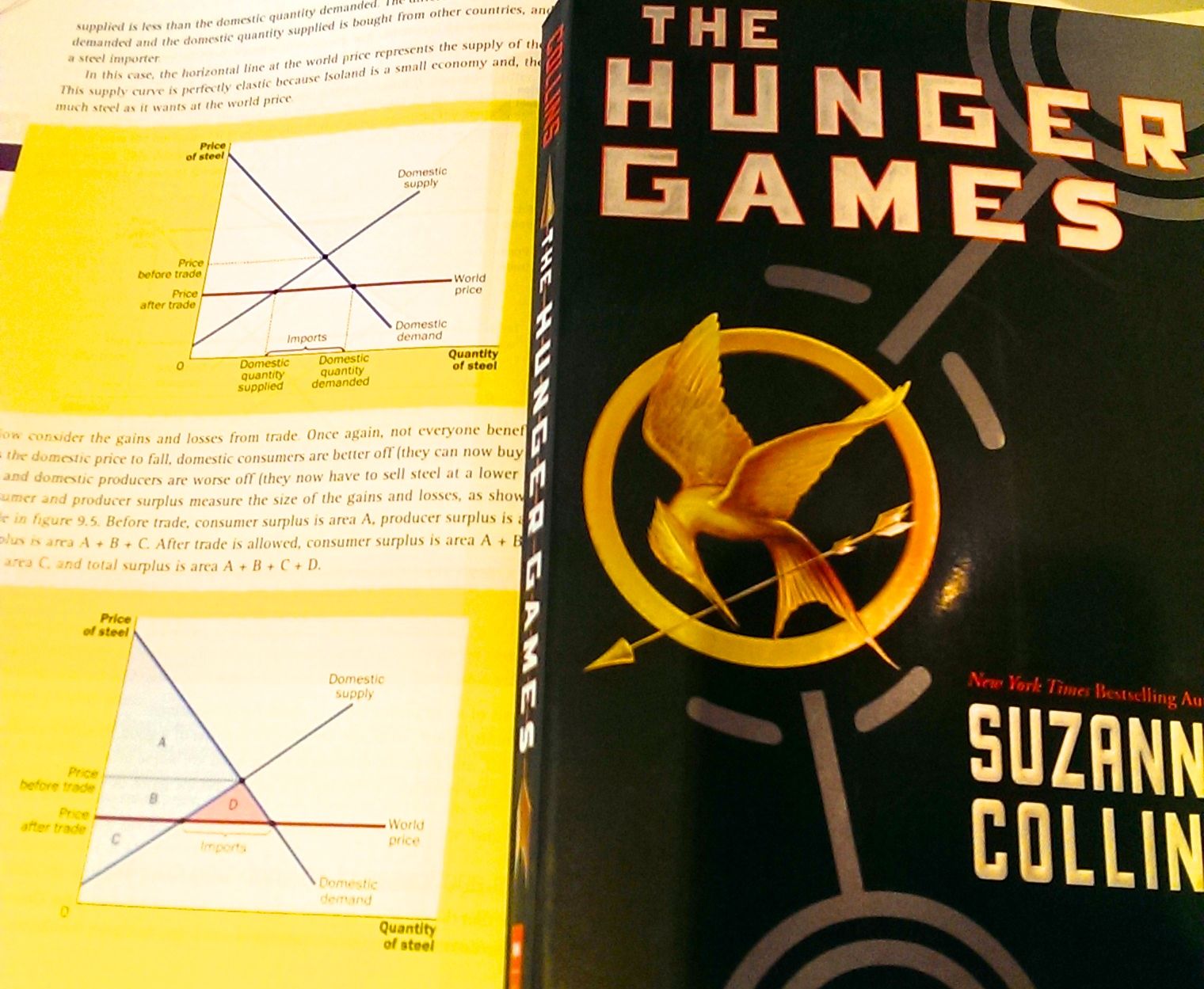
 Thomas the Think Engine