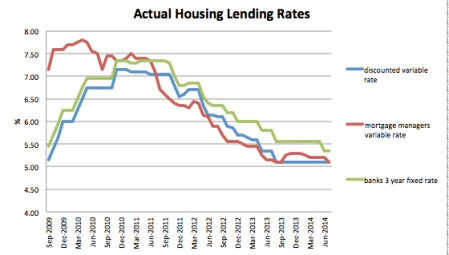
He reckons house prices will keep going up while the mortgage rate is not much more than the rental yield. He also theorises that Sydney prices rise first, and the rest of the country lifts thereafter. This theory holds water for me on an intuitive level. In the short run, a house in Melbourne is not a good subtitute for a house in Sydney, but in the medium term, perhaps it is. In the long-term, perhaps even a house in Adelaide could be a substitute!
But house prices in Melbourne seem a bit high to be making bold acquisitions for speculative purposes.
Luckily, house prices are very different across Australia. Sydney is way out in front. Perth, Melbourne and Canberra are a cluster. Then Brisbane and Adelaide are limping along at the back of the pack. Hobart doesn’t make the graph but it is somewhere back there too.
If you wanted to buy a house somewhere cheap, which makes most sense?
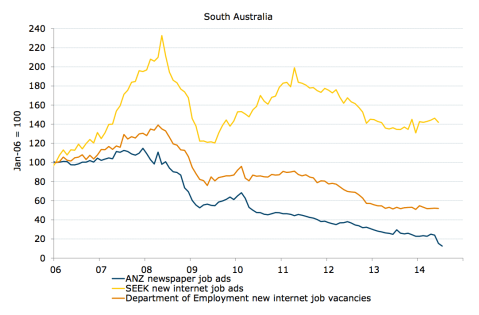
You’d want to choose a place with strong growth prospects. In recent times, all three laggards (Brisbane, Adelaide, Tassie) have shown a bit of pluck when it comes to the labour market (focus on the yellow lines).
Now, despite its “beautiful one day perfect the next” weather, Brisbane doesn’t rate a mention in the top ten cities ranked by the Economist for liveability.
Melbourne scoops that award every year (Adelaide came 5th this year in results released today). But while we are being open-minded, it’s worth noting that that survey is horribly biased.
You’d think getting married is relevant to your home life. You wouldn’t expect it to change your employment outcomes.
I mean, I’ve never done it, but I doubt you get back from your honeymoon buzzing with a desire to read and reply to all those emails.
And yet, the correlation between marriage and labour market outcomes is quite astounding.
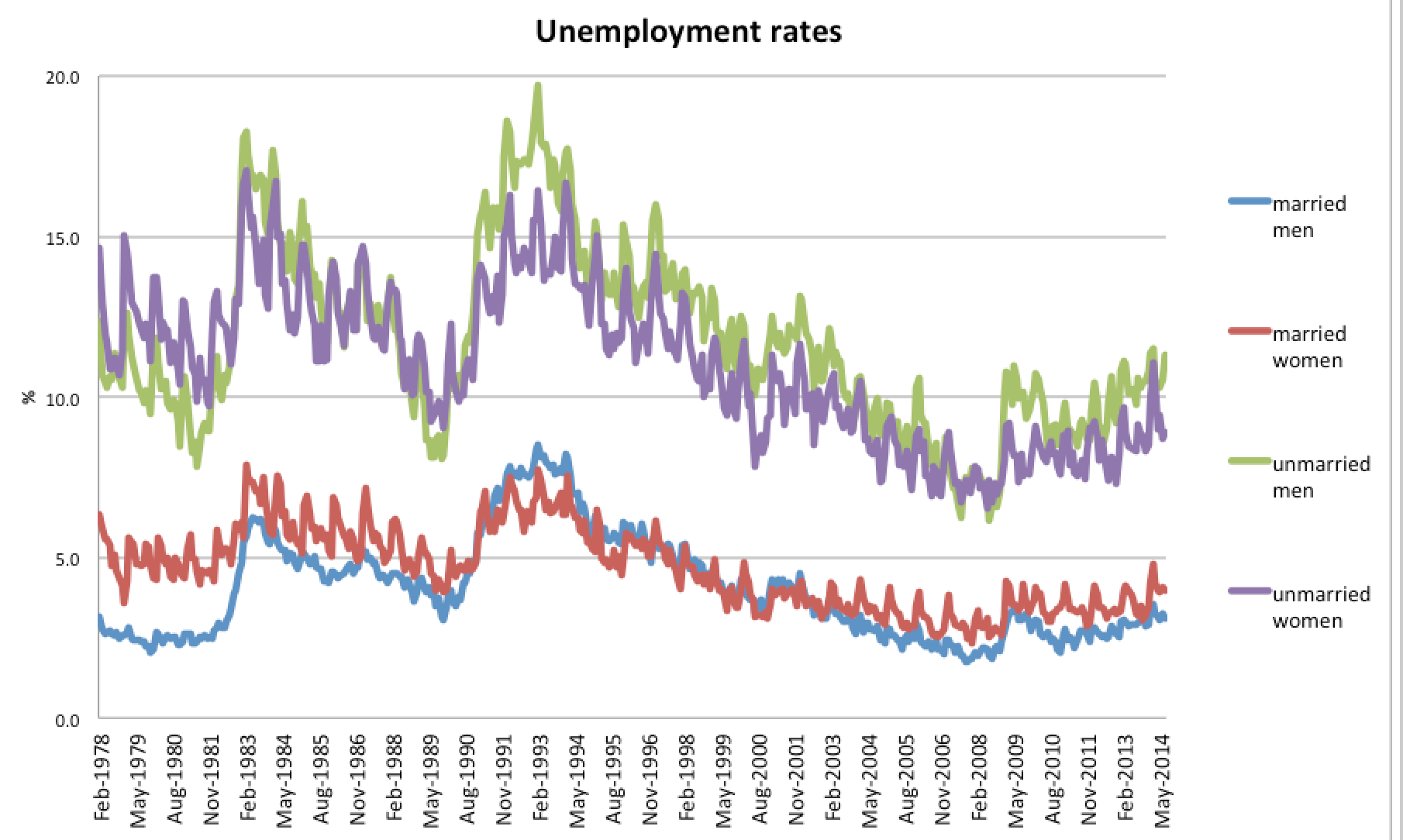
The unemployment rate for unmarried men is nearly four times higher than for married men (11.3% vs 3.1 per cent). For women, the ratio is over two (8.9% vs 4%).
The difference between married and unmarried makes the difference between men and women look small.
Essentially, if you are a married man, you’re living in a labour market no different from the best parts of the 1970s, with 3 per cent unemployment!
Might this be a statistical artefact? It could come about because the young have poor employment outcomes, and are less to be married. Let’s have a look at an older age bracket.
The absolute levels of unemployment have fallen, especially for men. But the ratios of unemployment rates between married and unmarried are about the same: 4:1 for men and 2:1 for women.
The above graphs make it look like married people are all hard at work in the office. But the unemployment rate hides a big difference in participation rates.
There are two distinct clumps in this chart. Married men, who participate in the workforce at a rate of 95 per cent. And everyone else, who participate at around 75 per cent.
The 80s were a time of rapid change for women. But since 1990, one of the biggest changes in the employment market has been unmarried men dropping out of the labour force. Their non-participation rate basically doubled from 10 per cent to 20 percent.
Given the unemployment graphs on the previous page, I’d be very surprised if the red line (married women) didn’t tick up over the green line in coming years.
Two mysteries remain.
1. Why is the difference between the married and unmarried so strong, and so consistent over time?
I have a few theories.
Perhaps the unemployed are busy proposing, but are rejected because they are unemployed?
Perhaps there are confounding variables, like good looks or intelligence, which are correlated with both earning power and marriageability.
Perhaps it’s not about the kind of people they are but the incentives they face:
Obviously marriage and children are correlated. Obviously children (who are cruelly forbidden by the law to earn the money to feed themselves) are expensive. Could it simply be the compulsion to put bread on the table that explains why married people are so rarely out of work?
2. Why is the labour force participation rate of unmarried men eroding?
Can that explain the fall in unmarried men’s attachment to the labour force?
(They are also increasingly likely to have a non-religious ceremony, but I’m not sure that’s relevant)
I’m not sure it does, and this makes me wonder if perhaps the “discouraged worker effect” might be true. All those unmarried men might once have worked in factories. Maybe they’re less able or inclined to take service sector jobs.
There might also be an echo of higher immigration rates in the data. The overseas born have lower workforce participation rates. (chart source)
Which looks like a nice simple story, until you fold it back in on itself and see that immigrants actually get married at a higher rate than their proportion in the population! (Number of marriages is on the vertical axis, so in total, this graph shows that at least 40 per cent of people getting married in Australia are overseas-born.)
The Victorian state election is coming up, and new small parties are registering. Given the rush of minor parties and independents that carried the day in the last federal election, it’s no surprise that Victoria is seeing a lot more parties registered with the Electoral Commission.
Here are four that have recently applied.
Rise Up Australia Party
Vote 1 Local Jobs
Animal Justice Party
Australian Cyclists Party
If they’ve filled out the forms properly, collected names and addresses of their members and paid their fee they will join the established parties on your ballot paper:
Australian Christians
Australian Country Alliance
Australian Labor Party
Australian Sex Party
Democratic Labor Party (DLP) of Australia
Family First Party Victoria Inc
Liberal Party of Australia
National Party of Australia
Palmer United Party
People Power Victoria – No Smart Meters
Socialist Alliance
The Australian Greens
Voluntary Euthanasia Party
I am surprised when I look at this list, that there is no Public Transport Party. The issue of public transport is hot in Victoria right now, partly due to the increasing concentration of jobs in the CBD, and the resultant increase in crowding.
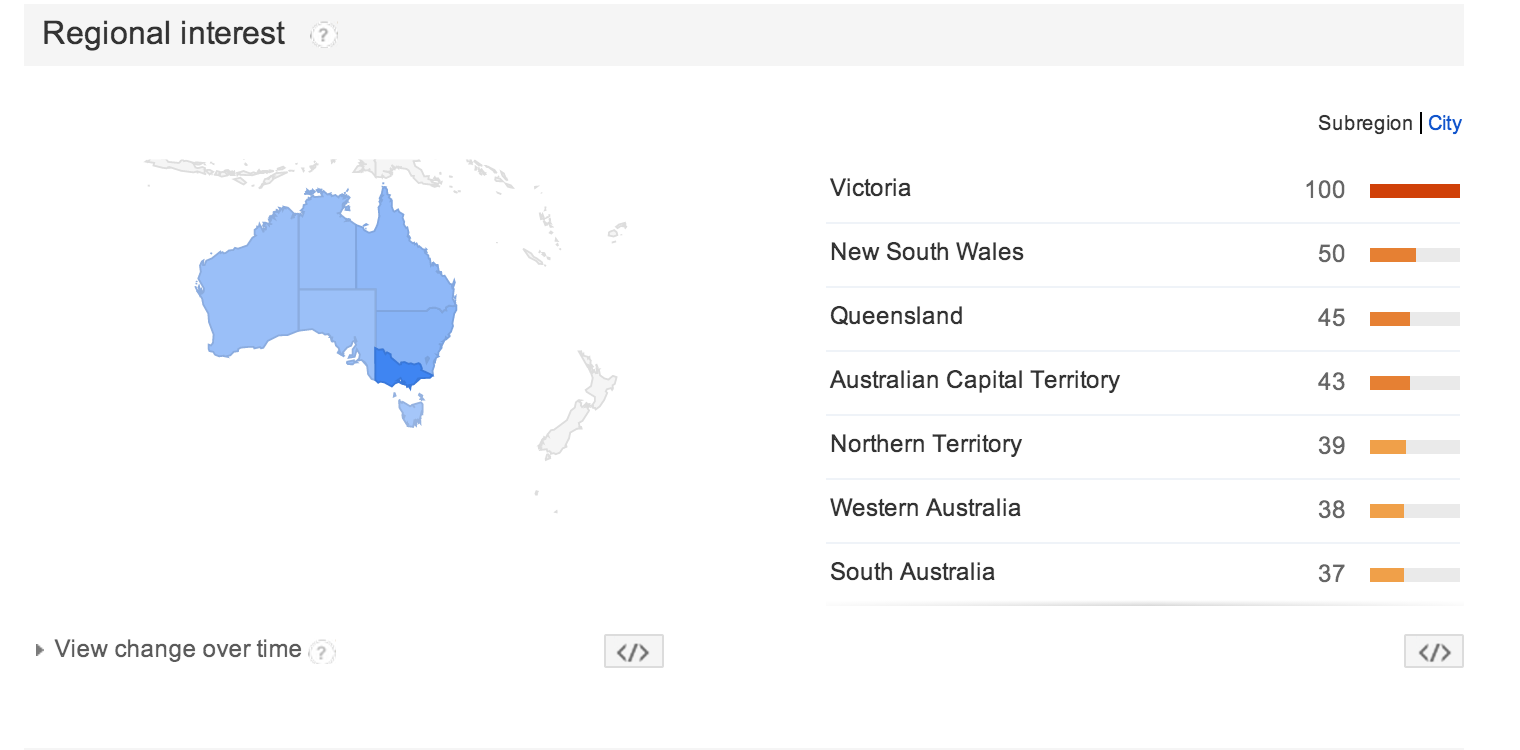
Google Trends shows Victorians are obsessed with the search term “public transport”
Crowding above the acceptable threshold affects nine per cent of passengers in the morning peak, according to the latest data. It’s lower on some lines and up to 26 per cent on the Craigieburn and Werribee lines.
In 2002 such a party existed. Called Public Transport First, it was founded by the late Paul Mees and fielded a candidate called Tony Morton in the seat of Brunswick. He lost but is now the head of the Public Transport Users Association.
But perhaps 2002 was too soon for a public transport party.
Stories about public transport are hot property in the press and on social media. You’d imagine a Public Transport party would get a decent share of the votes. It may be a less emotive topic than Voluntary Euthanasia, but it affects more people. And it’s a lot more sensible than a party opposed to smart meters.
The Victorian Upper House might be the best chance to get someone elected. But its not a fait accompli. In the last election the Greens got 12 per cent of the first-preference vote and installed three candidates. Family First got 2.86 per cent of first preferences and installed none.
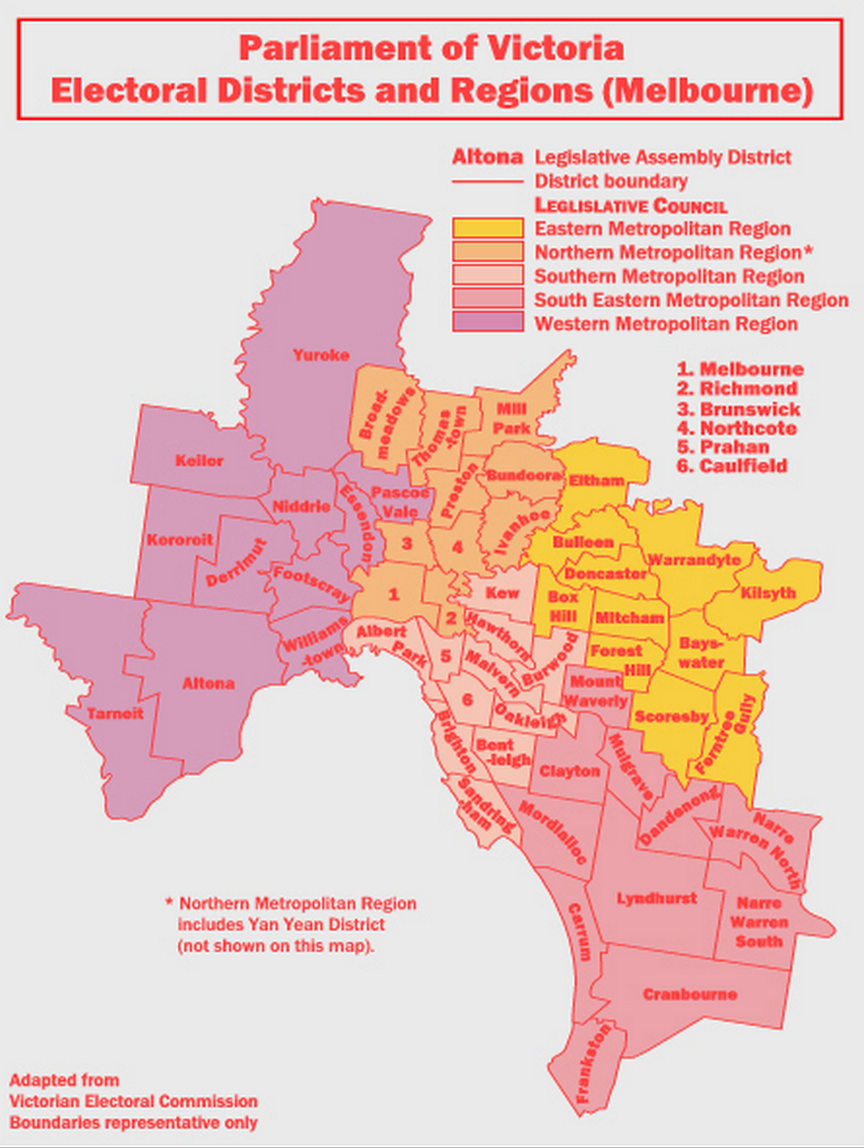
It would be very tough to make an impact in the regions. But there are five metropolitan “seats” in the upper house that each elect five candidates. Three of those elected Greens last time (western, northern, southern). These would have to be possibilities.
But the advantage of a single issue party like this is not necessarily in getting elected. Simply by forming, the threat of drawing votes away from all the other parties can encourage them to shift their policy positions. It’s the famous Hotelling Effect, perhaps my most-loved of all the economic theories.
Nevertheless, the challenges to starting a political party are many. You need 500 members to commit, you need the fees, and you have to pay $350 for each candidate you stand (refundable if you get 4 per cent of the vote.
And you have to be ready to face vitriol. I was kicking this idea around on the internet yesterday and a lot of people told me that it was stupid. But nobody had as much passion as this guy:
I imagine that actually becoming a politician would invite even more vitriol than just talking about it. When you look at it like that, I’m surprised there are so many brave people willing to start their own parties. Kudos to them.
I spent six years of my life attending an independent private school – Melbourne Grammar School. It was expensive. I remember fees being around $10,000 a year.
It cites research that shows “after controlling for tertiary entrance score, university students from government schools outperformed students from private schools.”
Which is interesting. There is certainly an argument that private school kids are “spoon-fed” and can’t handle university thereafter. (I also seem to remember research that students who scored less than the cut-off but got into their course tended to do better in first year, so there could be confounding effort effects.)
The new research looks further along the lives of these students and finds “former independent school students were no more likely to be employed full-time than those who attended a government school after controlling for the effects of level of education, sex and age.”
The study also finds that graduates of independent schools are not likely to have higher earnings, nor more “prestigious” employment, after controlling for education.
In a comment thread on the topic, a user called Gabrielle calls out the methodological elephant in the room.
“Yep, ‘controlling’ variables everywhere! E.g. controlling for whether or not people attend a Go8 university when they look at occupational prestige, or controlling for field of study when looking at earnings…what the?! I mean sure, that’s interesting, but it totally bypasses questions about whether your schooling or university help you get into high status or high earning careers.”
If a private school helps you get into university (independent school students had an 80 per cent higher chance of graduating from a G8 university, according to the research), and university helps you get a job, then controlling for university when trying to measure the effect of private school is distracting. Silly even.
It takes just a glance at year 12 results to see that private schools dominate the top scores. I think we can conclude that going to a private school has a real payoff.
But what form does it take?
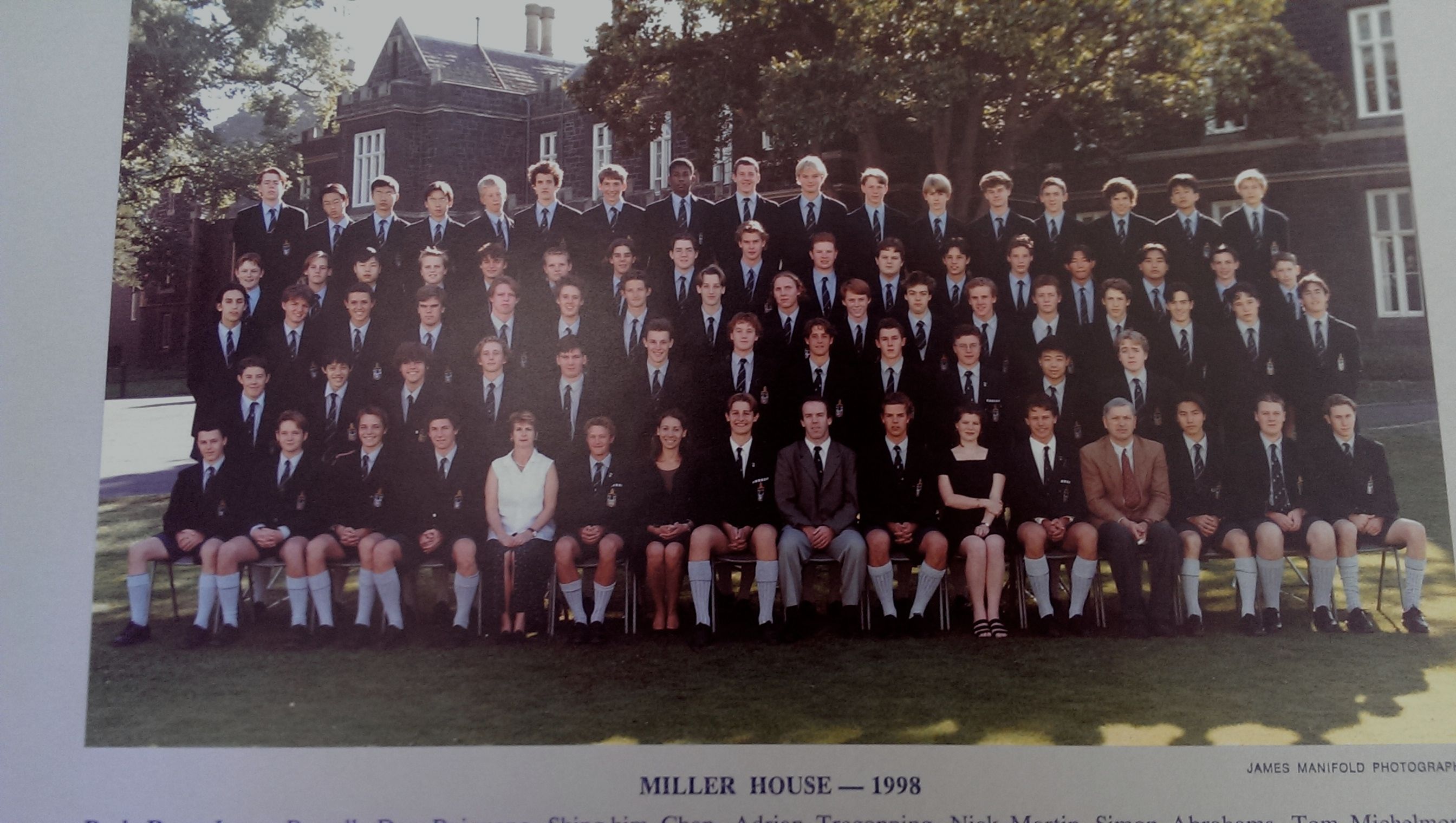
Dug this out. I’m second row, fourth from the left.
I’m still close friends with some people I went to school with. But I have other friends who went to other schools, public and private.
As far as networking goes, I’m not aware of any benefit I’ve got from “the old school tie” and quite acutely aware of the benefits that have come from people I’ve met in my professional life. Could seeing my school on my CV have helped me in job applications? It’s not impossible.
I’ve never worked at Goldman Sachs or a law firm, so maybe it’s different there, but I’ve rarely been aware of the schools my colleagues have gone to. When I have known, they’ve mostly been graduates of government schools. I don’t think my employers have been deeply biased to private schools.
So what was the benefit of my private school education?
You can never know the counter-factual but I think I fit the data perfectly – I suspect got a better year 12 result at the school I went to than at another school chosen at random.
Did the teachers “spoon-feed” me? I don’t know. They taught me, definitely. They were (mostly) highly qualified, diligent and happy to answer questions.
I also worked my arse off in year 12, despite having been rather disinterested in years 9, 10 and 11. By working hard I think I maximised my potential. I got into a good uni course that eventually helped me get a good job.
I wanted to beat the other kids by having a better score, and I knew they wanted to beat me. Even then, I was aware that the level of competition was peculiar.
Would that competitive aspect have been there at another school? It could have been. It might have been stronger at a selective entry school. But the skew of high scores at my school suggests it was acutely competitive.
So I’m not here to say, “I worked hard so I deserve everything I get!”
I’m trying to refute the crazy notion that private schooling is not advantageous, and answer the question of where and how that advantage accrues.
I know the world is unfairly skewed toward people who have the privileges I have. I’d like to see the opportunities of really motivating and rewarding educational environments shared really widely. Denying that private schools have benefits seems unhelpful in pursuing that goal.
The evidence is in a new paper from the National Bureau of Economic Research: Fairtrade producers get paid more per kilogram of coffee, have higher incomes, use fewer pesticides and avoid child labour. The minimum price and the rules the organisation sets actually work.
But there is an interesting question. Does Fairtrade just select for the marketing savvy farmers who would have been smart enough to get those benefits or other ones anyway? Complying with all those rules suggests nous.But Fairtrade seeks out small producers, who you would expect to be less savvy.
The evidence supports the idea that Fairtrade certifies farmers who’d be ill-placed without it.
“Saenz-Segura and Zuniga-Arias (2009) estimate a very strong negative relationship between Fair Trade certification and experience, education, and income within a sample of 103 Costa Rican coffee producers. This finding is echoed in Ruben and Fort’s (2012) study of 360 Peruvian coffee farmers (also see Fort and Ruben (2009)). In their sample, farmers that are less educated and own smaller farms are more likely to become certified.”
Another way to test this is to examine a panel of producers over time.
“In this way, one can examine whether a producer begins to obtain higher prices (for example) just after they become Fair Trade certified
Using such a strategy, Dragusanu and Nunn (2013) examine an annual panel of 262 coffee mills from Costa Rica between 1999 and 2010. They find that Fair Trade certified mills receive 5 cents more per pound for exports than conventional mills. “
A side effect of the selection of less-educated and less-skilled farmers into these schemes, is they may have no idea what is going on.
“Valkila and Nygren (2009) found that Nicaraguan farmers belonging to Fair Trade certified cooperatives had a poor understanding of Fair Trade, including its requirements, and potential benefits. According to the authors, one reason was the multiplicity of certification schemes, quality standards, and rural development projects faced by farmers. They simply were not able to keep track of them all and to distinguish one program from another. Mendez et al. (2010) also found that farmers were often unclear or confused about certifications, particularly about Fair Trade, although farmers did have a better understanding of Organic certification.”
But it turns out the customers may not be that insightful either. The fairtrade label helps us feel better. And the amazing thing? It works even better if it costs more.
“Examining fair labor standards for candles and towels sold in a large retail store in New York City, Hiscox and Smyth (2011) find that the label increased sales by 10 percent, and when combined by a price markup of 10-20 percent, sales rose even more, in the range of 16-33 percent.”
That suggests that really, humans are quite kind-hearted. But such an attribute won’t exist for long before someone takes advantage of it. And so lots of “I can’t believe it’s not Fairtrade” schemes are on the shelves.
The one I can find on lots of Aldi and Nestle products in my house is called UTZ.
I’m not saying UTZ is bad. Just that companies will likely choose certifiers with the lowest cost to consumer impact ratio. When one proliferates, it’s worth asking the question of whether it is the real deal.
Apparently, the Chinese real estate market is in a tailspin and they are desperately seeking alternatives. The press speaks of “frantic Asian buying.” It’s likely that most real estate sold offshore went to China last year.
In 2012-13, the Chinese topped the list for Australian real estate investment, according to the Foreign Investment Review Board. The board approved applications for purchases by Chinese worth more than $5.9 billion.
Chinese real estate investment leads to articles like this (fairly reasonable) and spawns comments like this (not so reasonable):
“Why bother invading a country when you can buy it a bit at a time.It’s fucking outrageous that foreigners are allowed to own residential property in Australia.
To the Chinese it’s a safe haven for their money invested where the Chinese government can’t get it’s hands on it, for Australians it’s having the opportunity of owning your own place evaporate. What’s the point if at the end of the day all that’s left is to pay rent so you can buy a house for some foreign investor.” (source)
But are the Chinese really taking over? Let’s look at the history for a moment.
I must have missed all the brouhaha about how the US was taking over Australia by stealth. (nb. There is some sort of series discontinuity post- 2008-09 due to a change in law.)
The point of this chart is to emphasise that China is not buying a crazy amount of Australian real estate, in historical terms, and that it is hardly new for foreign citizens to buy our dirt.
Let’s ignore for a moment that not all FIRB applications turn into purchases and put in context the value of real estate applications FIRB approves for sale to foreigners.
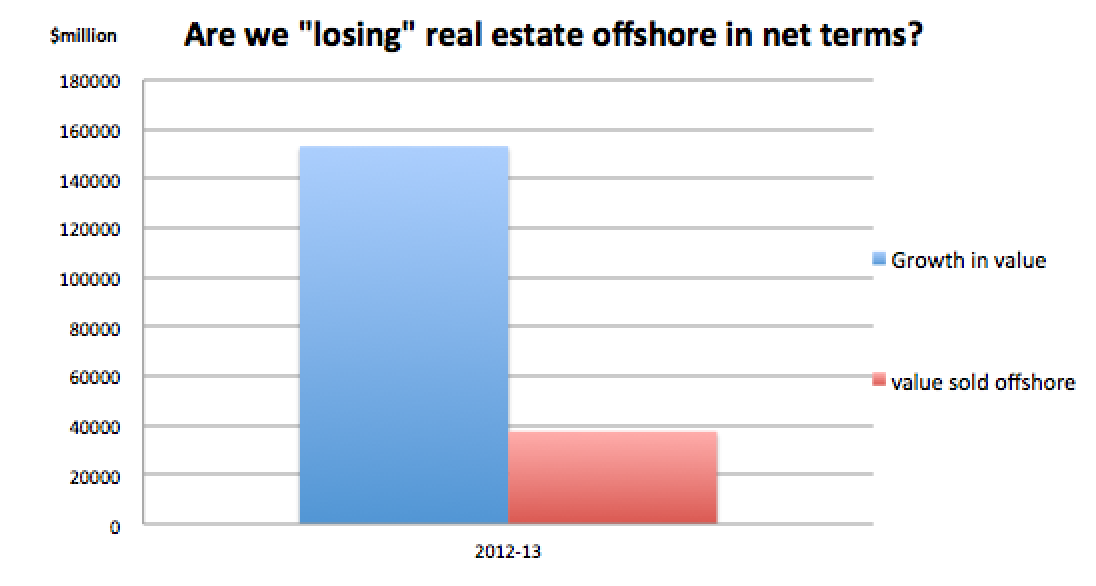
But those 1 per cents could add up, you might imagine,and before long it’s Beijing from Bondi to Burke! Actually, no. Growth in value of the housing stock (appreciation + new homes) easily outstrips sales offshore.
All the effort and graphs in this post is really to address the madmen and worry-worts on their own terms. As if they would read it and change their minds because what they are worrying about is not even happening!
But even if the foreign owners increased their share of ownership of our real estate, I think it would make little difference to our daily lives. Who cares whether you pay your rent to an account at Westpac or Bank of China?
And if there is a military advantage to owning a few homes, I’m yet to puzzle it out. It seems more likely to act as a brake on aggression if China is well and truly intertwined with Australia.
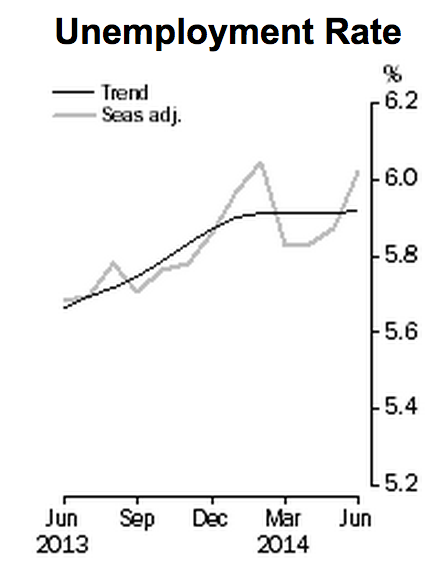
Today’s unemployment figures were SHOCKING: the unemployment rate shot up to 6.4 per cent, a whopping increase from last month’s result of 6.0 per cent, in seasonally adjusted terms.
Except.
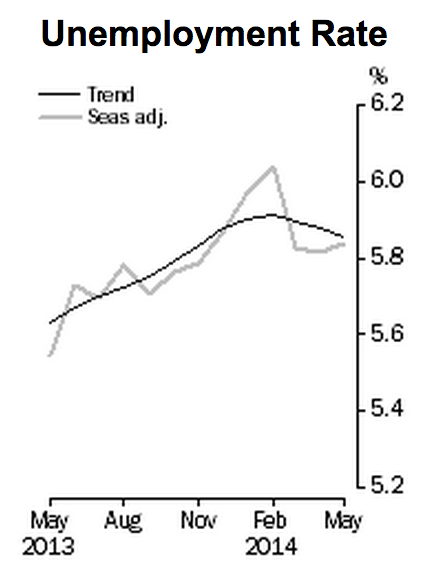
ABS reports Australia’s unemployment (trend) skyrocketing from 6.1% in June to 6.1% in July.
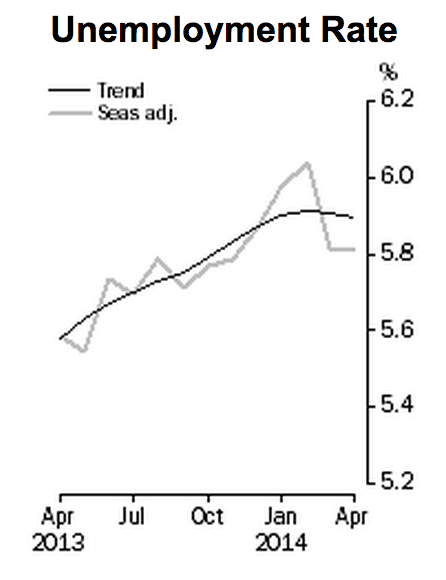
There are two main series that report the unemployment rate. Trend and Seasonally Adjusted. The former is more stable, the latter is more variable,.
There is a constant fight online between two gangs, the “wonks” and the “journos”. The former generally think the latter are too sensational with their taste for the more wildly variable series.
Wonkz v Press.
Here’s the latest update on the two series:
Trend looks like a sensible person who never gets too carried away, while seasonally adjusted is a wild ball of emotions, one moment in the dumps, the next elated.
It’s obvious which one serious-minded people should prefer, right?
But what if I told you trend is faking it? See how it claims to be sloping up all year? Let’s go back in time and consider the countenance of our “friend” the trend back in April.
At the time, it also claimed to be feeling glum. Now it has changed its tune. Trend is like a talented politician, flip-flopping around to try to claim the middle ground and seem more reasonable than the rest.
As recently as May, trend was headed downward. Then in June it made a small concession to the last two months of movement in the seasonally adjusted series:Below is how the trend is figured out. Essentially it uses a combination of old and new data to get a sense of how the series is moving over a longer time period.
“The smoothing of seasonally adjusted series to produce ‘trend’ series reduces the impact of the irregular component of the seasonally adjusted series. These trend estimates are derived by applying a 13-term Henderson-weighted moving average to all months except the last six. The last six monthly trend estimates are obtained by applying surrogates of the Henderson average to the seasonally adjusted series. Trend estimates are used to analyse the underlying behaviour of a series over time.
While this smoothing technique enables estimates to be produced for the latest month, it does result in revisions in addition to those caused by the revision of seasonally adjusted estimates. Generally, revisions due to the use of surrogates of the Henderson average become smaller, and after three months have a negligible impact on the series.”
When wonks say “the trend is your friend” they are focusing on a more than just the latest month’s data.
It’s like at the footy. One side kicks a goal and cheers. The other side points to the score, and chants “Scoreboard!” But in doing so, you can miss an important turning point.
Seasonally adjusted data look at what’s happened in the last month alone, just like the goal that just got kicked is the best measure of the passage of play that preceded it. Because it uses less data, it can also include more statistical noise.
The scoreboard, like the trend series, shows more than that and exhibits less statistical noise.
But this is a game that never ends. If you want to know what’s happening, focusing on the most recent figures seems perfectly fair to me.
The government is proposing to bring in lower, on-the-spot fines for public transport ticket infringements, worth $75. Online, people are questioning exactly why the government can arrange mobile payment for fines on trams, but not for tickets.
So, Now I can pay a fine on-the-spot – but I still can’t buy a tram ticket on the tram? http://t.co/YmNXBwBq0I Nice work PTV
I want to ignore that for the moment, and ask whether this regime is really smarter.
The fundamental economics of fare evasion fines is simple. There are two factors. A probability of getting caught, and a size of punishment.
If the product of the two is less than the cost of the ticket, you can’t expect people to buy tickets.
For example: the fine is $20 and the inspector is on 10% of trams and trains, you are better off paying $2 on every tenth tram ride than $3.58 for a ticket.
Do you increase the chance of getting caught or the fine?
Ticket inspectors are expensive. They are humans with sick kids and compo claims and they demand superannuation etc, etc. You don’t want to pay too many so the simple model is to make the fine very high.
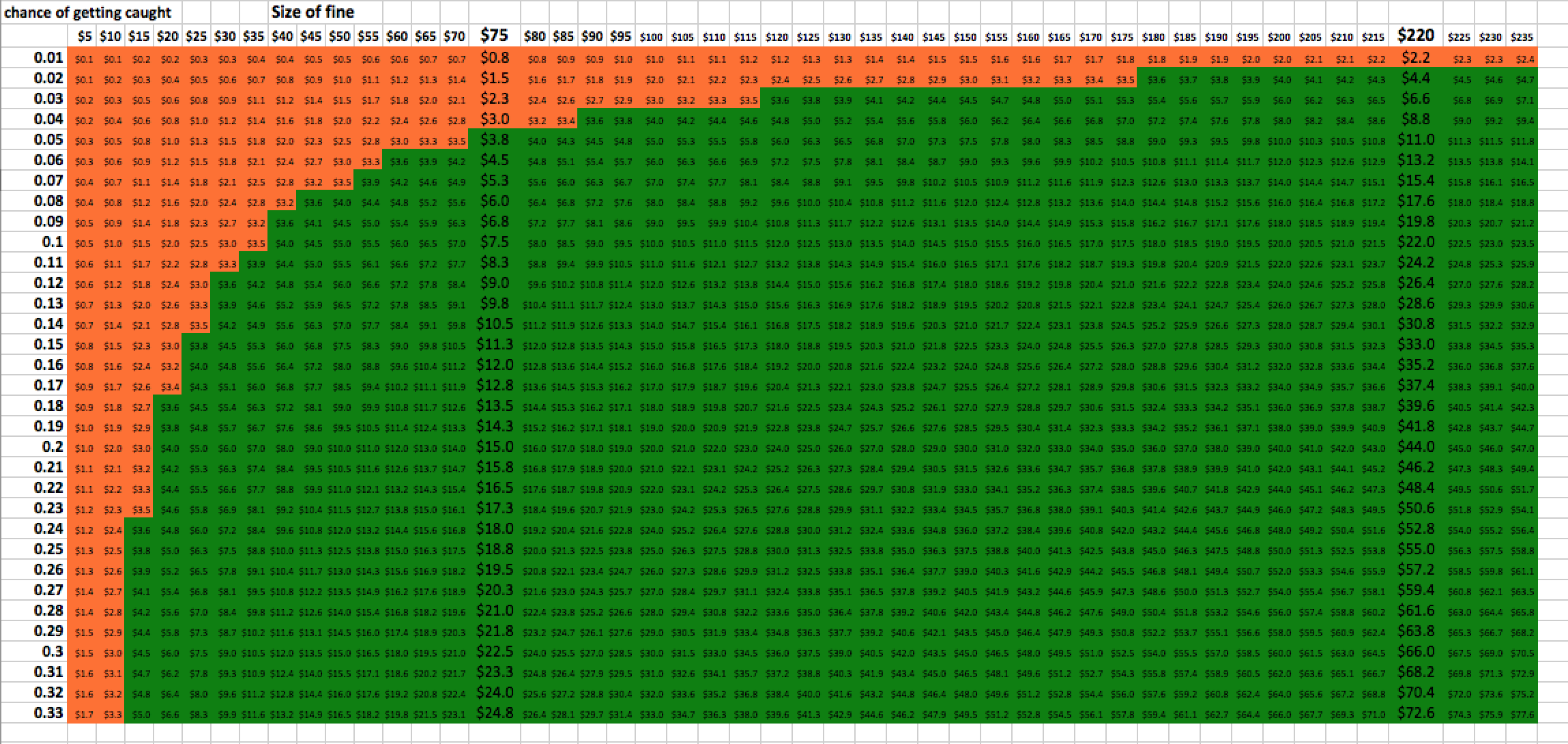
Your chance of getting caught may be 5 per cent, but because the fine is $220, you are better off buying a ticket. That keeps costs down and encourages compliance.
The table covers chances of getting caught between 1% and 33%, and fines from $5 to $235. The red areas are combinations of fines and chances of detection at which it doesn’t make sense to pay $3.58 for a 2-hour zone 1 full-fare ticket.
My concern is that if they are reducing fines from $220 to $75, it means they should be planning to have four times as many inspections to get the same deterrent effect. That means four times as many authorised officers on the public payroll. And I hate those guys.
But maybe, something different is going on. Could there be a behavioural economics aspect to this?
“A leading example of a behavioral bias that impedes market efficiency is present bias, or the tendency of individuals to place much less weight on the future relative to the present than would be predicted by standard models of time discounting. Present bias can lead individuals to make decisions today that reduce future welfare in ways that individuals will later regret (Strotz 1955, Laibson 1997). Analogous to an externality, the situation in which an individual’s decision in the moment creates negative future consequences is sometimes referred to as an internality. Present bias is posited as an explanation for behaviors ranging from a failure to save to smoking.”
Could it be that a percentage of fare evasion is committed by actual Melburnians who don’t care about the fine because it’s coming in the mail, sometime in the future?
Certainly a share of fare evasion is committed by people who don’t care about the fine because they’ll be back in Gotenburg/Seoul/Lyon by then!
If you bring forward the fine to RIGHT NOW, you might be able to reduce the present bias that says fare evasion is okay.
But costs are not the only relevant aspect. Could on-the-spot fines also manage the human tendency to imagine future effort is easy? “I’ll fight that fine in the court!” I told myself when i was last fined, about a decade ago.
In the end I did not fight it. I just paid it. The writing of the ticket and all the associated palaver in the current system allows one to imagine that the fine is avoidable, somehow. An immediate fine would avoid that.
For the behavioural effect of on-the-spot fines to work best, Cash would be optimal, but the authorised officers will accept only eftpos.
Of course the minute you allow ticket inspectors to accept cash for fines, there will be some that stop issuing receipts and their reputation will become even worse.
Tell me what you think about on-the-spot fines? Will they work? Would you fare evade more under this regime? Is this all just about saving administrative work in the back end of the Department of Justice? I’m keen to see your views in the comment field below!
The case for letting the shadow cabinet talk to a few public servants during the policy development phase – and not just for costings before the election – is pretty simple. I can sum it up like this:
“Protective Services Officers on every station!1!!!” [see here]
That’s the sort of policy that only gets dreamed up in opposition, when you’ve got no real capacity to figure out the cost of things, or advice on prioritisation.
When you don’t have a Finance Department to run ideas by. When you are incapable of weighing costs against benefits. When the “policy advisors” you employ to kick ideas around are actually most comfortable playing footsies with focus groups.
If governments are changing often – as they seem to be in Victoria – most policy being implemented is an election commitment dreamed up by an opposition.
Some of the ideas oppositions have come up must be the result of eating a great deal of cheese before bed.
How about this: a paid parental scheme that funds people to have kids by matching their incomes for six months, up to $150,000 a year … and wait for it, it’s funded by a levy on a really small number of businesses! That’s a policy maker’s nightmare.
Providing access to the public servants might actually help keep shadow cabinets tethered to earth, and that would be good for all of us.
PROBLEMS AND (some) SOLUTIONS
1. It could cause information flow from one party to another.
If the Premier or Prime Minister wants to know what policies the other side are weighing up, they can just ask the head of the department. Since they decide that person’s tenure, the head of department might be reluctant to keep the opposition’s secrets.
Equally, a government lagging in the polls could see their plans quietly leaked to the opposition, if they are expected to be government soon.
The obvious solution to this is to create autonomous mini units inside each department that work for the opposition. The problem with that is …
2. It could politicise public servants.
If a public servant’s job involves working for one side, they may become parochial and perhaps consider politics first and policy second.
Impartiality is lost and with it the distinction between ministers’ private offices and the public service. Furthermore if a great policy idea is offered only to one side of politics, the other side could cry foul.
The whole experiment would rest on the perceived integrity of the public servants, but if there is too much high-mindedness the risk is that …
3. Oppositions wouldn’t use it.
Why would a busy opposition want to spend important campaign time dealing with a shiny-suited public servant who will just tell them no? Listening to boffins won’t win votes!
When did the last great idea come out of the public service? Think tanks, newspapers, universities, websites and even blogs are full of policy ideas. The public service doesn’t have a monopoly on advice any more – they mainly renovate and repair bad ideas sourced from elsewhere to save them from destroying the budget (see protective services officers).
Any other problems or any other upsides that should be mentioned? Please use the comments section below to elaborate!
I liked Coles and Woolworths. They seemed like convenient places to buy the things I eat. But sadly, sometimes you can’t trust the market to make sure convenient is fair.
I used to live right near an independent grocery store called Piedimonte’s. It was enormous, but every time you walked out, you had the strong feeling you’d paid too much. The word expensive just keeps popping up in its online reviews. I moved away and the ambiguous feeling of shopping there evaporated.
This little place near me survives, somehow…
These days I get my groceries delivered mostly, and Coles is the go-to service. Spending 10 minutes making an order online takes half as long as going through the aisles, and it saves checkout, parking and travel time too. The delivery man will carry the items all the way in to the kitchen bench.
Coles and Woolworth also seemed good because they stock a lot of home brands. My enthusiasm for home brands should not be under-estimated. I love to be frugal and I hate compensating some crappy company for all their marketing.
This taste for the lower-price, equivalent quality good was only strengthened by some TERRIFIC recent research from NBER. It showed experts buy home brand: Chefs are more likely to buy generic flour, while pharmacists are far more likely to buy generic aspirin.
The local Foodworks, dubbed “expensiveworks”. Model is a curly-coated retriever named Susie.
Coles and Woolworths are supposed to be a duopoly. You’d expect them to sneakily raise prices and treat customers with disdain. Instead milk recently fell to $1 a litre. Competition reigns! So imagines the happy economist as he grabs bargains.
But The Big Two are wily. They don’t hurt the voting public, the shoppers. Instead, behind the scenes, where they think they can get away with it, the duopoly are flexing their muscles.
This terrific long article in the Monthly (unlocked and free at time of writing, although I recommend subscribing) was the first time I really engaged with the issue.
It turns out a major case is running in the Federal Court with the ACCC doggedly pursuing Coles.
I knew Coles and Woolworths were tough on their suppliers. But I didn’t realise how much they had in common with Don Fanucci at the start of the Godfather II.
In 2011, Coles demanded from its suppliers a “rebate” for “efficiency improvements”. The Monthly says they were very significant, at up to 1 per cent of total sales.
“At a meeting with Red Bull on 19 August 2011, Coles managers Simon Gillies and Philip Armstrong claimed that they had cut $400,000 from the energy drink company’s supply cost. In return, they sought a $200,000 rebate.
Red Bull’s representatives asked how Coles had arrived at those figures. Gillies and Armstrong did not provide substantiation. Red Bull refused to pay the rebate, having calculated that Red Bull’s total costs in serving Coles did not even come to $400,000.”
The weaker the company’s bargaining position, the bigger the rebate.
“[Coles] refined the supplier designation into three tiers. Tier 3 included 220 smaller suppliers for whom Coles constituted a “very significant” part – at least 30% – of their business. These had the weakest bargaining position. From them, Coles sought an across-the-board 1% rebate, to raise $16 million.
Category managers were trained in “ask” scripts. There would be no negotiation on the rebate amount. The suppliers would be asked to consent within days. There would be no substantiation of the nature of the savings Coles was claiming. Successful category managers would become eligible for “prizes”. If suppliers did not pay, the category managers were authorised to “escalate” the matter to their “business category manager”, who was likewise authorised to escalate it to the general managers Dymond and Pearson, even to Durkan himself. The scripts included “commercial consequences”: an end to supply contracts, a “range review” of current products, an end to data-sharing agreements, or all of the above.”
Here’s a quote from the man who runs the ACCC, Rod Sims.
“These were seriously large demands, put on these companies with threats. If these allegations are proven true, that is not the sort of behaviour you want in Australian business. It’s corrosive, we believe, of the effective working of a market economy.”
So what can you do? Shop at Aldi? They stock even fewer brands and their prices are even lower. I’m not exactly sure that will help.
Aussie Farmers Direct is probably the best choice if you care about suppliers – it seems to have good relationships with farmers. I used to get things delivered from them and the quality was pretty good – I stopped because at the time they only did fresh food.
Another option is to support the MPs who supported this Reducing Supermarket Dominance Bill [Wilkie, Xenophon, Katter]. Demanding the big supermarkets sell half their stores is an ambit claim, but perhaps something can be done. On this issue it should be possible to unite the Nationals in the Coalition and the Cross-benches, you’d hope.
I also learned from the Monthly that at their liquor outlets (Coles: Liquorland, Vintage Cellars and First Choice; Woolworths: Dan Murphy’s and BWS) the big two own a vast number of the brands on sale. Basically, they are fancied-up home brands! You can see the list here: http://whomakesmywine.com.au/thelist.html.
Confession: Just remembered. I own shares in Woolworths. Seems I may be arguing against my own financial interests here!
I can barely remember the last time I saw a jogger’s legs. Just about anyone who goes jogging has fancy leggings made of “technical material.”
They can cost as much as a flight to Sydney:
People are prepared to pay a giant amount for goods and services related to sports. Willingness to pay for compression leggings is enormous – never mind that the marathoners at the Olympics don’t wear them, and neither do the 100 metre runners.
The business model of companies like Skins (or Lululemon, Nike, Lorna Jane) is to align yourself with something that is or could be cheap, but which people find highly enjoyable or important.
People can run in cheap clothes, but they love running so much that if expensive and specific clothes seem to be required, the expense is minor compared to the overall enjoyment.
Hanging out with your friends can also be cheap or free. But if a cultural expectation develops that it’s only appropriate to hang out in a bar or a restaurant – not in a park or on a street corner – then people don’t blink to pay.
Businesses that sell expensive bicycles profit because they leverage both these trends. If you want to do that exercise properly, and hang out with your cycling friends, you need to have a bike that won’t embarrass you or leave you lagging behind the bunch. Or so they say.
The business model is this. Find something people love to do. Something that offers them a strong benefit at a relatively low price, and great “consumer surplus.”
Then position your product as an indispensable tool to doing that. It doesn’t matter if your product is truly important – you can capture some of that consumer surplus if you can convince people it is. It might be as simple as making the stitching on your leggings high-contrast to create the impression of science.
My last example for the post is popcorn. If I was to watch a movie sitting on my own couch, I would not plan to eat popcorn. But if I am invited to someone’s home to watch a film, the odds of me buying popcorn rise dramatically. Why do popcorn and movies go together? It’s a social construct – and a way to capture my willingness to pay. (1)
Are there other examples that grate on you? Leave a comment below!
What is harder – making money or saving money? Judging by the amount of time my facebook friends seem to spend relaxing in exotic locations, the latter is substantially more tricky.
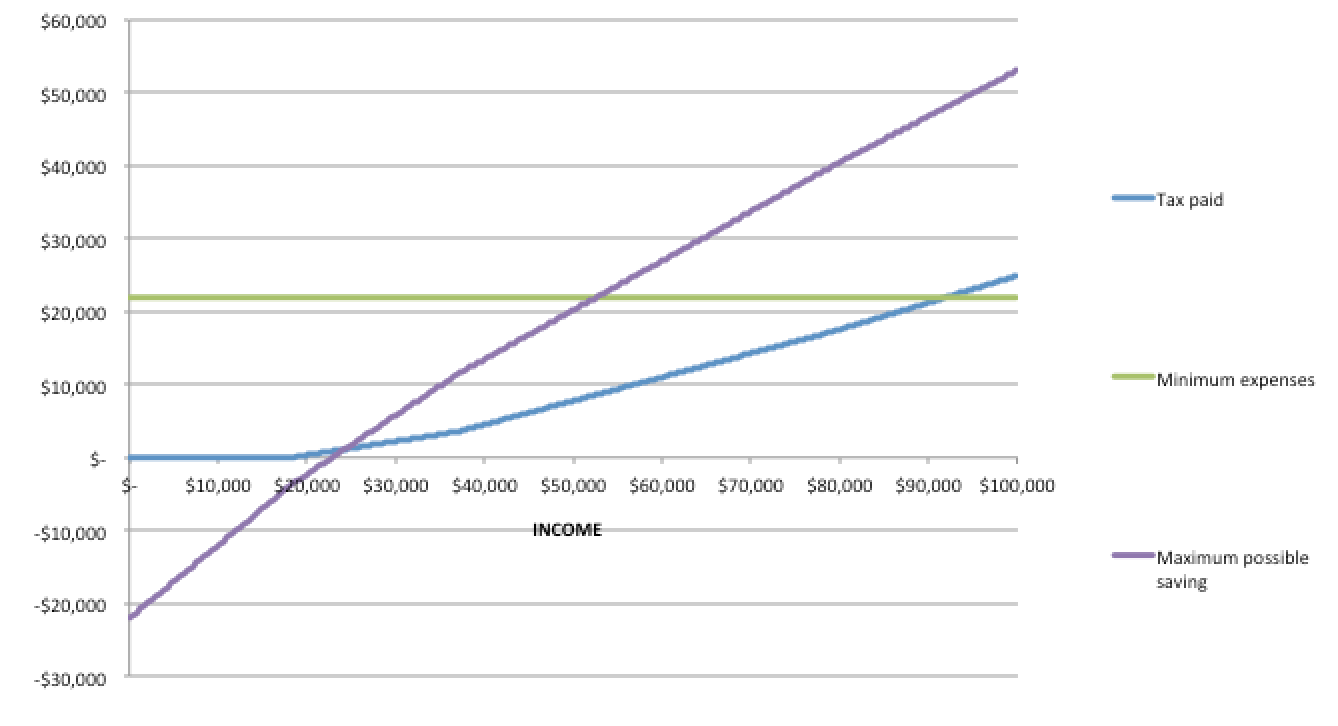
How much could a person save, if they wanted to live a normal life in a decent part of the city, showing up for work dressed appropriately, heating their house, eating nourishing food?
Holidays? No. Dinner out? No. A car? No. Soy flat white to take away? Uh-uh.
Total annual expenses would run to $21,948. Would it be worth it?
Before I made this graph, if you told me it was mathematically possible to save $20,000 a year on a pre-tax income of $50,000 I would have called you crazy. The graph above does not account for any government transfers or the low income tax offset (worth $230/year at income of $50k), either.
GOODBYE LUXURIES?
Savings advice seems to always centre around giving up takeaway coffee (1, 2, 3). I don’t drink a huge amount of take-away coffee, but when I do, I really enjoy it. And really, five cups a week at $4 each is only $20 a week.
The pie chart above shows there’s more to be gained by trimming down the big recurring expenses. Finding a place that rents out for $20 a week less locks in the saving of $20 a week, without constantly exercising self-control over caffeine urges. Self-control is like a muscle – it tires as you use it. So if you avoid buying coffee in the morning, you are more likely to splurge on pizza on the way home. Any saving plan should rely on locking in low recurrent expenses.
Behavioural economics suggests that humans have “present biases” that prevent them from meeting their own stated preferences about saving. That’s why we have compulsory superannuation. But there are tricks that make people respect their own preferences.
“Soman & Cheema (2011) evaluate an interesting variant of a commitment savings technology in a field experiment targeted at unbanked construction laborers in rural India who are paid cash wages. Individuals earmarked a certain amount of their weekly wages as savings that was then set aside in either one (nonpartitioned) or two (partitioned) sealed envelopes. Realized savings was 39–216% higher for workers whose savings were partitioned into two envelopes rather than put all into one envelope. The authors hypothesize that opening a savings envelope, or violating the partition, induces guilt. Having multiple accounts, or partitions, increases the psychological cost of spending money set aside for a specific purpose and consequently increased the amount saved.”
Even if they could, most people would not live like monks just to save up pennies in their bank account. But the structure of our tax system mean they will do it to pay for a home.
If you take out the rent expense of over $9000, pre-tax income of $50,000 leaves $28,000 spare a year. That’s enough to pay off a $400,000 mortgage.
I hesitated to even publish this graph, because it makes my non-house purchasing ways seem immoderate and wasteful. But there it is, in all its horrible glory. You can – if you set your mind to it -base a life of grim abstinence in a house of grand proportions.
Saving a bit is important to make you happy.
“Annual income twenty pounds, annual expenditure nineteen pounds nineteen and six, result happiness. Annual income twenty pounds, annual expenditure twenty pounds nought and six, result misery.” – Micawber, Dickens.
The kind of lifestyle I graphed above would be easy to maintain for a fortnight, possible to maintain for six months and hard to do for two years. After five years it’d be hard to do anything else, because your social life would have withered and died. Dickens, remember, also wrote about Ebenezer Scrooge. Like all things, saving is best in moderation.
In a comprehensive new paper disseminated by the US National Bureau of Economics Research, Harvard professor Brigitte Madrian discusses the latest thinking on using behavioural economics to optimise policy design.
There are a few items in there with direct relevance to Australia that are worth a bit of attention:
1. Orwellian language works. Madrian praises the re-branding of the UK’s dole as a “job-seeker allowance” and criticises the use of the term”work for the dole” in Australia. The evidence for the power of framing in the allocation of transfer payments is more significant than I had realised.
“Kooreman (2000) finds that the marginal propensity to consume children’s clothing is 10 times larger out of income designated as a “child benefit” than out of other income sources; in contrast, the marginal propensity to consume adult clothing is highly significant for other income sources but is negligible for income from designated child benefits. The labeling of income as a “child benefit” apparently creates in parents a moral obligation to actually spend that money on their children. Similarly, Benhassine et al. (2013) evaluate the impact on school enrollment of a labeled cash transfer program in Morocco that designated the funds for children’s education, although the funds could be used for other purposes. They find a sizeable increase in elementary school attendance by children in families who received the labeled cash transfer relative to children in control households who received nothing. They also find that a labeled cash transfer is as effective, indeed for some measures is more effective, at promoting school attendance than is a conditional cash transfer in which payments are made only if a child does in fact attend school (and is significantly less expensive to administer than a conditional cash transfer program).”
2. There’s a reason the ATO prefers to over-collect tax and deliver tax refunds each year, and it has to do with both loss aversion, and the way human minds frame problems with reference to arbitrary points.
“A natural reference point for taxpayers at the time of tax filing is whether they owe additional tax (relative to what has already been collected) or expect a refund. Engström et al. (2013) find that in Sweden, taxpayers are more aggressive about claiming deductions when they owe additional tax at the time of filing than when they expect a refund, consistent with the predictions of prospect theory. An obvious policy implication is that a tax collection strategy that relies on overwithholding followed by refunds at the time of tax filing may increase tax compliance and total taxes paid.”
3. Madrian is an economist, so she’s au fait with the merits of financial incentives. But the paper emphasises that public finances are in short supply, so it is important to look for policy tweaks that would work as well as a financial incentive.
“Levitt et al. (2012) examine the effectiveness of several different incentive schemes to motivate student performance on standardized exams. They find that giving students a trophy for meeting performance targets, at a cost of about $3 per student, has roughly the same impact on test scores as a direct financial incentive of either $10 or $20, and in some cases is more effective.”
Thinking about whether there is a behavioural economics solution that would substitute for a subsidy may also provide insight to the real reasons for a policy. For example, the government’s proposed Paid Parental Leave scheme – a subsidy for staying at home and looking after a child.
The PPL scheme is expensive, offering up to $50,000 dollars in wage matching over six months. What behavioural tweaks could make it cheaper?
The question is actually hard to answer. Is PPL designed to lift the birthrate? To keep women at home in the first 6 months of life? To return women to the workforce thereafter? To reduce demand for childcare? To support incomes? The fact that whatever the policy problem is can only be solved by this expensive PPL hints that it is in fact a policy in search of a solution.
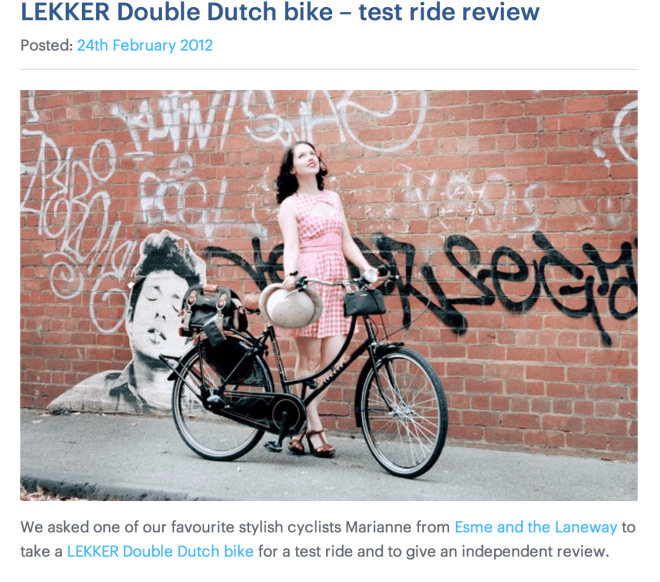
A bicycle is an experience good. A lot like a bottle of wine or a book, it’s hard to determine the quality of it before you consume it, so you can easily fall into the trap of buying the wrong one.
It is an easy mistake to make for anyone, but I’d like to focus on women tempted into buying “Dutch bikes.”
People buy Dutch bikes because in the shop, the sitting position seems very important – you seem to be choosing between “hunched over the handlebars” or “sitting up comfortably,” between “sporty” and “relaxed.”
I once went with my mum to buy a bike. She bought a heavy, upright bike and it is almost never used. She still rides though – it is just more likely to be on an old mountain bike.
In the real world, the discomfort of bicycling is – for a healthy person – much less about your body position, and far more about the effort expended.
This is extra relevant if you imagine doing some cycling for transport, not just leisure.
If you are sitting up comfortably on a 20kg bike, you will be going more slowly in almost all circumstances. If riding to work will take 5 minutes longer than the train, it’s unlikely to be your go-to choice when you are stressed in the morning.
You are also exerting yourself for longer. You will be exposed to a higher chance of getting caught in the rain, more tired and more likely to be drenched in sweat when you arrive.
Exertion and time are the real costs of cycling and the real reason bikes get left in the shed while their owners drive. Yet people who imagine themselves as “not sporty” are the most likely to buy heavy, hard-to-ride bikes!
Dutch bikes are slower because of extra weight (this “lifestyle transport bike for ladies” weighs 21.4kg), and the upright sitting position.
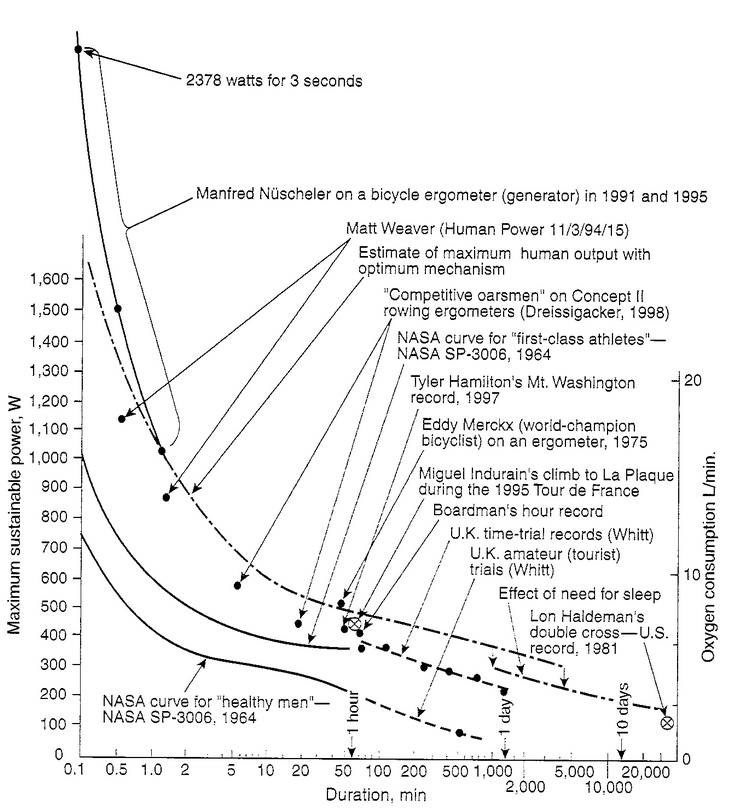
The unfit could be in the steep and tricky part of this graph at quite moderate wattages
The effect of sitting up straight is to create drag. Drag increases with speed, so a more aerodynamic position is more important when you would like to go fast. Not so important when idling along the shops or a busy off-road bikepath, but relevant on a long straight road, or when other cyclists are going fast.
Melbourne is not Amsterdam. It is undulating, in places downright hilly, and the other cyclists are not meandering along. If you find yourself pushing your bike uphill and getting overtaken, of course you will give up riding it.
If we observe actual women cycling, in the wild, we see what kind of bikes actually get used.
What we (mainly) see is this: flat bars, baskets and aluminium tubing. Bikes that weigh perhaps 12kg, not 20kg. Bikes that won’t make it into a shop’s window display but should be celebrated and promoted.
Other experience goods often have independent quality ratings that provide some sort of indication of what you’re getting. You might look for a Booker Prize shortlisted book, or a wine that has won a lot of medals.
So I’d like to contribute an endorsement for light and practical women’s bikes. What Dutch bikes need is an equal but opposite thing. A big red sticker on them that says: “Warning. Will gather dust.”
The Victorian Government is considering a new rule that would mean apartments have to be bigger than 37 square metres, or bigger than 50 square metres if they have a separate bedroom.
Why would we do it, especially when tiny homes are in huge demand?
I went to look at this little flat in East Melbourne a while ago. A bedsit in a nice location, in a beautiful building, with about 35 square metres of floorspace.
It turned out to be mouldy and squalid, and then sold for $370,00. But I would have happily lived in that much space if properly appointed (although not at that price!).
Is there inherently anything undignified about having one room that operates as bedroom, kitchen and lounge room? It is doubtless less comfortable, but I suspect that it is also true of driving a Barina rather than a Range Rover.
In fact, housing should probably be less regulated than cars. You can’t crash a house into someone else.
The fact of the matter is that small homes may suit many people best, for any number of reasons.
People might feel cosier and more secure in a small house. People physically unable or mentally indisposed to do housework may love them. Environmentalists may choose them because they require less energy to light and heat.
Certainly the single-person household is on the rise in a major way – up to 24 per cent of households from less than 20 per cent 15 years ago. So why would we regulate against small homes?
Part of the reason might be the psychology of decision makers.
People who make laws tend to live in large and charming detached houses. They wouldn’t want to live in a tiny little home. So they imagine they are helping the unfortunate by making sure homes are not small.
Politicians do not tend to live in the following: caravans, boarding houses, cars or under bridges. Lawmakers may struggle to empathise with those people, for whom a real home is a lifelong ambition they may never achieve because it is too expensive.
Very small studio apartments help make housing more affordable in two ways.
Not only do they cost less than a one bedroom house – which could be significant on its own – but they also allow for developers to put more homes on the same space, which increases the potential housing supply.
The worst thing you can say about a “too small” apartment is that they will be hard to sell. That the market for them will be small. That is equally true of a 20 bedroom mansion, and the same logic will apply – drop the price.
If in ten years they prove unpopular, that will actually provide relatively cheap homes near the city, for a small group of people who would otherwise be shut out. I could only support such a policy.
Higher interest rates make it harder to do business. If the RBA lifts interest rates now, while unemployment is at its highest level in years, the improvement in the labour market might slow down.
Basically, the RBA is in a pickle. It is an “inflation-targeting” bank. Our entire economy hinges on the idea that lower interest rates create both growth and inflation. If they only create inflation, then we are stuffed.
It nervously awaits the next release of inflation data (in 3 months time) and the next release of unemployment data (on August 7th). We should all be on the edge of our seats.
n.b. the fact that the red line is below the blue line in the graph above means we have negative real official interest rates! The fact that money is losing value should be enough to get people spending it.
There is a lot to be disappointed about in the current conflagration between Israel and Palestine.
The world is getting more peaceful every year, but that little area around the Dead Sea remains a hotbed of conflict and violence. Since long before I was born, there has been conflict there. Is there any way to make it stop?
I’m not a foreign policy expert, I’m not theist in any way, and I’ve never been to the middle east.
But I am trained as an economist and I’ve done a lot of reading on Game Theory. And it suggests to me the response of Israel to Hamas rockets is probably far from optimal.
Rocket attacks are not a brilliant strategic move by Hamas. They are motivated by anger. And the more Israel looks like a bully that willingly kills civilians, the angrier Gazans will get.
Equally, military force deployed by Israel is disproportionate, strategically unsound and seemingly driven by anger.
When the death toll in a “war” stands at over 500 to 20 (Reuters, 21 July), it is clear one side is doing more than the other. It might be imagined that the higher the willingness of Israel to be really aggressive, the faster Hamas learns to stop firing rockets. But that’s not what the theory says.
In this instance, each rocket attack could be defined as the move of a player, and met with proportional responses, rather than much larger missile attacks and a ground offensive.
The downside from Israeli government’s perspective is that it would be perceived as the government valuing Palestinian lives as much as their own.
Another approach backed by Game Theory, is called Graduated Reciprocation in Tension Reduction. It was developed in the 1960s as a way to address the Cold War and is optimised for breaking a stalemate. It involves one side announcing it will make a unilateral move to reduce tension, and then inviting the other side to respond.
“GRIT may have a greater effect on changing the “enemy images” that fuel conflict since it uses unsolicited gestures to signal a willingness to pursue common interests to an adversary who has heretofore seen the conflict in zero-sum terms. Nevertheless, GRIT also has shortcomings that need to be taken into account. In particular, the work of Lee Ross on “reactive devaluation” strongly suggests that the mere act of offering a concession decreases its perceived value in the eyes of the recipient (Ross, 1995; Ross & Ward, 1995).” source
De-escalation by one side is the only way for the conflict to return from boiling to simmering. I place the responsibility for making the first move to stop this “war” at the feet of Israel.
Some might argue that is unfair. But with the kind of moves Israel has made, Hamas lacks the capacity to play tit-for-tat. How could it mount a ground invasion? While Israel is a nuclear armed power, Gaza is not even a state, Hamas fighters are not real soldiers, and who knows how effective the chain of command is. The side that has an international reputation is Israel.
—
CODA / COUNTER-POINT
Israel may be investing in its reputation for being hard, rather than being irrational.
If a change in global polarity is coming, driven by the rise of China, Israel may perceive a need to be ready.
The US, may have a rival within decades. If China rises and forms an alliance with the oil-producing states that lie a short pipe-line away from its western border, the strategic imperatives for the US of supporting Israel may diminish.
Perhaps, in recognition of that, Israel has decided it will need to form a lasting peace within decades. If so it may be currently investing in a reputation of being mad and dangerous, in order to maximise concessions in that peace.
The last few years I paid an accountant to do my taxes, partly because there was no e-tax for Mac, and partly because I perceived there would be some great benefit of getting a professional involved.
Having now been on both sides it’s time to announce my conclusion.
E-tax is, for me, a million times quicker, easier and cheaper than using an accountant. (Even though last tax year my affairs were more complicated than ever, having an ABN and business income, a redundancy payment, etc to contend with).
All the information the accountant uses is provided by me – why not just enter it into a system myself? My accountant also bothered me with physical pieces of paper (ugh!) that I had to physically sign (so medieval!). Using an accountant also gave me no hard deadline on doing my taxes – unlike e-tax – so I let it hang over my head til the following May.
When I go to e-tax, the suburban accounting industry takes a hit. They used to make a few hundreds bucks a year from me ($451 last year, I think) but now they make nothing. Doubtless, this hurts.
But this is exactly how productivity increases – painfully. When I find a way to do something more cheaply, it means someone loses a revenue stream.
The money I used to send to the accountants, I can now spend in some other way. It might go on travel, a new bicycle or dinner out at a restaurant. Some other industry will see the upside of this efficiency increase.
The story of the accountant being pushed out of work by a computer program is extremely relevant right now.
“Software substitution, whether it’s for drivers or waiters or nurses … it’s progressing. … Technology over time will reduce demand for jobs, particularly at the lower end of skill set. … 20 years from now, labour demand for lots of skill sets will be substantially lower. I don’t think people have that in their mental model.” Bill Gates
In their mental model, the jobs are lost and not replaced. That defies centuries of progress. Could this time be different? I doubt it.
This guy (and many like him) were replaced by a single tractor
What will happen is that people will specialise in doing things only humans can do, or things where having a human do them adds great value.
We will not cease to be a social species, so there will be lots of instances in which people are prepared to pay a premium to have a human provide for them. You’ll notice the Sushi train has not yet replaced the waiter and the vending machine has not replaced the barkeeper.
What this means as well is that more and more jobs will be fun and challenging, because they are human-facing. There will be fewer book-keepers and widget makers squirrelled away in the back room never seeing another human.
Instead there will be more barbers, life coaches, counsellors, nail artists, masseurs, tailors, troubadors, baristas, chauffeurs, etc. And that’s only the existing jobs. I bet things you never thought a person could or would outsource will turn into huge industries.
I can imagine a cooking coach in people’s homes, to bridge the gap between eating in and out. A financial adviser on call in all manner of situations – perhaps you can set up your credit card so you have to dial them up and justify your purchase every time you try to spend more than $100.
There could be cycling leaders who organise a great ride through the best terrain for the day, and make sure you’re not stranded without a spare tube. Experts that come to you to help you “homebrew” beer or make your own yoghurt. Interior designers that help you custom craft your own furniture. Cleaners that do lots of value add, by say, bringing flowers. Dog trainers, cat groomers, budgie psychologists?
Many of these already exist at small scale. The possibilities are limited only by human ingenuity and the human desire to consume. Don’t bet against those forces.
The Essendon drugs saga has revealed an awful truth about football journalism. Most sports reporters are sycophants who live in fear of upsetting footy clubs.
The chumminess of journos and clubs can be shown in another way too – when the AFL launched its own, in-house news service, it actually compared quite well to the existing reporting.
Compared to the way politicians and companies are treated, much football journalism is as tough as being stroked with a mink mitten.
For example, here’s a story that definitely did not come straight out of an AFL marketing department: Players Back Coach.
Here’s a great quote from that story:
“Mick has remained positive and very supportive of the players,” Yarran said. “Hopefully, he goes on. It is in the best interest of us if he stays. He has been fantastic for me and for the footy club.”
The reason for the sucking-up is access. There are nine Melbourne clubs and far more journos. The clubs offer players and coaches for interviews with favoured news outlets. And the longevity of the clubs is secure.
That may be because a club does not hold all the cards. Three of the 20 teams are relegated out of the Premier League each year. The journalist knows that they can pursue a story about a club that will cause major damage to the club and the club can suffer so much it eventually disappears. It is not unlike the way a political reporter can hound a politician on a really big story that could end that politician’s career.
But in the AFL, if you hound a club on drugs or violence, sexism or a culture of persistent failure, they’ll be there next season, and the one after, and the one after. They are likely to last far longer than a football journo. Unlike politicians or even businesses, you can’t play a club off against another club – their survival does not depend on another’s failure.
About the only topic on which AFL journos will sometimes have a swing is coach performance. Is it any coincidence that coaches are hired and fired in the free market, and sometimes let go mid-season? I say no.
Introducing relegation into AFL would dramatically change the nature of the game, and make the AFL’s job of equalising the league far far harder. I’m a fan of an even competition and I am not seriously suggesting relegation.
Another alternative would be to have sports reporters whose goal is to make it as journos, not just as football journalists.
They would not be afraid to dig dirt on a club if they know they have a two-year tenure as footy journos before they get moved onto state politics, courts reporting, or restaurant reviewing…
Your thoughts? Egregious examples of sycophantic sports reporting? Favourite worst reporters? Please leave a comment below.


 But you want to be careful. Tasmania’s prospects are pretty dire, as discussed in this piece: How long until Tasmania is totally empty?



















 Thomas the Think Engine