Do we *really* want to be a small business nation?

This story was published by Crikey the day after the Budget and is now out from behind the paywall. Below is an excerpt.

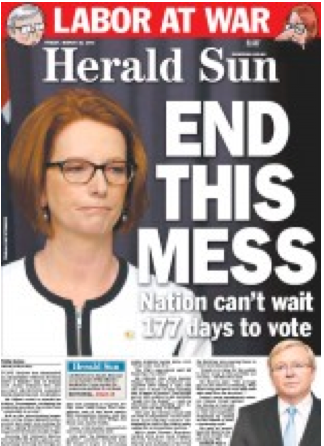
In last night’s budget speech, Joe Hockey spoke extensively of his father’s property business, and made it sound wonderful:

I, like so many of my colleagues, grew up in a small business family. That small business put a roof over our heads. It paid the bills. It gave all of the family a chance at a better life. Small business is often a family business. A business of brothers and sisters, uncles and aunts, cousins, parents and children. And for those who work in a small business, who are not related, well they often become family.”

(The future Treasurer’s experience with small business evidently shaped him so much that upon graduating university he went off to work for major law firm Corrs Chambers Westgarth.)

Today, the head of the small business lobby described himself as “gobsmacked” and revealed that his sector got “far more” than it lobbied for.

Small business owners are a powerful voting bloc. But the budget’s unchained enthusiasm for the entrepreneurial class makes one wonder if it is, in fact, devoid of the ideological touch that soured last year’s effort.

Most of us probably have warm thoughts towards small businesses — the people who cut our hair and wrap our fish and chips in paper. But the Treasurer’s current small business obsession — and make no mistake, this budget is obsessed with small business — could have less benign effects than putting a smile on the local cafe owner’s face.

Please check out the story on Crikey.

Rich, white, connected. How Uber rolled the taxi lobby and won the world

This story is hosted over on Crikey, where it is now out from behind the paywall! I’m rather pleased with it.

Here’s a little excerpt:

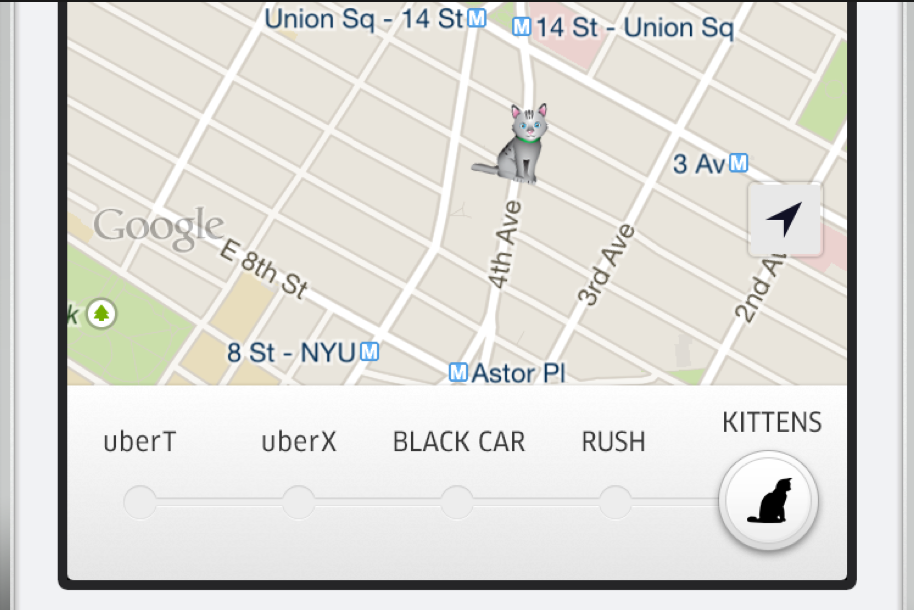
Uber’s marketing department gets a lot of attention for stunts. For example, during a recent promotion, Uber drivers delivered kittens to people who requested them through the app. People would play with the kittens and upload photos to social media.

Screen Shot 2015-07-10 at 10.20.31 amIt got a lot of press. But these sorts of stunts are the puff of smoke that happens while the magician is busy, not the real machinery of success.

This misdirection is all the more remarkable because what Uber has achieved is enormous. The company took on one of the most powerful industries, in one of the most heavily regulated sectors in the world, and won.

To read the whole thing, please visit Crikey, who paid for the original story!

How you’ve been buying wine wrong.

This post originally appeared over at The New Daily, where I’ve been writing a consumer-focused story each week.

We’ve all been there. In a bottle shop on the way to a dinner, wondering what kind of wine to buy.

20 per cent of our brain is thinking about the grape varietal, but 80 per cent is wondering if we’ll look like a bogan if we bring something cheap.

Australia has been doing wine wrong for ages. Our approach to vino is getting further and further away from how the Europeans do it, and more and more silly in the process.

The price of grapes has been tumbling.Screen Shot 2015-07-03 at 3.40.50 pm

Source: Australian Government Wine and Grape Authority Vintage Report 2014

Just 15 per cent of grape growers made a profit last year.

But has that meant cheaper plonk for us? Hell no. The average price paid for wine has now risen over $10/litre.

As the cost of grapes falls, we buy more and more pricey wine.

Screen Shot 2015-07-03 at 3.30.41 pm Price per bottle (equivalent).

Source: Coles Report for Winemakers Federation of Australia

Wines that sell for over $15 and over $30 have seen sales grow by about 50 per cent in five years.

(The under $7 category looks big, but remember that will include sales of those commercial-size 30+ litre casks to pubs, restaurants and commercial kitchens, – what you’re left with is a market for bottled wine that has turned quite fancy.)

FLAVOUR SAVER?

It may be hard to believe but a $35 bottle of wine may be no better than something that costs 10% as much. Here’s why:

Scientists showed people rate a wines as delicious if they’re told they’re expensive, and not delicious if they’re told it’s cheap.

Those scientists found real differences inside people’s brains during tasting, just depending on the price point they were told about. (It was the same wine.)

Screen Shot 2015-07-03 at 4.26.28 pm

They really experience a difference. But here’s the thing. If you know there’s no difference between the expensive wine and the cheap wine, the trick doesn’t work.

THE BIG TWO

So buying cheap wine and being confident it will taste good should be a winning strategy.

It’s not easy to do that in Australia. Part of the reason is the grip the big supermarkets have on the wine market.

According to a report published by the Winemakers Federation of Australia, Supermarket chains account for 56 per cent of wine sold. Independent bottle shops for 14 per cent. Cellar door online and wine clubs are 11 per cent. And food service accounts for 19 per cent.

When you stroll the aisles at Dan Murphy’s, your eye might settle on a bottle like Silver Moki, a Marlborough Sauvignon Blanc.

Screen Shot 2015-07-08 at 10.13.48 amWhere’s that winery, exactly? Good question.

The answer is there is no such winery and the brand on the bottle is owned by Pinaccle Liquor, which is associated very closely with Woolworths. Pinaccle Liquor essentially makes home brand drinks for Woolworths. Not just wines but also spirits. It also has the license for certain imported brands.

Dan Murphy’s is also owned by Woolworths. But on the shelves at the bottle shop, unlike at the supermarket, these Woolworths brands don’t have the word Select on them.

Owning their own brands gives Dan Murphy’s market power. It can fill its shelves without having to give in to every demand that comes from every vineyard.

Dan Murphy’s success contributed to the 27 per cent gross profit at Woolworths (translating to $2.5 billion of net profit after tax) in the 2014 Financial year.

The company-owned wines are apparently something they don’t like to talk about much. Woolworths wouldn’t send me a list when I asked. But a huge range of company-owned brands (Coles as well as Woolies) is outlined at the independent website whomakesmywine.com.au.

These company-owned wines are not necessarily bad. Some have local wine-makers involved in their production and have great marketing, like this Yarnbomb wine. It’s made in the Pinnacle Drinks production facility, from grapes sourced from across Maclaren Vale.

Video: https://www.youtube.com/watch?t=52&v=GTlHbNOJ0Uk

But some home brand wines are just mass-produced, like a bottle of Sprite. Pinnacle Drinks also makes the Spanish Tempranillo ‘Lovers not Toreadors’ for Woolworths ($16.99 a bottle), and C’est La Vie Rose ($13.99 a bottle).

We love the stories of independent winemakers. We love to visit cellar doors and see a few generations of one family at work among the intoxicating smell of the barrels. But we refuse to admit most wine is not made like that.

We are paying a premium for home-brand wines, and kidding ourselves.

LA DOLCE VITA?

Australia is like America in this respect.

Because our nation is relatively new to wine, wine is a source of fear as well as delight.

In Europe, families might take a plastic bottle to the supermarket to fill up with a litre of table wine for a euro or two.

Meanwhile we worry about being seen drinking the wrong kind and worry that we are insufficiently expert. We do wine appreciation courses and we spend up big to compensate.

We weren’t always so fussy about wine. It used to be acceptable to get wine in a box. But around about eight years ago the cask became a minority item.

Screen Shot 2015-07-03 at 3.20.15 pm

But maybe it’s time for the comeback of the cask. If we’re going to be drinking wine that’s made much like Sprite, why kid ourselves that it’s fancy?

Two crazy ideas for the asylum seeker problem

Asylum seeker boat arrivals – fairly inconsequential in real terms – are a major political problem.

Last night on QandA a Labor minister indicated that the “journey” would not be “re-opened” for asylum seekers, indicating a maniacal desire to “stop the boats” is a bipartisan ambition.Screen Shot 2015-07-07 at 11.13.20 am

The racist pandering to Western Sydney inherent in “stopping the boats” was always called out as the bullshit it was. Until the video of the drownings of asylum seekers on the coast of Christmas Island in 2010. Suddenly it was possible to say preventing asylum seekers from arriving in Australia by boat was a moral imperative.

That’s an extreme idea, requiring the sort of broad view of morality that would also support fencing off Australia’s surf beaches to prevent drownings. Most people would say imperative #1 is to not harm people with your actions.

One year ago I wrote about how powerless and ineffective I feel when faced with asylum seeker policy. What’s changed is that the extreme nature of the “solution” – including laws preventing reporting of child abuse – permits a broader range of alternatives that might previously also have been seen as “extreme.”

So is it possible to solve the boat arrivals “problem” without spending billions and becoming a police state? It must be. Lets think outside the box.

1. Make a queue

People are always fighting about queue jumpers, and whether there is a queue. What if we made an actual queue on the shores of Indonesia, where the boats are leaving from?

Asylum seekers get on a boat because that’s how they imagine they can get into Australia. What if we let them get into Australia without getting on a boat?

Could we rent some space from the Indonesians, bring it inside the migration exclusion zone and process refugee claims up there?

Budget impact score: 9/10. No more detention centres, less need to police the seas for boat arrivals, etc.

Political acceptability score: 5/10. Should diminish boat arrivals so long as the applications are processed swiftly.

Direct morality score: 8/10. Assuming they are able to live in the community in Indonesia, there need be no imprisonment.

Indirect morality score: 9/10. No more drownings between Indonesia and Christmas Island.

2. Open slather.

Embrace boat arrivals. Stop turnbacks, Close off-shore detention; close on-shore detention; visas to live in the community while refugee applications processed.

This is about stopping boat arrivals from being a political problem. If you wanted to change the narrative on boat arrivals, you’d have to own the arrival of each boat. Get a video crew, translators and a government minister onto each boat as it arrives, so we can see them shaking hands with the asylum seekers, chatting and smiling. Interview the people, find out their stories and their names. Publish lists of asylum seekers, their smiling photos, and key quotes from them. Humanise not dehumanise. Let’s hear about their desire to live in Australia, their interest in what they’ve heard about us, their qualifications and jobs in their home countries, what they’re fleeing, what skills they bring, etc. This would absolutely freak everyone out for a while but the rate of repetition and the volume of boat arrival footage might eventually make boat arrivals very very boring.

(I think this approach could be helped along by some sort of non-government work to try to humanise asylum seekers. Greenpeace made us care about whales by having little inflatable boats out there and video cameras showing what was happening. Can we do the same with Asylum seekers? Could Sea Shepherd open up a northern Australia branch, for caring about humans? )

Budget impact score: 10/10. This is cheap.

Political acceptability score: 2/10 in the short-term as boat arrivals will go up up up.

Direct morality score: 10/10 (No more taxpayer-funded imprisoning of innocent people)

Indirect morality score: 5/10. (Some drownings still likely).

I’d be very interested to hear any other crazy ideas people have. Please share them below!

How one internet hater made me learn something important.

On Sunday, I found a whole lot of traffic coming to my site.

Screen Shot 2015-07-06 at 2.41.21 pmThis would normally be great news! The clicks were leading to a piece I wrote a few weeks ago about the ABC documentary The Killing Season. It was a scathing attack on how the media airbrushed itself out of the political intrigue. I knew it might lose me some friends in the media establishment, but I thought it was a story worth telling.

But when I traced back the link that was directing all the clicks, I found this:

Screen Shot 2015-07-06 at 2.45.06 pmThe piece had been fairly well received. Until yesterday.Screen Shot 2015-07-06 at 2.42.43 pm

The author of these epithets is not some lonely nut-job. His blog is otherwise quite good and he has a lot of readers.

But he had quite mistaken my take-down of the media.

I had a bit of trouble grasping what had gone wrong. How could what I wrote be seen as a defence of the media? It made no sense.

I drafted several extremely rude and contemptuous replies to his blogpost but then deleted them and spent more time pondering.

I believe I’ve unwound the problem. And in doing so came to a sort of epiphany.

The problem for this reader started when I tried to do a bit of structural analysis of why the media behaves as it does.

I wrote:

“The political journalist’s job is absurdly stressful and difficult. I doubt many people could imagine how precious time is for a working journalist. Deadlines don’t just loom. They crash down. There is scarcely time for typing, let alone time for reflection.

Pondering the role of the media in shaping political events is a job for retirement. Their job is to get stories out the door. Now.”

He interpreted this as me excusing the behaviour of the media, and that set him off.

Explaining is not excusing.

You can do analysis that says: Behaviour X is prevalent in a certain population because of these structural factors, and still condemn each instance of that behaviour.

For example, domestic violence in indigenous communities, killings in America’s inner cities, obesity in contemporary Australia, lying among politicians.

In each case, the people who bash their partners, kill their neighbour, eat so much they get fat, and tell untruths have done the wrong thing. They should change their behaviour.

But the heightened prevalence of these outcomes in these communities is not because they are a uniquely vile set of people.

There are structural explanations – things about their economy, society and unique incentives that make these transgressions more likely. Not inevitable for any individual, but likely in a population.

Pointing out structural explanations is risky: It has an extremely strong history of making people very upset.Screen Shot 2015-07-06 at 2.22.47 pm Screen Shot 2015-07-06 at 2.14.35 pm Screen Shot 2015-07-06 at 2.12.40 pm Screen Shot 2015-07-06 at 2.11.42 pmPeople think you’re letting bad people off the hook. I disagree.

I think explaining why problems exist is more useful than berating wrong-doers.

Berating can only get you so far when the incentives haven’t changed. Pointing out structural problems helps us improve our society.

To see why berating won’t work, let’s look at it statistically.

Let’s agree the government does a lot that is wrong. What are the odds that the entire parliament is composed of people with a sense of ethics that falls far below the national expectations? The odds seem low that all 150 MPs are selfish liars. In fact politics, with its lower pay and higher scrutiny, ought to attract more ethical people than some other careers. A structural explanation for their behaviour is likely more useful. Same for journalists.

The circumstances/context of a group of people are important to understand because:

1. We can potentially change the circumstances;

2. They have a big influence on people’s behaviour.

It turns out, despite what our fundamental myths like to tell us about the nature of character, that human behaviour is shaped far more by circumstance and priming than we like to admit. Personality and character have a role. But not always a defining role.

This is where I got excited.

Spending a lot of time around the internet, one often falls into debates where good behaviour goes out the window. I’m guilty of this. I see someone saying something factually wrong, and I type a mean response. I swear I’m trying to be nicer, but without always being successful.

So is the internet bringing out haters who always existed? I say no. It’s the circumstances that make haters.

Something about anonymity, the invisibility of intentions, and the ability to dredge up someone’s history to make a neat little narrative of their motivations can turn good people quite nasty. They can turn especially nasty if they think you’re providing excuses to their sworn enemy.

Acknowledging the internet incubates nastiness is an important first step. It allows people who want to male the internet more civil to introduce changes, like using our real world identities more, doing reporting and moderation of comments, and hopefully many others that haven’t been invented yet.

So I don’t hate the guy who misunderstood my blog and called me all those names.

I bet if he and I sat down face-to-face we’d get along just fine.

Speech – Prime Minister Wyatt Roy. January 26 2038.

Screen Shot 2015-07-02 at 11.07.33 amSpeech – Prime Minister Wyatt Roy.

January 26 2038.

[check against delivery]

My fellow Australians.

On this 250th anniversary of the arrival of the First Fleet on this continent, I want to make a few comments about our society and economy.

Arrival Day, as we’ve known it for several decades now, has become a day to look back on things we’ve done wrong. Dedicating a day to critical self-reflection is one of our nation’s finest achievements. We can’t undo our mistakes. But we can learn from them and use that to set the future on the right path.

That’s why it’s very important we think about house prices. How did we get to this point? When I travel across this country, I see three disappointed generations – one owning homes that have slumped in value; one owing giant debts on low-value homes, and one perhaps able to buy a home, if they were not wounded by the economic shrapnel that came from the explosion.

We were like butterflies. We thought our brief glimpse of the world told us everything we needed to know. House price crashes had never happened in our lifetimes, so while rates were low, we treated the banks like an all-you-can-eat salad bar.

Interest rates were low for so long that we began to think they’d never go back up either.

When the RBA raised rate in 2025, after so many years of inactivity, perhaps the house price upswing might have stopped. That was our chance.

But fate intervened.

We now know that China’s overstretched financial system was, at that exact moment, about to burst. The failure kept interest rates low, even as Chinese funds flowed out of China and found their way to Australia.

RBA Governor Stevens repeated his now infamous signature move and cut rates. The price of housing in Australia continued to rise. Median prices in all major capitals topped $1 million. Sydney’s average price rose over $2 million.

A first home loan of six figures was de rigeur. And why not? With rates at 1 per cent, young people around Australia could afford that sort of debt to obtain their own home.

Their parents, in most cases, had done likewise. Who would talk them out of it? I saw my own children – Morgan and Orbison – make the exact choices I had, and although I felt a tremor of unease, I didn’t want to dictate their lives to them. Personal freedom is one of the strands of philosophy that enlivens the Libor Party I lead, and I try to live it out in my own life too.

At home I bit my tongue. To my shame, I did the same from the opposition benches in Parliament.

Treasurer Bandt seemed to have a firm grip on the economy. House price appreciation was as Australian as a Golden Gaytime on a 45-degree day. Who was I to argue with a trend that had run my entire life?

Environment Minister Irwin read me a quote the other day that I knew I must use in this speech.

That men do not learn very much from the lessons of history is the most important of all the lessons of history,” she said. That’s from a science fiction writer from last century. He saw something of the future, Bindi told me, but only by paying careful attention to the past.

That’s our job, from hereon. To make sure we pay attention to the full sweep of history. We must not only be obsessed with what’s right under our noses. The more things change, the more they stay the same. The lessons of 5 years ago may glow more brightly than the lessons of 105 years ago, but they are not always more pertinent.

We should make sure our memory of the excesses of the mid 20th century inform our debates on government over-reach. Make sure our memories of the 18th and 19th centuries inform our debates on unchecked poverty. Make sure our memories of the rise and fall of civilisations long past informs our thinking about our permanence.

On this day, above all others, I commend the study of history to all of us.

So, should you spend a bit more to get a fancier car?

This story originally appeared over at The New Daily. (They’ve asked me to write a consumer-focused story each week, which I will also post here)

I recently looked up the cheapest new car and the most expensive new car being advertised in Australia. I was gobsmacked at both ends of the spectrum.

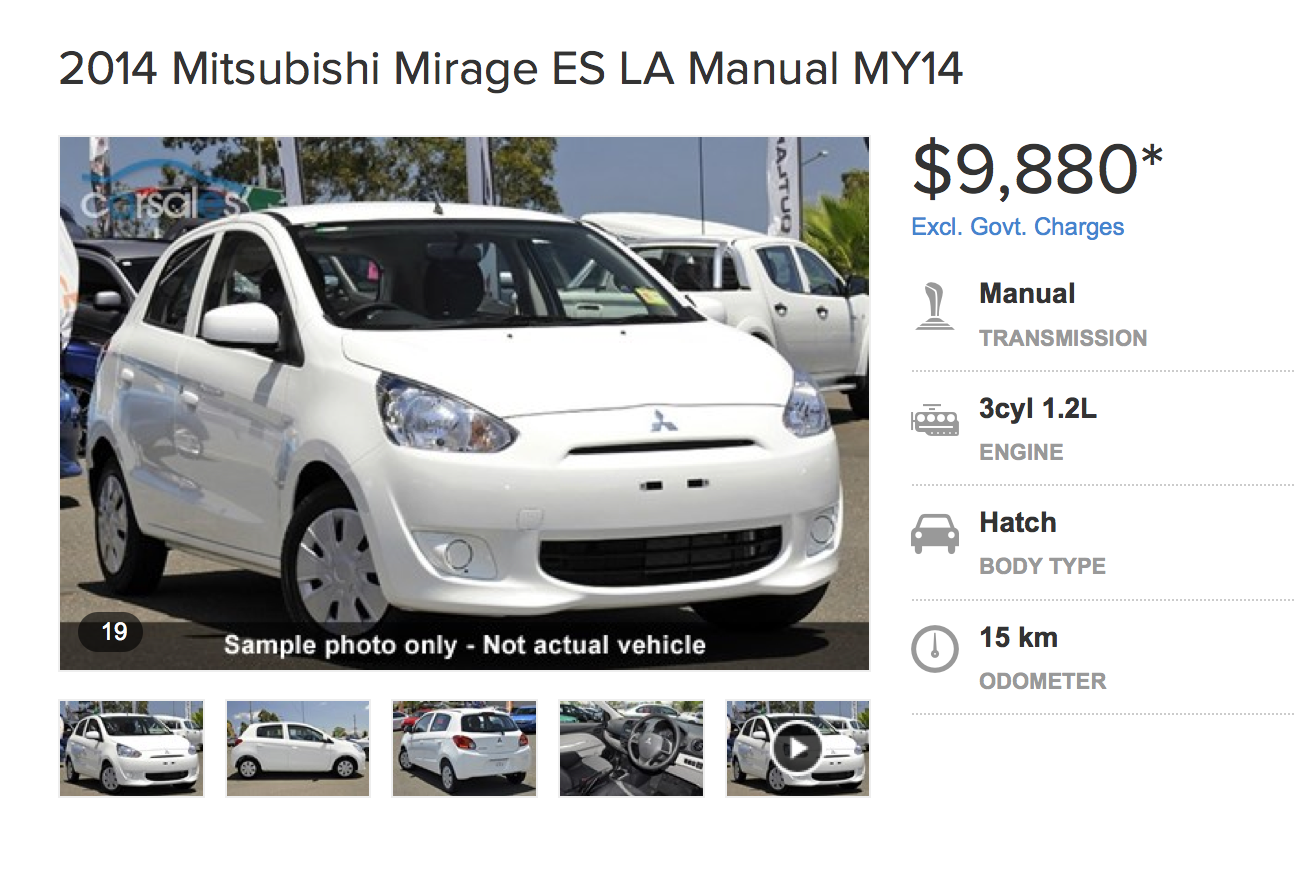
At the very bottom end was a Mitsubishi Mirage, 2014 model, with only 15km on the clock. It cost $9,880 before on-road charges.

Screen Shot 2015-06-28 at 2.52.40 pm

The most expensive was a new Rolls Royce Phantom. The only one of its kind in Australia. Price $994,000, drive away, no more to pay.

Screen Shot 2015-06-27 at 11.29.16 am

That’s 100 times more expensive! Obviously you get big differences depending on which car you choose.

Only one of these cars has a 5-star ANCAP rating – the highest local standard for safety, and a 5-year warranty.

As you probably guessed, I’m talking about the Mirage. Yep. You can pay a million bucks for a car that has no official Aussie safety rating and a shorter (four-year) warranty.

The Mirage’s little motor also boasts far better fuel efficiency, at 4.6L/100km. That compares to 14.8L/100 km for the 12-cylinder engine beneath with the winged lady.

So the cheapest car is winning on some pretty important features. This made me wonder. What is the real difference between a cheap and expensive car?

Once upon a time it was reliability. Mercedes of old ran for hundreds of thousands of kilometres. Not so much any more.

The great industrialisation of Japan, from the middle of last century changed the game. The brilliant standardisation of quality pioneered by companies like Toyota made quality a starting point.

These days the car that endures that is likely to be a Honda or Subaru.

So luxury cars distinguished themselves with features. Leather seats. Sunroofs and electric windows. (Remember how exciting the smooth glide of an electric windows was when they first came in?) Cruise control and heated seats.

But it turned out that when you’re making millions of Camrys, it is possible to cheaply fit them all with an impressive swag of desirable features. So the game shifted again.

Now the luxury car distinguishes itself on some rather weird parameters.

The reviewers dwell on things like the noise the engine makes in a Porsche, or “a rather striking cherry wood inlay in the luggage area” in a new Mercedes.

Do these things matter to anyone who isn’t looking for a reason to buy an expensive car anyway? They remind me of the blueberry notes the labels are always so eloquent about in fancy bottles of wine. Important for an extremely refined few.

Most of us operate at a rather more prosaic level.

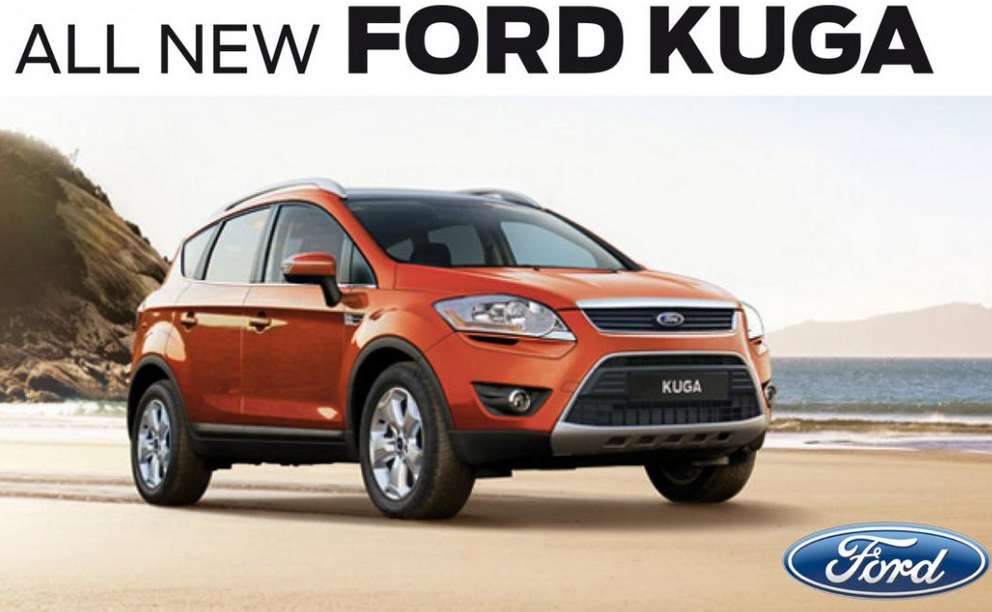
Let’s look at two vehicles in the fastest growing category around – “crossover” SUVS. Screen Shot 2015-07-01 at 1.37.05 pmScreen Shot 2015-07-01 at 1.37.34 pmA Ford Kuga costing around $26,000 and a Mercedes GLA costing around $55,000.

Here’s a comparison on some important features.

Screen Shot 2015-07-01 at 1.43.07 pm

Okay, I’m being facetious.

There are actual differences. For example, the Mercedes gives you 4.6L/100km, the Kuga 6.3L/100km. And there’s more:

Screen Shot 2015-07-01 at 1.43.14 pmThere are lots of other little differences too, in things that are probably good to have. But adding them up, are they worth an extra $30,000+?

The difference in comfort between a $25,000 car and $55,000 car is more slight than the difference between economy and business class on an aeroplane. If you sit in that car for an hour a day for ten years – 3650 hours – a $30,000 price difference means you’re paying a premium of $8 an hour.

Whether that $8 hourly rate looks like a worthwhile investment or a worthwhile saving depends on the person, and their income.

Interestingly, it seems income is a big factor.

Official statistics show the rich spend far more on cars than the poor. Households at the top of the income distribution spend eight times more on cars than the bottom of the distribution.

Maybe they can afford it. Maybe they value the small luxuries of life. But there’s another explanation possible too.

It is called signalling. On the African savannah, the male lion grows a mane which may actually harm its survival. Doing so and still managing to thrive shows it is super fit and healthy – and worth mating with.

Some experts think conspicuous consumption is similar in humans. Throwing money around announces to the world that you are special.

The larger and more frivolous the expenditure, the more effective the announcement. It makes sense – the person who buys that one-of-only-25-in-the-world Rolls Royce is far more likely to be someone trying to demonstrate something about themselves than a person with an extreme passion for fine wood inlays.

So when we see someone insisting they need electric lumbar support and alloy wheels, and the Mercedes is simply the best way to get that, we are probably justified to wonder whether they are falling into the trap of simply showing off.

Obviously, there’s a minimum price point –perhaps somewhere below $10,000 – where spending less on a car is a risk too big to take. And there’s a point – probably somewhere above $100,000 – where spending more is entirely silly. But where’s the tipping point? What’s too much to spend on a car? What’s too little? Please share your views below!

Disenfranchised but safe: Australia now.

The ABS has just released an odd bundle of data with a whole lot of hidden gems in it.

This part on political enfranchisement caught my eye. Between 2006 and 2014 fewer people felt able to have a say, down from 29 per cent to 24 per cent. Meanwhile, a growing share of people thought they couldn’t have a say.

politically invovled

But it’s not all bad news. Aussies feel a lot safer.

Screen Shot 2015-06-30 at 12.16.00 pm Screen Shot 2015-06-30 at 12.13.30 pm

Is this the classic trade-off of voting for authoritarian governments – gaining safety but giving up your voice?  Perhaps that’s a bit glib…

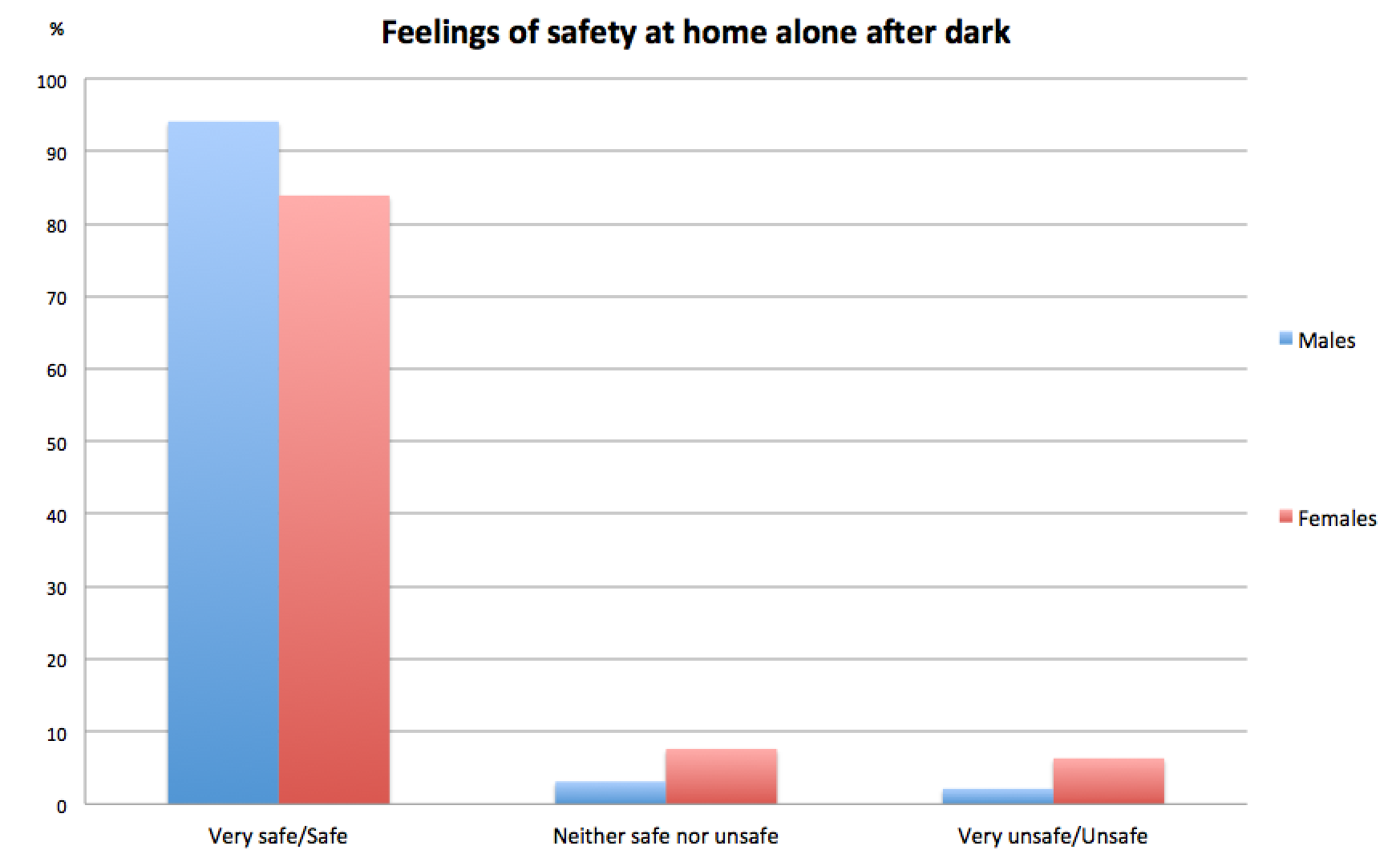
Let’s look instead at how men and women perceive safety.

Screen Shot 2015-06-30 at 12.23.55 pm

Women fear more for their safety. They are three times more likely to feel very unsafe.

The question itself though is a bad one. How much you fear for your safety when home alone is less important than how much you fear for your safety when you’re home with your partner.

Intimate partner violence is the leading contributor to death, disability and ill-health in Australian women aged 15-44, according to White Ribbon.

I call on the ABS to lift its game and ask the right questions.

This next set of data didn’t come in a time series, but was interesting. A snapshot of who is happiest, it contains a few surprises: The elderly are the happiest, recent migrants are happier than average, and gays and lesbians are about as happy as the average.

life satisfaction

It  shows where society can improve – people with mental health conditions are far worse off than the average, and people who identify as non-heterosexual but not gay or lesbian are the least happy of all. I’m not sure what the policy options are for that last category, but I do know we can and should do more in mental health prevention and treatment.

One simpler issue I’d like to draw attention to is the unemployed. They are more unhappy than a person with a disability, and there’s more of them than there have been for years. Joe Hockey’s first Budget must bear a lot of blame for Australia’s recent surging unemployment rate. His second budget is better, but still not enough to undo the harm. Fixing unemployment is not a parlour game of economic philosophy. It’s an urgent issue to do with human suffering and it should be a national priority.

Why you should be proud you didn’t fall for the Apple Watch Hype.

This article originally appeared at The New Daily.

You should be proud you didn’t succumb to hype and buy an Apple Watch. Not only because you saved between $499 and $17,000. (The $17,000 one has rose gold bits. Really).

You should be proud because the watch is a dud, and its failure shows some very good news: sometimes, we humans are smart enough to see through the best marketing in the world.

Apple’s marketing is famous. No. Beyond famous – it’s revered.

The Apple hype machine is what they’ll be teaching in marketing class in 100 years time. Apple’s marketers completely rewrote the rule book and managed to get news organisations to report breathlessly on the fact their new product was coming out.

Their secret recipe for marketing success had the following four parts.

  1. Secrecy + Tantalisation

Apple makes exceedingly few official announcements about what it’s doing next. Then it springs surprises. The shortfall of official information creates riots around every possible leak, every possible hint. First rumours of an Apple watch were way back in 2012. 36 months of headlines ensued as the public salivated over the possible new product.

  1. Reputation

Lots of companies had smartwatches coming out. Only Apple’s had people on tenterhooks. That’s because the California-based juggernaut earned our respect with a series of good products.

  1. Customers who are thought leaders

If you have an effective but ugly product, it will be bought by effective but ugly people. Apple’s products are effective and look cool. Cool people want them, this makes Apple products even more cool. Repeat.

  1. Fake scarcity

On launch day there’s never enough supply. This makes people queue. Then the news organisations show up to interview people queueing. Why can’t Apple sort out its supply chain? Oh, that’s right. It could easily. But lines of excited people are all part of the grand design. (Interestingly, the Apple Watch had an online launch, not in stores. Perhaps Apple sensed the queues might seem disappointingly small?)

This four-part marketing symphony was in perfect tune for the many iPods, iPhones, iPads and MacBooks the California-based company launched between 2004 and 2014.

That decade of glory saw Apple’s share value rise from around $5 to $125. The company sold $800 billion worth of product at amazing profit margins – often over 50 per cent. It has banked so much money (US$194 billion according to recent reports) it could now buy Australia’s biggest bank – Commonwealth – without going into debt. On the same shopping trip it could also pick up Telstra and Macquarie Bank. And still have cash to spare.

But then the marketing machine stumbled.

It turns out brilliant marketing really only works in combination with a brilliant product. We should give ourselves a pat on the back, humanity. Sometimes a dumb product comes along and even the best marketing doesn’t fool us.

Let’s not mince words about the Apple Watch. It’s not good.

Some people put off buying a smart watch for a long time because they expected the Apple version to be a category killer.

Here’s some choice parts of a review written by one of those previously enthusiastic people:

“…A horror to put on…. the requirement to recharge every night very quickly became tedious … I almost never felt the haptic alerts… I decided to return it…. I nominated a courier pickup date and location, and I received a ‘return address’ label to print and attach to the box. Going through the motions of removing the Watch from my wrist, unplugging and coiling th charging cable, and stowing it all carefully back into the layers of excessive packaging, was strangely cathartic.”

And he’s not alone.

There are hundreds of unflattering reviews on the internet.

Given the trend towards bigger screens in smartphones, it’s not clear why people thought a smartwatch was such a good idea.

Historically, there has not been much demand for wearable information technology.

The market starts and ends with the wristwatch. Wristwatches became extremely popular in the west in the 20th century, following their use by aviators in world war one. But it would be easy to over-interpret the importance of a display strapped to your arm.

  • The wristwatch took serious market share from the pocket watch only in the last 100 years.
  • The wristwatch is a thing you glance at, not interact with. Even serious stopwatches are strapless.
  • When mobile phones came out, younger generations mostly gave up wristwatches.

An interactive display strapped to the one body part you can reach with only one hand may come to seem a technological dead end.

Apple is obviously betting that’s not the case. There are already rumours in the wind of a newer, better Apple Watch.

Will brilliant marketing and a brilliant product combine again in the case of Apple Watch 2.0? Apple better hope so. Because its next product launch will have to retrain the brains of consumers who just learned not to trust the hype.

The industry that’ll save Australia doesn’t require coding

There’s an industry on the brink of a break-out, and it doesn’t require us to learn C++. It would rather we learned to smile widely.

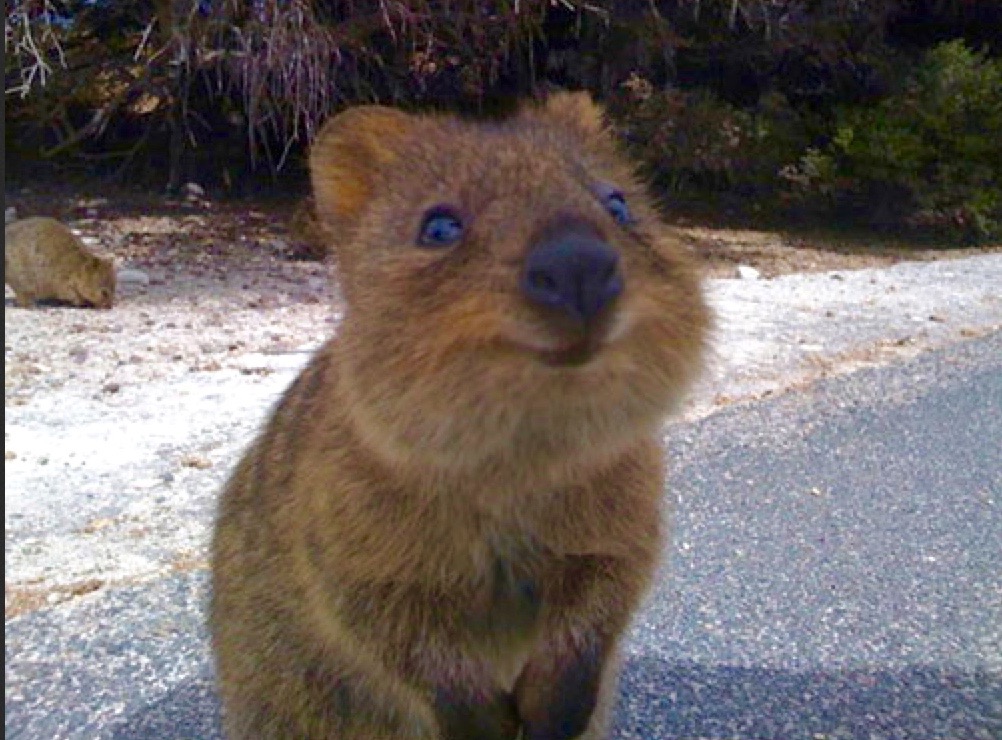
G'day Quokka!
G’day Quokka!

That industry is tourism.

Tourist arrival numbers hit records in November, December, February and March. Glancing at this graph of the last 15 years tells us we’re onto a winner. Look at that uptick since 2012!

Screen Shot 2015-06-25 at 11.06.14 amArrivals in March 2015 were 13 percent higher than a year ago. Arrivals in February were 14 per cent higher.

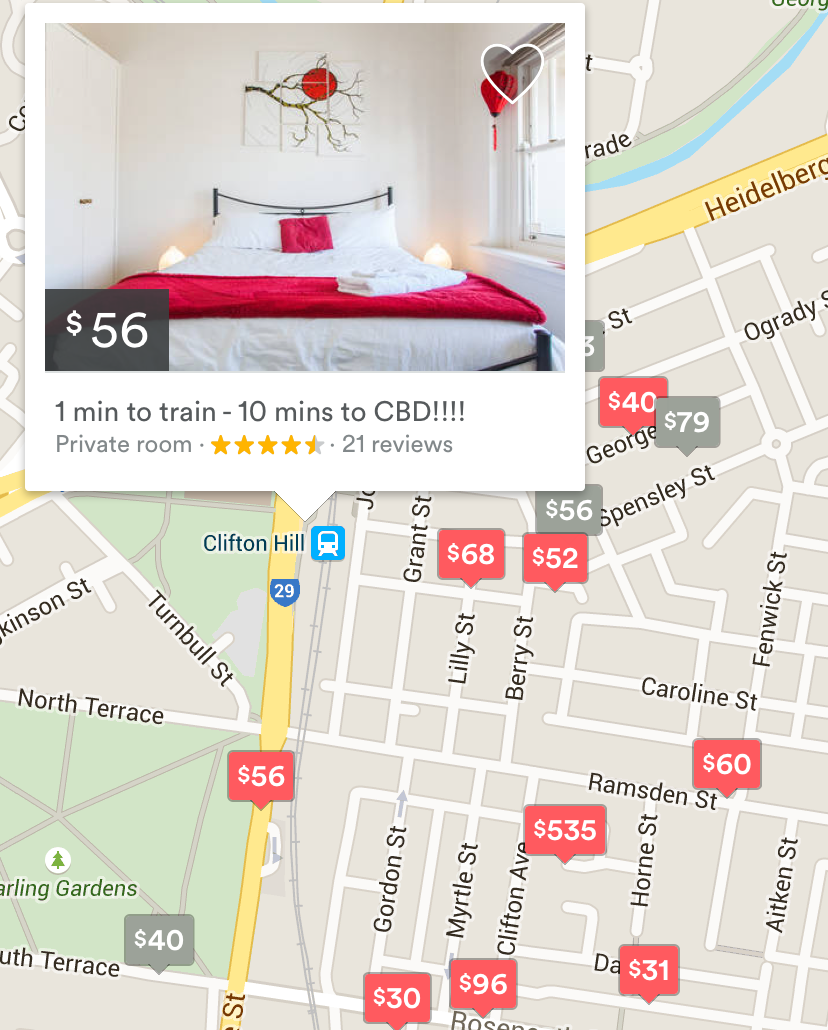
It’s time to turn your place into an AirBnB, people. There are already dozens of listings within walking distance of my house.

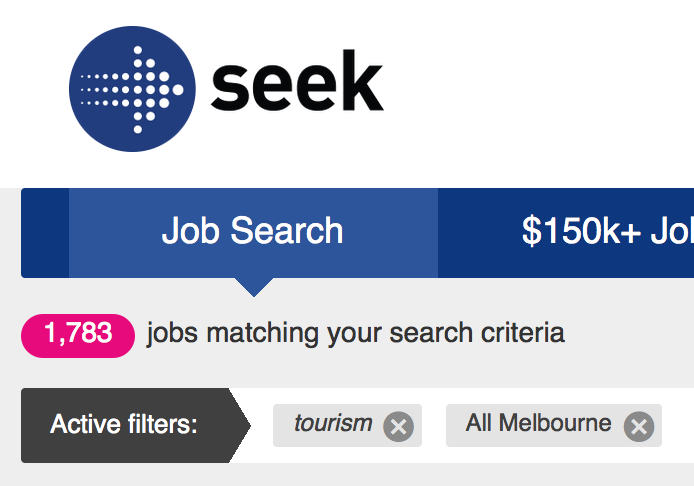
Screen Shot 2015-06-25 at 11.09.48 amAnd it is more than just a cottage industry. There are thousands of real jobs available in the sector too.

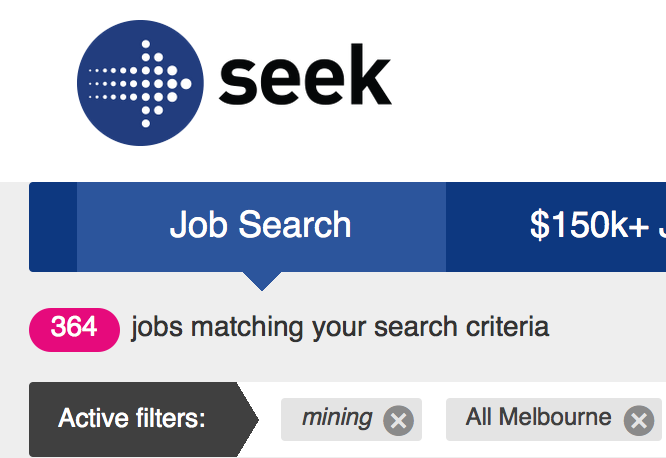
Screen Shot 2015-06-25 at 11.15.44 amThat’s five times the number of jobs I could see in mining.

Screen Shot 2015-06-25 at 11.16.12 amThe tourism sector has been in growth mode for a long while, although we don’t celebrate it much.

Screen Shot 2015-06-25 at 11.19.10 am

Politicians are more likely to say they want to live in a country that makes things.

Are we somehow ashamed of tourism? Do we feel it debases us to offer hospitality to visitors? While it’s somehow strong and tough to make things and send them to those same people?

Bangladesh makes a lot of things. I’d rather live in a place people want to visit.

We can make Australia better for tourists by improving transport in our cities and nation-wide, by teaching languages, and by preserving our natural environment.

A politician that made tourism the centre-piece of their economic recovery plan would get my vote.

The big thing missing from The Killing Season

I really loved the Killing Season. A beautifully-made story about the most interesting period in recent Australian politics. It took Canberra’s political life seriously. I think we could have our own West Wing now – previously the closest we could manage was the satire of the Hollowmen.

The story, told by veteran journalist Sarah Ferguson, will scoop the pool at the Walkleys – the journalism industry’s own award night.

But it omitted a major angle. The role of the media in the downfall of two Prime Ministers.

This could be simply a matter of editing. Trying to fit months of excitement into an hour of TV means things must be skimmed over.

Screen Shot 2015-06-24 at 12.30.17 pm But there is a set of incentives at play that makes me think this omission is more fundamental.  Before the narrative congeals and sets, I think remembering the role of the media is important

This tweet from Sky News anchor Aaron Young on the day Rudd knifed Gillard illustrates the media’s urge to write themselves out of history.

Screen Shot 2015-06-24 at 12.26.42 pmIt’s very understandable.

The political journalist’s job is absurdly stressful and difficult. I doubt many people could imagine how precious time is for a working journalist. Deadlines don’t just loom. They crash down. There is scarcely time for typing, let alone time for reflection.

Pondering the role of the media in shaping political events is a job for retirement. Their job is to get stories out the door. Now.

Screen Shot 2015-06-24 at 12.32.14 pmEven if journos wanted a critical reflection on the media, where would it be found? The mainstream media is not in the business of introspection. [I did find this 2013 Crikey piece pondering the media’s role.]

So the press gallery favours a paradigm where they merely observe and report. If speculative reports come true, the paradigm is only strengthened.

But of course media practice changes politics. Without the media acting as it does, we’d not have half the policies we do. Boat arrival reporting drives asylum-seeker policy, for example. The media’s lens made John Howard trim those eyebrows and Joe Hockey get lap-band surgery. It drives soundbites and policy on the run.

But this is not a major subject of the thinkpieces that damn modern politicians’ inadequacy.

ABC spill coverage.As in any mob, no individual can be blamed. Picking on Grattan or Oakes or Lenore Taylor is silly. There are around 180 journos in the official press gallery, from dozens of outlets. Then thousands more weighing in from beyond Canberra.

It’s rational behaviour for any one journo to see everyone else reporting leadership speculation, and so to report leadership speculation.

Indeed, the media organisations can throw up their hands too, and say they merely serve an audience. If those stories did not draw frenzied millions of clicks, they would not publish them.

But having no individual at whom the finger can be pointed doesn’t matter for a meta-analysis. The reporters and outlets can be basically innocent and the industry very much implicated. (Much like the problems within Labor don’t end with Shorten or Gillard, or even the people who responded to those polls ‘Dasher’ Dastyari was so smitten with.)

Having been in the media and seen how much power there is, how lightly governed it is, and how much you can get away with, it’s amazing. The reaction to the Finkelstein inquiry told me a lot about the power of the media.

What’s the Finkelstein inquiry, you ask? Exactly.

An enquiry into media regulation by a respected Federal court judge known as ‘The Fink,’ it got an extremely hard time in the media – when it was being reported at all. (The inquiry recommended things like newspapers reporting corrections and press council adjudications prominently.)

But the media is not above reproach.

Screen Shot 2015-06-24 at 12.24.20 pmThe Killing Season included at least two examples of politicians backgrounding journalists with information that may well be fake. Arbib saying he’d reconciled with Rudd in 2013, and the SMH reporting Rudd was checking his numbers in 2010.

Reporting off-the-record comment means that the public can’t check its veracity. It requires utmost trust in the reporter. That trust was eroded during the period in question.

But off-the-record comment is just a small moving part in a  big machine. The influence of the media on politics is like the water fish swim in – so pervasive they don’t notice it or question it.

To extend the water metaphor, let me say this. Politicians would be starved of oxygen without the media. But the life-giving force also contains vicious currents that affect the posture and behaviour of the politicians it sustains. Like a current in the water, we can normally only identify it by the ripples.  The events of the Killing Season were more like a period of breaking waves.

Note: I can see the response this piece is going to provoke : “Mate! Did you even watch the Killing Season? Labor ate itself! The media didn’t need to help it.”

But that’s a simplified version of history. Let’s not forget Mr Abbott was also nearly consumed by leadership speculation too. Would that happen if this was just a Labor problem?

Also, don’t let the narrative set in your mind until you’ve read Gillard’s book, in which the negative impact of the media is far more central. (She released excerpts to the press yesterday, but it somehow didn’t seem to get much coverage. Odd…)

The six stages of Costco

This story originally appeared over at The New Daily (a news site you ought to check out). They’ve agreed for me to host it here too.

CostCo has been running in Australia for six years now, but the big American retailer just opened its first stores in Brisbane and Adelaide in the last 12 months.

Shopping at Costco is a rollercoaster ride. Here, for the uninitiated, are the Six Stages of Costco.

1. Fearing

In this stage, the shopper is bewildered by the membership-based discount warehouse concept.

Those in the fearing stage can be identified by the following class of statements:

Costco sounds weird. Is it just a supermarket? I can’t find a catalogue online.

It’s not near my house. How do I get there?

I hear it costs $60 to even be able to shop there! Who do they think they are?

Many will never leave this stage. Those that do will likely make the leap because of word-of-mouth. (Costco doesn’t advertise).

2. Learning

In the learning stage, the shopper’s fear and confusion is rapidly replaced with a sense of wonder.

The shopper begins to form an elementary map of their Costco store and assumes they will one day be able to navigate it confidently. (This assumption is false.)

The learner can be identified by the following kind of statements.

Look at the size of this place! Wow!

Things are so cheap here! I can get Veuve Clicquot around $50 a bottle!!

It’s mostly real brand name stuff  – Nutella, Sony, Levis. It’s not like Aldi.

There’s even jewellery for sale … and you can buy holidays!

You can get a hot dog at the end for just $1.99. Delicious.

Coming to Costco is fun. It’s more like a theme park than a supermarket!

3. Loving

In the loving stage, the shopper’s very identity seems to merge with their membership of the discount warehouse.

You don’t need to ask to identify them as a Costco lover: they’ll tell you. You will be subjected to non-stop statements like these:

Did you know Costco works out 15-25 per cent cheaper than Coles or Woolworths on a per kilo basis?

Have you tried their beef? OMG. The quality is to die for.

Did you know the CEO of Costco pays himself just a third of what the Walmart CEO gets, while they treat their staff better than most other retailers?

You must come to Costco as my guest! I’d be delighted to take you!

The typical Costco lover is happily middle class. (Costco sells a lot of smoked salmon.) The Costco experience actually takes money to enjoy, given the fees, the need to go by car, and the need to spend hundreds per visit to harness the discounts.

Some people never leave this stage. They’re in retail nirvana. (Some of these people live near a Costco that does discount petrol and make their savings on fuel alone.) But there’s plenty of shopper with three more stages to go.

4. Realising.

In the realising stage, the Costco shopper learns thousand-dollar shopping trips can have a nasty hangover. You can spot the realiser by these mutterings:

Did I need to buy 1000 zip ties? And a kilogram of Hersheys kisses?

Why is there never any ******** space in my ******* fridge?!

Shame I couldn’t get through all those avocados before they went brown.

Yes, I can take you to Costco (again) to stock up on things for your party. Yes, taking a guest is one of the good things about the membership. No, I don’t mind.

Those cheap hotdogs are revolting.

The realiser has a few more unhappy moments coming.

If they darken the doors of the local Coles or especially Aldi, they may make the following realisation – not everything is cheaper at Costco. There are some non-perishable things Costco may be unbeatable for – pet food, or toiletries –  but not everything.

5. Calculating

In the calculating stage, the shopper looks at some very long receipts with some big numbers on them. They try to quantify the opportunity costs that come with bargain hunting.

Here are some notes they may make on their spreadsheet.

If I save 20 per cent per $200 shop, but succumb to two $20 impulse buys I shouldn’t have, my savings are gone.

If I get a second freezer to freeze bulk meat, its going to cost me about $400 and then at least $100 a year in electricity. Hmm.

If I drive an extra 30 minutes to the Costco and back, and spend an extra 30 minutes shopping and waiting in line, I need to make sure the savings are worth 90 minutes of my time. So if I get paid $30 an hour, I need to save $45 per shop to break even. Plus petrol.

6. Quitting

The quitting stage is not spectacular. There’s no more excited chatter. The quitter quietly lets their membership slide.

Costco is growing and its stock price is double what it was five years ago, so the quitting stage doesn’t happen to everybody. But it happens to some.

For this group Costco is like an old friend you don’t see any more, and you wonder what you ever had in common. Maybe you are missing a screaming deal on a TV or some new tyres, but you know what, being a bargain hunter doesn’t seem like the most important thing in your life any more.

Maybe this is you, maybe it isn’t. But no matter what, before you quit, stock up on that cheap champagne!
A tropical metropolis on top of this antipodes?

Tony Abbott has a plan – to make the north of Australia more economically vibrant.

It says, “A growing northern economy benefits the whole nation through jobs, investment, infrastructure and services.” But is that true? Let’s have a look

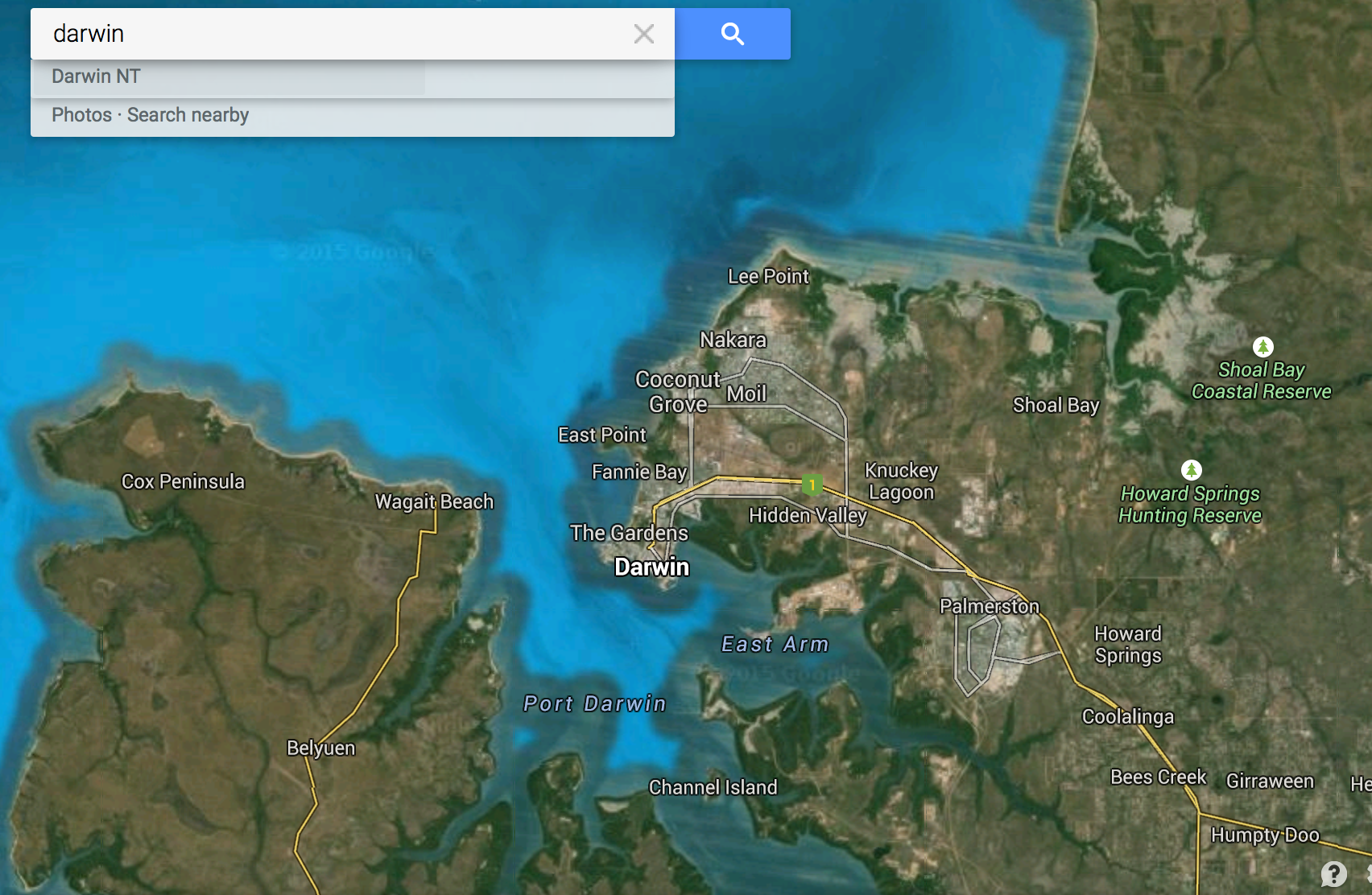
Darwin has just 136,000 residents. It’s the smallest capital in Australia.

Darwin

Darwin certainly seems to be a lovely spot with room to grow. So why not? It doesn’t make sense that most of the population is in the southern half of the country, far from our populated neighbours in Asia.

A highly developed north could be Australia’s California.

California grew late in America’s development – in 1900 LA had 100,000 population while New York had 3.4 million. Comparable figures to Darwin and Melbourne today.

But if expansion of population is the plan, we need to be clear why we’re doing it.

Having more population made sense back when Australia feared being invaded. Populate or perish was the cry. These days our big risks are different. So the idea needs to stand up economically to make sense. Let’s have a look at what the economics of this tropical metropolis might be.

BENEFITS:

1. The Northern Territory would have a higher population, so the fixed costs of operating the jurisdiction – such as parliament – would be spread over more people. This is efficient. It would have a minor upside for the rest of Australia as smaller GST transfers would be necessary to the NT, and the remainder of the country would keep more.

2. With more people living in the tropical north, the area would have bigger markets, and greater economies of scale. Prices should drop for consumer goods, and the range of goods and services would increase. Good news for Darwinians tired of the same few pubs and restaurants!

3. Australia would get a higher GDP. This might give us more clout in global affairs, but wouldn’t mean much for most of us. It wouldn’t necessarily solve our unemployment problem. Per capita GDP is what matters – lifting the total output of Australia is irrelevant for most of us.

4. The NT is 30 per cent indigenous. By creating more employment opportunities in the north of Australia, development could help reduce indigenous disadvantage.

5. If successful, a booming northern frontier could reduce the population growth rates in the southern capitals. This might reduce the rise in house prices and diminish pressure to build expensive infrastructure through crowded areas.

6. A more happening north might attract more tourism. Darwin is already a big tourist town and with Australia on the brink of a tourism boom a bigger, better offering could help the whole nation attract more tourists. The risk would be actually diminishing its charm. The key is good urban planning so the inevitable ugly parts of development are invisible from the tourist hotspots.

COSTS

1. Economic development always uses land. Changing the use of land always comes with an opportunity cost. In this case, the change would turn natural environment into suburbs and industrial parks.  National parks are already close to the centre of Darwin. The location of development would need to be very carefully managed to make those opportunity costs worthwhile.

2. Putting another big city absolutely miles from the rest of Australia’s cities is only going to increase travel costs and times for the rest of us. Perth is bad enough!

3. Government effort could be expensive and futile. The plan to deregulate domestic routes in the north is already in tatters. Here’s the thing – forcing economic activity to happen in a certain place is next to impossible. Economic activity happens where it wants to. The venn diagram of development policies and failed development policies looks like a circle with only the faintest shadow. Having worked in both domestic regional development agencies and international aid efforts, I think I can say this with some confidence. We could be investing in a tropical white elephant.
Is this plan more likely to create Australia’s California or Australia’s Alaska? Please share your views below!

So, do kids really need to learn coding?

<blogpost>

Federal Labor is pushing to make coding part of our primary school curriculum.

Coding is extremely fashionable right now. A mate of mine works for a hot New York City start-up called codecademy that teaches people to code for free online, and has got a LOT of positive press.

Tony Abbott suggested learning coding was unnecessary, got laughed at, then had to back down when he realised his own government was also funding coding in schools.

Is learning to code important?

Well, the market for software has exploded and there are millions of apps for sale right now. Some apps make enough money they can have a $40 million ad campaign starring Kate Upton. But most make very little money.

app long tail

From Metakite: The Shape Of The App Store

When I look at software I have on my computer and phone, I see relatively little that is boutique, and lots that is mainstream – Firefox, iTunes, etc. The replicability of software means we don’t each need one made personally.

That suggests the coding universe exhibits the characteristics of a one-to-many market, like acting or professional sports, rather than a one-to-one market like lawyering or medicine.

The key characteristic of labour markets in professional sports and acting is that a few people make a lot of money in them, while a large coterie of fringe dwellers hopes for a big break and makes next to nothing. App-making is the same.

Further eroding the need for coding skills is the fact coding can substitute for itself.

Good back-end coding makes it possible for non-coders to do things that used to require coding skills, like run a website (like this one), an online store, or even make an app. There are dozens of sites that let you make an app with simple drag and drop techniques.

Don’t get me wrong – there will be coding jobs in Australia in the future. Lots of them. Some of those jobs will be very well paid. We should continue to have great computer science programs at high schools and universities open to those who have passion for coding

But will there be enough demand to warrant teaching coding to everyone?

There will be even more plumbers in future and I don’t hear anyone saying we should teach the fundamentals of unclogging in Grade 5.

Let’s not forget writing code can be fiddly, repetitive and boring. This is not the sort of activity that will ignite bored kids imaginations. I did a term of writing code as an elective in 1995 and hope to never again cross paths with an assignment operator.

Even nerds that are experts in computer programming think learning to code is wasteful.

Coding requires an analytical mind and a grasp of language. Ensuring literacy and numeracy are in place is a higher priority than teaching coding. With the fundamentals in place, learning other things is easier.

We ought not fool ourselves that adding a subject is costless.

Adding to a school curriculum is easy for politicians. They don’t face the opportunity cost, don’t realise students are really only paying attention for a couple of hours a day, and don’t understand half the kids aren’t properly literate.

Teachers at the coal-face, however, know the trade-offs are real. The 2014 Federal Government review of the Australian curriculum highlighted that:

“the greatest concern was the content load expected to be delivered at primary school.”

We should push back on this fanciful policy.

</blogpost>

I wasn’t panicking about the Australian economy … until I saw this graph

This graph makes my tummy turn into a knot.

capex

[Source: ABS]

It shows how much money business in Australia expects to invest. Businesses invest in new trucks, new computers, new buildings, etc. Investment is what makes businesses grow, what makes the economy grow.

The white columns are spending plans, the grey columns are cold reality. Looking at those last two small white columns,  we see business is terrified.

They show how much money businesses expect to invest in 12 months from July 1 2015. It’s low. Very low. The worst since 2010-11.

We can expect the plans for investment (the white columns) to grow a bit as the year continues, same as in every other year. The third estimate of plans for investment (third white column) is often the biggest. Reality (the grey column) rarely beats that third estimate. This year’s final business investment number hasn’t come in yet (there’s no grey column seven yet in 2014-15) but it looks likely to be the lowest since 2010-11.

And next year’s business investment looks like it will be worse.

WHAT IT MEANS

Low business investment means low economic growth. Low economic growth means higher unemployment.  Higher unemployment means more human suffering. (Why do we need high growth to keep people in work? This is something I wish I understood better about economics.)

The information in the graph comes from a survey the ABS does. The survey happened in April and May, so it would have caught some (but not all) of the Budget leaks about the supposed small business bonanza. Of course we will have more information about the effect of the Budget next month.

But for now, it looks like Hockey’s second Budget is a dud.

Partly, the problem is mining. The end of the mining boom is as sudden as the start, and the cash rivers flowing to projects in WA and QLD are drying up fast.

But the real problem is that other industries are not picking up the slack. Here’s the graph for selected industries excluding both mining and manufacturing. The pattern is the same. Estimate two for next year is 10 per cent less than estimate two for this year. That spells trouble.

capex selected

What can we do?

The federal government should spend more to give the economy more of a boost. They know that and Hockey has been blaming the Victorian government for cancelling the east-west road project.

But given the sacred status of surpluses, there’s little more we can expect from fiscal policy.

Instead, all eyes turn to the RBA. Will it try yet more monetary policy to keep the economy moving? Will it cut interest rates yet again?

Some people think yes. In some ways, there’s nothing else we can do. Even though the RBA has already cut rates to record lows and house prices have gone crazy. So long as inflation is modest next time CPI comes out, another rate cut is very plausible.

But will it work to make those white columns go up? To ultimately make businesses plan to grow and hire more people? To keep people in jobs and prevent the suffering of joblessness? I fear not.

Why we should tax tampons, and everything else.

Tax on tampons is a hot topic, with Tony Abbott and Joe Hockey in major disagreement. The issue was brought into the spotlight via a petition on communityrun.org.

“And how can a bodily function be taxed? Because the government doesn’t consider the tampons and pads we’re forced to buy every few weeks ‘necessary’ enough to be GST-free.

On the other hand, condoms, lubricants, sunscreen and nicotine patches are all tax-free because they are classed as important health goods. But isn’t the reproductive health and hygiene of 10 million Australians important too?”

I didn’t sign the petition, and here’s why

Sanitary items are different from “condoms, lubricants, sunscreen and nicotine patches”, because people already want to use them, and there is no evidence of significant public health risk if usage falls. Also, “necessity” is not the binding criterion for determining what gets taxed – we tax electricity.

“Half the population menstruates and they shouldn’t be financially penalised for it.

If you still aren’t convinced, let’s consider some statistics: on average women, who make up the majority of people who use sanitary products, earn $262.50 per week less than their male counterparts, and they are also statistically at greater risk of living below the poverty line. Furthermore, this tax disproportionately targets those who may already be disadvantaged, that is the homeless and unemployed.

So why force this underpaid, at risk and disadvantaged portion of society to pay more for basic essentials?”

Healthy women menstruate for about half their life. So, less than 25 per cent of the population menstruates. How big is the financial burden of this tax on them?

A 16 pack of brand-name tampons costs $4 at Coles. Let’s estimate a woman spends $10 a month. GST on that adds up to $12 a year.

The number of people who can’t afford tampons because of GST is therefore negligible. The number of people pushed into poverty because of that $12 slug would be small. Most people campaigning against this tax have no trouble affording $12 a year.

So if you want to make a difference to the financial well-being of poor women, this is an indirect and very marginal approach. It comes with real trade-offs – it would cost the government revenue. That undermines the ability of society to support the poor.

Here’s a petition I’d support instead: raising income support payments to a more reasonable level.

WHAT’S REALLY HAPPENING

If this petition is not really about public health, necessity or fairness what’s it about?

People hate paying tax. They really hate taxes they can’t avoid. They then create ex-post reasons why they should not have to pay tax, generally involving the welfare of the wretched. (Their own benefit is merely incidental to the social good they’re pursuing!).

The mining industry showed the way, with its campaign against the mining tax, focused on the health of small towns and communities. The big polluters mimicked this in killing the carbon tax, worrying about the electricity bills of families on the bread-line.

It’s no surprise these tactics have spread – they’re extremely effective!
The crux here is whether there is a link between fairness and avoidability. Is a tax fair only if there’s a way to avoid it?

Unavoidable taxes are the backbone of our revenue raising system. We already raise lots of revenue effectively through big taxes on things everyone agrees are “good,” like earning income and buying clothes. I’ve previously written that we need more taxes nobody can avoid.

Tax theory says not to introduce loopholes. That was the mantra when I worked at Treasury – maintain the integrity of the system. Always use payments to solve problems, because exemptions are not targeted and get exploited.

But perhaps I am out of step with community sentiment.

Hate for (certain) unavoidable taxes goes back a long way – Poll taxes brought down Margaret Thatcher, for example. Also, exemptions to the GST were what bought it enough legitimacy to be introduced.

I sometimes wonder if sin taxes – tax on alcohol and cigarettes for example – are to blame for the way people see tax in general. A lot of people interpret the tax system as a moral agent judging their actions. If I saw all tax as punishment, I’d be furious about paying tax on sanitary items too.

Tax is not punishment, so maybe we should rename sin taxes to something other than taxes. What we should not do is carve up the system with more exemptions.

Exemptions undermine the efficiency of the tax system but also the sense that tax is our common duty.

I see plenty of normal people arguing that big companies that contort themselves to pay very little tax in Australia are “just doing what anyone would do”. The sense that everyone can and will avoid tax at every turn is pervasive.

I don’t mind paying tax because I can see the benefits it brings. (even though I’m quite aware it’s not all spent efficiently.)

“Tax is what we pay for civilized society.” US Supreme Court Justice Oliver Wendell Holmes, Jr.

Thanks for reading this far! If you’d like to agree, disagree or accuse me of obnoxious mansplaining please do so below, and I shall attempt to respond!

The real value of the government’s “phenomenal” $20k asset write off

The government’s small business budget has been a big success, it seems. They got positive headlines about the Budget being stimulatory, and now approval ratings of the PM are back up.

It’s a PR success. And a lot of that is due to attention lavished on the $20,000 tax write-off for small business.

It’s “Phenomenal” apparently.

Get ready for a lot more asset write-off announcements in future. Because they buy the government a lot more headlines than they deserve.

You wouldn’t know this from reading about it, but the “$20,000” asset write off is worth only about $1000.

Here’s why:

The $20,000 is not taken off the tax bill of a small business. Instead it’s a deduction from income – same as when an individual gives to charity.

After a small business takes $20k off their income, they save the 28.5 per cent tax they would have paid on it. 28.5% of 20k is $5700.

That’s the actual value of being able to instantly write off a car or machine from your tax this year.

But here’s the thing. Businesses could always write off asset purchases against their income. They just had to do it more slowly.

Using a depreciation schedule from the ATO website, I calculated how much a small business would have been able to save off their tax under the old rules.

It’s $5700.

The only advantage is that under the new policy, a business can claim all that $5700 in this tax year, instead of claiming it in dribs and drabs over the next decade.

Here’s a graph for how your depreciation works under instant write off versus slow depreciation.

Years since purchase on the horizontal axis.

We can measure how much benefit instant access to the write-off provides. All we need to do is make an assumption about how small business values money over time. We do that with a discount rate. Lets assume a discount rate of 8 per cent.

If that is the case, the net present value of the flow of money is $4660. Only $1040 less than the value of the money right now.

(If you assume small business is even more patient, the value of the instant write-off is even less. At a 2 per cent discount rate the NPV is $5350 and the net value of the new policy is a mere $350.)

In summary, the government is getting great value from this policy in media coverage terms.

Compare it to another tax break they gave small business in the Budget – a five per cent tax cut for unincorporated businesses. You probably haven’t seen mention of that anywhere.

But this five per cent tax cut (full disclosure, I run an unincorporated business!) is worth even more to the Budget bottom line. That’s it in the blue bubble on the right side – worth $1.8 billion. This graphic was in the glossy brochures journalists got in the Budget lock-up.

budget glossy

It’s one of the most expensive measures in the Budget. And it has barely got a headline. The government will not make that mistake again.

Expect asset write-off thresholds to be even higher in the next Budget as governments seek a headline that says something like $100,000 Asset Tax Bonus for Small Business.

Budget Day!

I’m in the nation’s capital for the federal Budget! For me, this is like Christmas.

Screen Shot 2015-05-12 at 9.46.35 am

At 1.30pm I go into Parliament House for the lock-up and start diving into the Budget papers. (Budget paper 2 is the choice of the connoisseur.)

No phones or internet are permitted inside, and once in, you can’t leave until 7.30pm. At that time the Treasurer stands to deliver his Budget speech to the House of Representatives and the Budget is finally public.

I’ll be writing for The New Daily, a free news website with its head office in Melbourne. Hopefully by 8pm my stories will be published on their website. ( And hopefully, the government’s promise of a “dull” budget will be another promise on the scrap-heap!)

Until that time, please check out these two pieces of pre-budget coverage I have had published in other places.

A “Fantasy Budget” I wrote for Crikey.

A very simple Budget explainer I wrote for The New Daily